


A powerful new synthetic drug known as flakka has been spreading rapidly across parts of the United States and has been reported in Australia and potentially parts of Europe, prompting serious concern among law enforcement and health officials about its extreme and sometimes deadly effects.
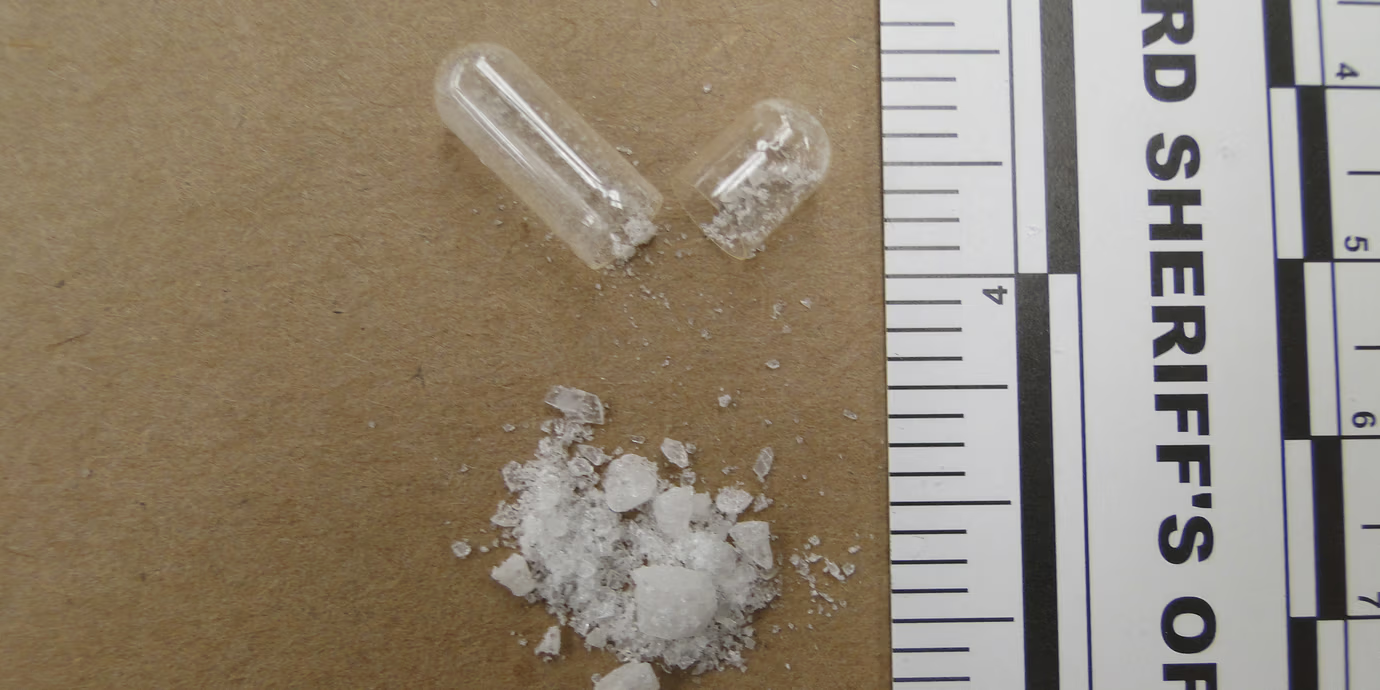
The substance, which gets its street nickname “gravel” from its appearance as small colourful crystals resembling decorative aquarium stones, belongs to the same chemical family as the bath salts drugs that made international headlines several years ago. It can be snorted, smoked, injected or swallowed, making it accessible through multiple methods of consumption.
The behavioural episodes linked to flakka use have been among the most disturbing associated with any synthetic drug in recent years. Police recently arrested a man found running naked through a busy intersection, convinced he was being chased by people who did not exist. In February, footage captured another individual under the influence attempting to kick down the glass doors of a Fort Lauderdale police station in Florida. A further incident in March involved a man impaling himself on a metal fence after taking the drug.
Flakka is produced using a chemical compound called alpha-PVP, which is a close chemical relative of cathinone — the amphetamine-like substance found in bath salts. The connection to bath salts is not coincidental, as both substances work on the brain in broadly similar ways, triggering hallucinations, paranoia and episodes of extreme and unpredictable behaviour.
Perhaps the most alarming aspect of flakka’s spread is its current legal status. While the active ingredient in bath salts was officially banned in the United States in 2011, its newer derivative alpha-PVP was not added to the list of prohibited substances at the same time. That means the compound remains entirely legal in any jurisdiction that has not independently moved to ban it, creating a significant gap in drug control legislation that manufacturers and distributors have been able to exploit.
Reports indicate the drug is currently spreading beyond Florida into Ohio and Texas, raising fears that what began as a regional problem could quickly become a national one if legislative action is not taken to close the legal loophole that currently allows its production and sale.
