


British forces stationed in Iraq intercepted two Iranian drones overnight after coalition bases in Erbil and Baghdad came under sustained attack, Defence Secretary John Healey has confirmed.
The base in Erbil — capital of the Kurdistan region and home to both US and British personnel — was struck multiple times, injuring a number of American troops. A second coalition base in Baghdad was also hit. Brigadier Guy Foden said British forces successfully brought down two unmanned aerial vehicles launched toward the Erbil camp, though several others broke through and impacted the site. No British casualties were reported.
Healey, speaking during a visit to the UK’s military headquarters in Northwood, said a British team had been deployed at Erbil since Iran began striking targets across the region following the US-Israeli offensive. “We’ve had a team at the base in Erbil that’s been pulling down drones, protecting themselves but also protecting the base and other service people that they serve with there,” he said.
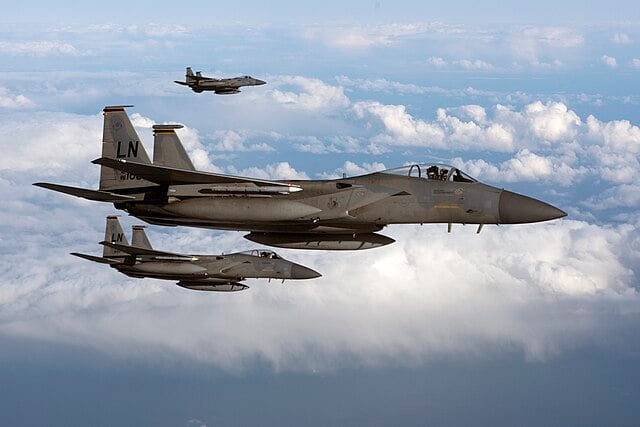
Beyond Iraq, British air operations have expanded significantly across the region. RAF jets flew combat patrols over Jordan, the United Arab Emirates and Qatar overnight, and continued flying in defence of Cyprus alongside European allies. The UK has now accumulated more than 300 pilot flying hours over the past 13 days. HMS Dragon, a British warship that departed the UK on Tuesday, was still making its way to the Mediterranean as of Thursday midday.
At the Northwood briefing, Lieutenant General Nick Perry, the UK’s chief of joint operations, told Healey there were definitive signs of a connection between Russia and Iran in how the drone attacks are being conducted. Healey later told reporters the Iranian tactics bore the hallmarks of Russian methods used against Ukraine, adding that no one would be surprised to find what he called Putin’s hidden hand behind them.
The defence secretary identified Russia’s President Vladimir Putin as the single world leader benefiting from the widening conflict, pointing to elevated oil prices as a fresh source of revenue funding Moscow’s war in Ukraine.
