


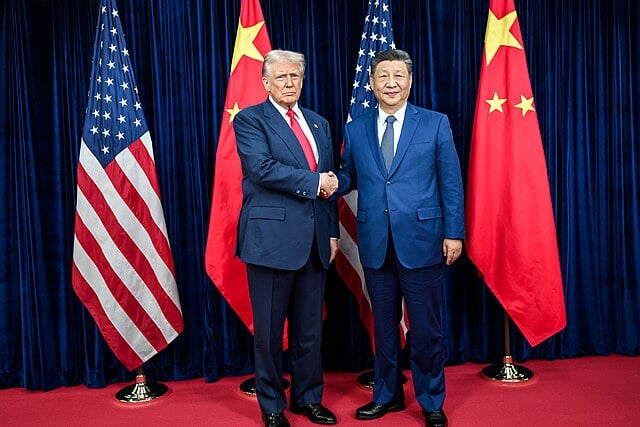
A high-level meeting between the leaders of the world’s two largest economies is now weeks away, yet the groundwork that typically underpins such encounters remains largely unfinished.
The summit between President Donald Trump and Chinese President Xi Jinping, scheduled for March 31 to April 2, was confirmed by the White House — but China has yet to officially announce the dates, consistent with its usual diplomatic practice. What is less usual is how little has been settled about what the two sides actually hope to get out of it.
Scott Bessent, the US Treasury Secretary, is expected to meet Chinese Vice Premier He Lifeng in Paris this week in what may be an attempt to fill in some of those gaps before the leaders sit down together.
On the American side, one notable absence stands out: business executives. World leaders travelling to China typically bring large commercial delegations. Germany’s Chancellor Friedrich Merz arrived in Beijing last month with around 30 company chiefs. Britain’s Prime Minister Keir Starmer brought nearly 60 business figures in January. Trump himself took executives on his first presidential visit to China in 2017.
This time, no invitations have gone out. Sean Stein, president of the US-China Business Council, confirmed on Tuesday that the White House had yet to include any business leaders in the trip. A White House spokesman said invitations would be extended when appropriate and that it was normal for them not to have been sent at this stage. The administration had not yet decided whether executives would accompany the president, according to Stein.
The uncertainty extends to the substance of the talks. Chinese analysts say Beijing has received little clarity from Washington on what Trump intends to raise or what agreements might be within reach. Wu Xinbo, dean of the Institute of International Studies at Fudan University, said preparation had begun unusually late and was still ongoing. Normally, planning for a visit of this scale would begin months in advance.
The backdrop to the summit is a trade relationship that came close to breaking down entirely last year. Trump’s sweeping global tariffs triggered Chinese retaliation — Beijing halted purchases of American soybeans and restricted exports of rare earth minerals that US manufacturers depend on. The two leaders met in South Korea in October and agreed on a year-long trade truce. American officials have since indicated the two are expected to meet up to four times in 2026.
US business groups are hoping the summit can be used to push for greater access to Chinese markets, including approval for American crops grown with genetically modified seeds, pharmaceutical exports, and outstanding licences for financial services firms.
China’s top diplomat Wang Yi offered a broadly positive signal last week, describing 2026 as “a big year for China-US relations” and confirming that high-level exchanges were already planned. He also issued a veiled caution, urging both governments to avoid actions that could introduce unnecessary disruptions ahead of the meeting.
Trump has already held back an announced package of arms sales to Taiwan — the self-governed island Beijing claims as its own — reportedly to avoid antagonising Xi before the two meet.
Whether the Paris talks between Bessent and He Lifeng produce enough common ground to give the summit a clearer shape remains to be seen. With both sides still declining to confirm a joint agenda, the meeting’s outcome may hinge on decisions made in the days immediately before it begins.
