


Britain’s competition regulator has opened formal investigations into five companies over concerns that online customer reviews may have been manipulated, marking one of the first significant uses of enforcement powers that came into effect earlier this year.
The Competition and Markets Authority (CMA) confirmed it is examining Just Eat, Autotrader, funeral services provider Dignity, reviews platform Feefo, and pasta delivery company Pasta Evangelists. The watchdog stressed it had “not reached any conclusions about whether consumer law has been broken.”
The investigations centre on how each business obtains, moderates and displays customer reviews — a practice the CMA says shapes billions of pounds of consumer spending annually.
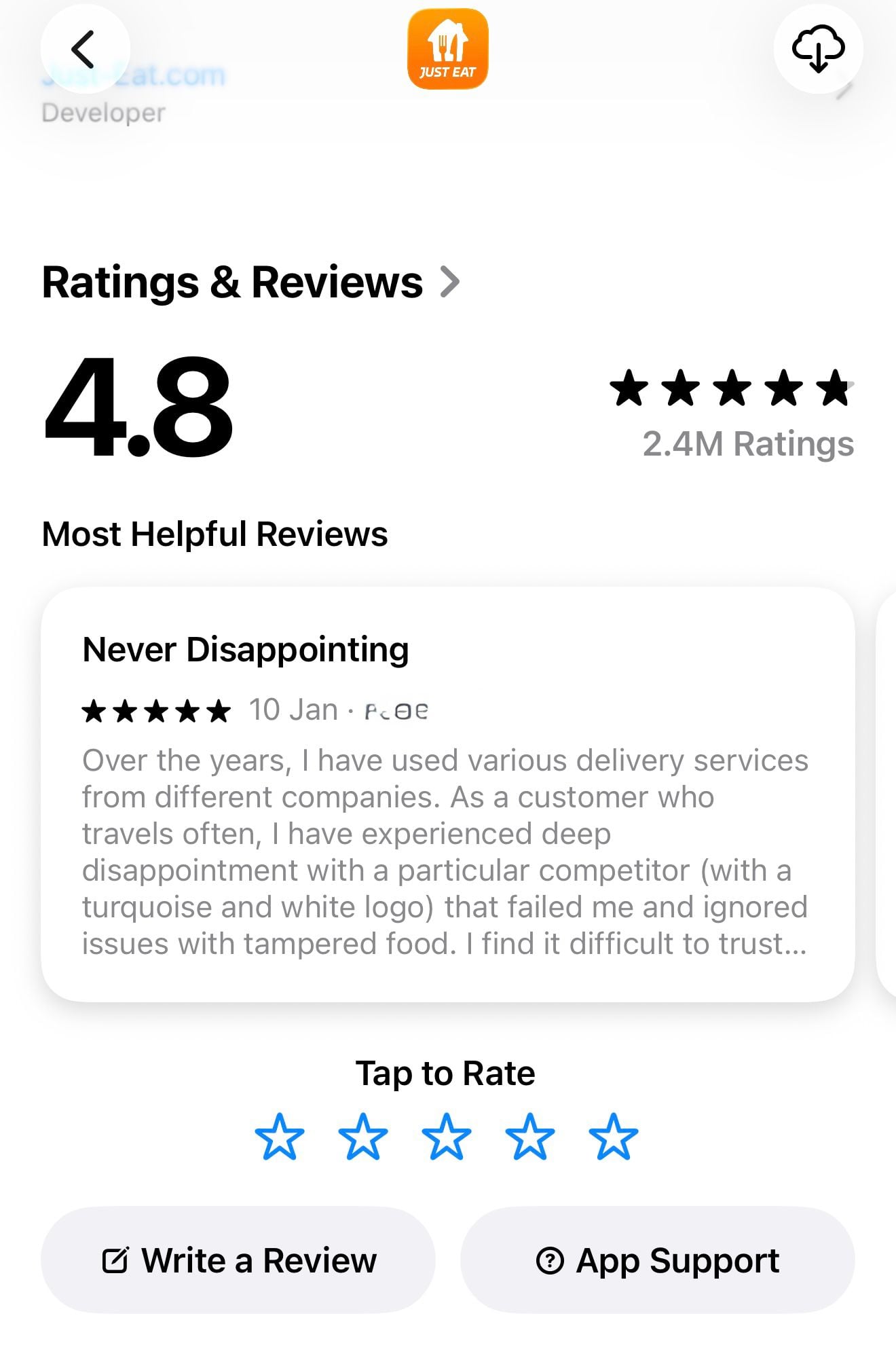
The nature of the concerns differs across the five firms. Autotrader and Feefo are being examined over whether certain negative reviews were omitted, potentially preventing consumers from forming an accurate view of others’ experiences. Just Eat faces scrutiny over whether star ratings for some of its listed restaurants and grocery partners were artificially inflated. Dignity, which provides cremation services, is under investigation over whether staff were asked to submit positive reviews, and Pasta Evangelists is being looked at over whether it offered customers discounts in return for five-star ratings on delivery platforms.
CMA chief executive Sarah Cardell said consumers needed reliable information, particularly given the current strain on household finances. “Fake reviews strike at the heart of consumer trust,” she said, adding that the regulator was “deploying new powers to tackle some of the most harmful practices head on.”
Those powers, introduced under legislation announced in 2024 and active since April, allow the CMA to impose fines directly on businesses found to have breached consumer law — without requiring court proceedings. The investigations represent an early test of how the regulator intends to use that strengthened mandate.
Autotrader said it would cooperate fully with the inquiry and maintained that it aims to operate as “a responsible and compliant business.” The BBC reported it had contacted the remaining four firms for comment.
Consumer group Which? welcomed the move but urged the CMA not to stop at investigation. Sue Davies, the organisation’s head of consumer rights policy, said enforcement would be the true measure of success and called on the regulator to “issue serious fines if these companies aren’t playing by the rules.”
Alongside the investigations, the CMA published guidance for consumers on identifying unreliable reviews. The watchdog advised reading reviews in full rather than relying solely on star ratings, and flagged the growing risk posed by artificially generated content. Reviews that appear unusually polished or formulaic may warrant scepticism, the regulator said. It also suggested consulting multiple platforms and noted that three or four-star ratings are generally less likely to be fabricated than perfect scores.
The CMA has not indicated a timetable for concluding its inquiries.
