


Washington’s diplomatic pressure on Tehran has collided with an unexpected military humiliation — and the clock is ticking on multiple fronts simultaneously
It was a scenario the White House had not anticipated, and almost certainly had not war-gamed. A US F-15E Strike Eagle — one of the most capable multirole combat aircraft in the American arsenal — was shot down over southern Iran on Friday, the latest and most significant military escalation in a conflict that has been expanding, almost without pause, since its opening stages. The incident has punctured the self-assurance of an administration that, only days earlier, was publicly insisting Iran’s air defences had been rendered largely ineffective.
The political exposure is considerable. President Trump had declared, with characteristic bluntness, that Iran “couldn’t do a thing” about American aircraft operating over its territory. The wreckage of the F-15E suggests otherwise.
How a Combat Search-and-Rescue Mission Became a Multi-Aircraft Emergency
The immediate facts, pieced together from US media reports and statements from Iranian authorities, describe an incident that cascaded rapidly in complexity. One of the F-15E’s two crew members — the pilot — was successfully recovered by US forces. But the rescue operation itself quickly ran into difficulty.
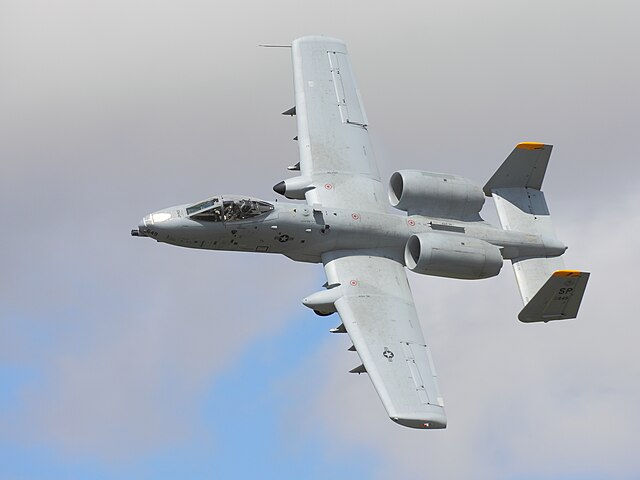
A Black Hawk helicopter tasked with extracting the pilot was struck by small arms fire before landing safely, injuring crew members on board. A US A-10 Warthog — the close air support aircraft typically assigned to precisely this kind of search-and-rescue escort role — was also hit and damaged during the mission, though its pilot was subsequently recovered. Iranian state authorities claim to have shot down the A-10 entirely; whether this refers to the same aircraft reported as damaged by US sources, or a separate incident, remains unverified.
What has given the episode a distinctly unusual character is Iran’s account of how some of the damage was inflicted. The Islamic Revolutionary Guard Corps attributed attacks on two US Black Hawk helicopters not to its own military forces, but to nomadic tribal communities in the mountainous Kohgiluyeh and Boyer-Ahmad province — the Bakhtiaris and the nomads of that region, known for carrying rifles to protect livestock in remote highland terrain. BBC Verify confirmed footage from Friday appearing to show armed individuals firing rifles towards at least two helicopters. The deputy governor of the province stated that local people had fired at “enemy helicopters,” preventing them from landing.
Whether this attribution is accurate, a convenient deflection, or a deliberate political signal from Tehran is a matter of active debate. What it does reveal is the degree to which US aircraft were operating in contested, difficult terrain far from anything resembling a permissive environment.
Why the Missing Weapons Systems Officer Changes the Strategic Calculus
The pilot’s recovery, while welcome, does not resolve the most pressing uncertainty. The F-15E carries a two-person crew: a pilot and a weapons systems officer. The status of the latter remains publicly unknown. Iran’s Revolutionary Guard has reportedly sealed off a large area and initiated a search operation, offering approximately £50,000 for the capture alive of any unrecovered US crew member.
This detail transforms what might otherwise have been a manageable embarrassment into a high-stakes standoff with potential strategic consequences. A captured American serviceman on Iranian soil would represent a profound complication for an administration already navigating a web of simultaneous pressures — ongoing nuclear negotiations, a self-imposed diplomatic deadline, and the military tempo of a conflict that shows no sign of de-escalating.
Trump has publicly stated that the loss of the aircraft will not affect negotiations with Iran. Privately, few analysts would accept that formulation at face value. A hostage situation — should the weapons systems officer be captured — would introduce a variable that no White House communication strategy can simply absorb.
Second US A-10 Warthog Down Near Hormuz as Pilot Rescued
The Diplomatic Deadline and the Limits of Coercive Pressure
The timing of this crisis is not incidental. Trump had set 6 April as a deadline for Tehran to agree to a deal or reopen the Strait of Hormuz, warning of the “obliteration” of Iranian power plants should the deadline pass without compliance. That ultimatum now sits alongside a developing military incident that Iran will almost certainly use to demonstrate it retains meaningful capacity to inflict costs on US forces — regardless of whatever damage has been done to its air defence networks.
The Iranian nuclear programme has been under sustained pressure throughout the conflict. Natanz, the country’s most significant uranium enrichment facility, has been struck twice since the war began, most recently on 21 March. The Khondab heavy water complex and the Ardakan yellowcake production facility were also targeted on 27 March. US and Israeli strikes on Fordo and Isfahan, carried out during last year’s twelve-day Iran-Israel war, further degraded Iran’s nuclear infrastructure. Prior to the conflict, Iran held approximately 440kg of uranium enriched to 60% — a stockpile whose current status is not publicly confirmed.
Yet Iran has not collapsed, and it has not complied. The downing of the F-15E is a pointed reminder that coercive pressure, however intense, does not always produce the compliance it demands — and that a cornered adversary with functional air defences, mountainous terrain, and tribal allies willing to fire on rescue helicopters is not a defeated one.
The Widening Arc of Regional Instability
The F-15E incident sits within a broader regional picture that has been deteriorating with striking speed. Kuwait reported intercepting eight missiles and nineteen drones within its airspace in the preceding twenty-four hours alone, with no casualties or material damage confirmed by its defence ministry — a figure that would, in any other context, represent a major security event in its own right. The normalisation of such volumes of aerial ordnance across the Gulf speaks to how fundamentally the region’s threat environment has shifted.
In southern Lebanon, meanwhile, the Israeli military confirmed the death of Sergeant First Class Guy Ludar, a 21-year-old serving with the Commando Brigade’s Maglan Unit, killed during combat operations. Israel’s ground incursion into southern Lebanon, launched on 2 March, was itself a consequence of Hezbollah’s rocket fire into northern Israel — retaliatory action that followed Israel’s assassination of Iran’s supreme leader at the war’s outset. The connective tissue running through each of these threads leads, ultimately, back to Tehran.
On the diplomatic periphery, the US State Department announced the arrest of the niece and grand-niece of Qasem Soleimani — the Quds Force commander killed by a Trump-ordered air strike in January 2020 — after their lawful permanent resident status was revoked by Secretary of State Marco Rubio. The administration characterised the action as a refusal to allow the US to serve as a home for those supporting “anti-American terrorist regimes.” Whatever its legal justification, the timing is unlikely to be coincidental.
An Administration on the Back Foot — for Now
None of this is to suggest that the trajectory of this conflict has decisively shifted in Iran’s favour. The damage inflicted on Iran’s nuclear programme is real and significant. Its air defence networks have been degraded. Its economy remains under extraordinary pressure. But the events of Friday night demonstrated something important: that the United States, for all the firepower it has brought to bear, has not achieved the kind of dominance that makes its aircraft immune to being shot down, its rescue missions impossible to harass, or its deadlines impossible to simply absorb.
Trump’s silence on the specific incident — no public statement has been forthcoming — reflects either the disciplined restraint of an administration managing a sensitive ongoing operation, or the difficulty of finding language that acknowledges a setback while projecting strength. Possibly both.
The 6 April deadline arrives against this backdrop. How Washington chooses to respond — to the downed aircraft, to the missing airman, and to Iran’s studied defiance — will say a great deal about whether its coercive strategy retains the credibility required to bring the other side to the table. If it does not, the gap between Trump’s rhetoric and the reality on the ground will become impossible to ignore.
