


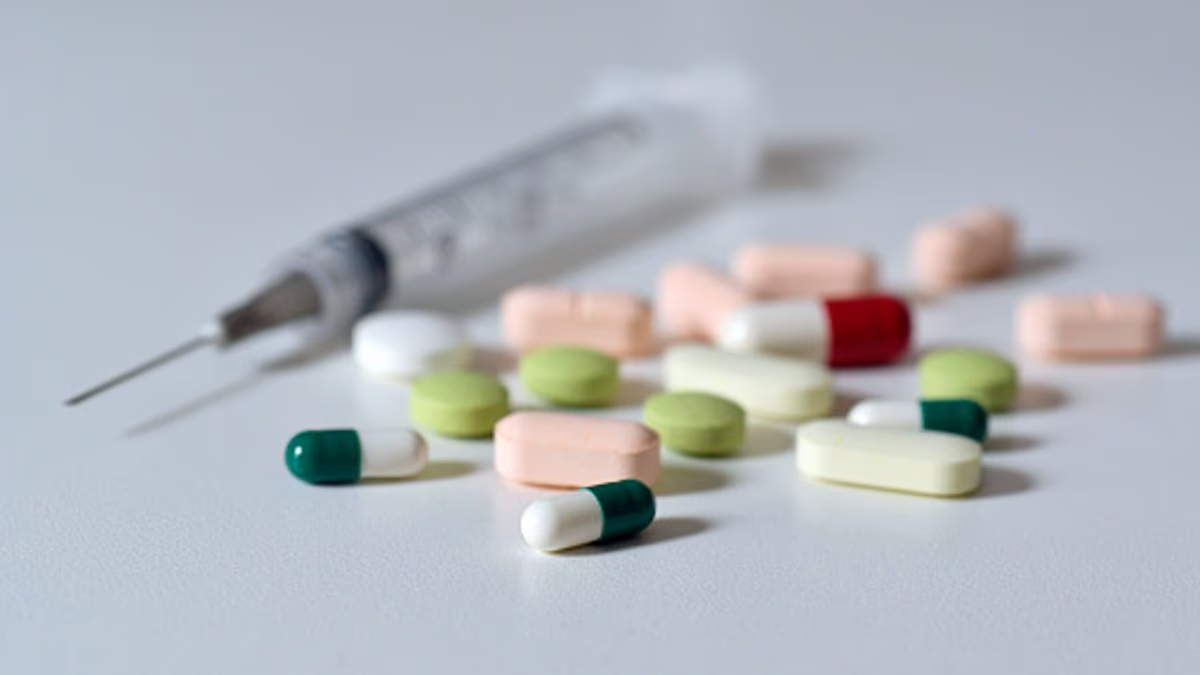
Britain is currently in the grip of an unprecedented weight-loss revolution. A recent study led by researchers at University College London (UCL) and funded by Cancer Research UK revealed that an estimated 1.6 million adults are now using prescription weight-loss medications, with more than 90 per cent of those accessed privately rather than prescribed on the NHS. And after a flood of injectable options, treatments in tablet form are now reaching the UK market, promising rapid, dramatic results.
Everyone from Sharon Osbourne and Jeremy Clarkson to Elon Musk and Boris Johnson has openly discussed their transformations using weekly slimming pens, and what began as a medical intervention for severe obesity has expanded into a mainstream get-slim-quick fix.
Now, the promise of an oral treatment rather than self-administered injection is proving alluring for those wanting to bypass calorie counting and cardio, and shed stones in a matter of months. For many, the idea of swallowing a daily pill feels less extreme than injecting, and not as painful.
Research by UCL has revealed that around 1.6 million adults in the UK are taking weight-loss medication.
However, medics and nutritionists have warned that choosing between an injection and a tablet is far more complex than picking a preferred method. It involves distinct biological mechanisms, strict daily routines, and metabolic considerations unique to the patient.
When assessing whether injectables or tablets offer superior slimming outcomes, our experts say that individual suitability and lifestyle dictate the decision.
GP Dr Suzanne Wylie says, ‘I would be cautious about presenting injections as simply being better than tablets, because the decision needs to be based on the individual patient, their health, their previous experience with weight management and, importantly, what treatment they are likely to be able to continue using consistently.
‘The newer injectable medicines, such as semaglutide and tirzepatide, have become particularly prominent because they act on gut hormones involved in appetite and satiety, helping people to feel fuller for longer and reducing hunger, and they are generally administered once a week, which many patients find convenient.’
The National Institute for Health and Clinical Excellence (NICE) recommends weight-loss medicines for eligible people alongside dietary and lifestyle support, rather than as a standalone solution, but up to 90 per cent of people taking them are buying them privately, and there are many ‘fake’ jabs available online.
But there are often side effects. Dr Wylie says, ‘Injections are not suitable for everybody and can cause side effects including nausea, vomiting, constipation, diarrhoea and abdominal symptoms, particularly when treatment is being started or the dose is increased, so patients need appropriate counselling and follow-up rather than simply being given a pen and left to manage it themselves.’
Side effects for tablets are less well known as they are newer to the market.
Whichever method is chosen, both engage identical hormonal pathways. So says Dr Alan Desmond, NHS GP and gastroenterologist and author of What Your Doctor Isn’t Telling You About Food. He said, ‘GLP-1 medications work by altering the biological signals that control hunger, fullness and food intake. Whether the medicine is delivered by injection or taken as a tablet, the overall effect is similar: people tend to feel fuller sooner, stay satisfied for longer and eat less.’

‘Different weight-loss medicines work in very different ways,’ says Dr Wylie.
He adds, ‘What matters more is the specific drug, the dose and how strongly the individual responds to it. I would not think of tablets as a weaker version of injections, or vice versa. The route of administration is less important than the medication itself.’
The distinction between different types of oral treatment is equally critical, says Dr Wylie, who is a medical adviser for IQdoctor. While traditional weight-loss pills have existed on NHS prescription guidelines for years, their mode of action is entirely different from modern hormonal therapies.
‘Tablets still have an important role, particularly for people who would strongly prefer an oral treatment or who are not suitable for an injectable medicine, although it is important to recognise that different weight-loss medicines work in very different ways and should not be regarded as interchangeable simply because they are all designed to help with weight.’
Dr Wylie says that Orlistat, for example, is a tablet taken with meals that reduces the amount of fat absorbed from food, but its effectiveness is linked to dietary intake and it can cause grim side effects, including ‘oily stools, urgency and diarrhoea’, which some of her patients find more difficult to tolerate than giving themselves a weekly injection.
‘There is also an important distinction between a medicine being available in tablet form and that tablet being licensed or recommended specifically for weight management; semaglutide, for instance, exists as both tablets and injections for different indications, but the injectable form is the formulation used for obesity treatment, so patients should not assume that taking an oral version will produce an equivalent weight-loss effect,’ she says.
She says she would discuss the practicalities as well as the medical considerations with a patient, including whether they are comfortable injecting, how they feel about potential side effects, what other medicines they take, whether they have conditions such as type 2 diabetes or cardiovascular disease, and what their expectations are, because a treatment that produces excellent results in one person may be poorly tolerated or simply unsuitable for another.

It is expected that the introduction of a daily GLP-1 tablet will make the medication more accessible.
Our experts all agree that personal preference plays a pivotal role in long-term treatment, and the ability to stick with any form of medication. While some find a once-weekly injection easier, others prefer the daily routine of a tablet. Dr Wylie said, ‘For patients who have tried both approaches, their experiences can be quite different, and this is where individual case studies can be useful because they demonstrate that there is no universal winner between jabs and pills. One person may find tablets preferable because they are uncomfortable with injections or value being able to take a medicine discreetly as part of their normal routine, whereas another may find that a weekly injection is much easier to remember and, more importantly, gives them better control over hunger and portion sizes.’
Beyond the logistics of taking the medication, eating a balanced and nutritious diet is key when your appetite is suppressed by any form of medication. PortionIQ nutritionist Mark Gilbert says, ‘What does not change is the importance of nutrition. GLP-1 medications work by significantly reducing appetite, which means many people consume substantially fewer calories. While this supports weight loss, it also increases the risk of nutritional shortfalls if food choices are not carefully considered. When people are eating much smaller portions, every meal and snack needs to deliver maximum nutritional value.’
Research indicates that medication alone will not permanently alter metabolism, and that when treatment is stopped, the chances of piling the pounds back on are high. Mr Gilbert adds, ‘It is important to recognise that these medications are not a permanent solution on their own. We know from a recent review of the research on GLP-1s by the University of Oxford that, on average, people will likely regain all of the weight they have lost within 18 months after stopping GLP-1 treatment, as well as losing all of the health benefits. There is currently no reason to expect the tablet version to produce a different long-term outcome.’

To ensure you keep healthy while taking GLP-1 medication, prioritise nutrient-dense foods.
Holly Caske, Registered Associate Nutritionist at Biomel, says, ‘To keep healthy while taking GLP-1 medication, particularly when portion sizes may be smaller, it’s important to prioritise nutrient-dense foods. Ensure you’re getting enough vitamins and minerals, alongside protein, healthy fats, carbohydrates and fibre, to support a balanced and varied diet.
‘Protein is particularly important, so aim to include a source at every meal.’
Dr Desmond agrees. He says, ‘I would pay particular attention to protein and fibre. Protein matters because some lean tissue and muscle can be lost during weight loss. Fibre matters because constipation is common with these medications, and many people already eat far less fibre than recommended.’
Dr Desmond’s Five Foods To Add To Your Diet When On Weight Loss Medication:
Lentils – a great combination of protein and fibreTofu or tempeh – excellent sources of high-quality plant proteinBeans and chickpeas – another very useful combination of protein, fibre and micronutrientsOats and other whole grains – particularly useful for fibre and gut healthBerries and other whole fruit – rich in fibre, vitamins and beneficial plant compounds
