


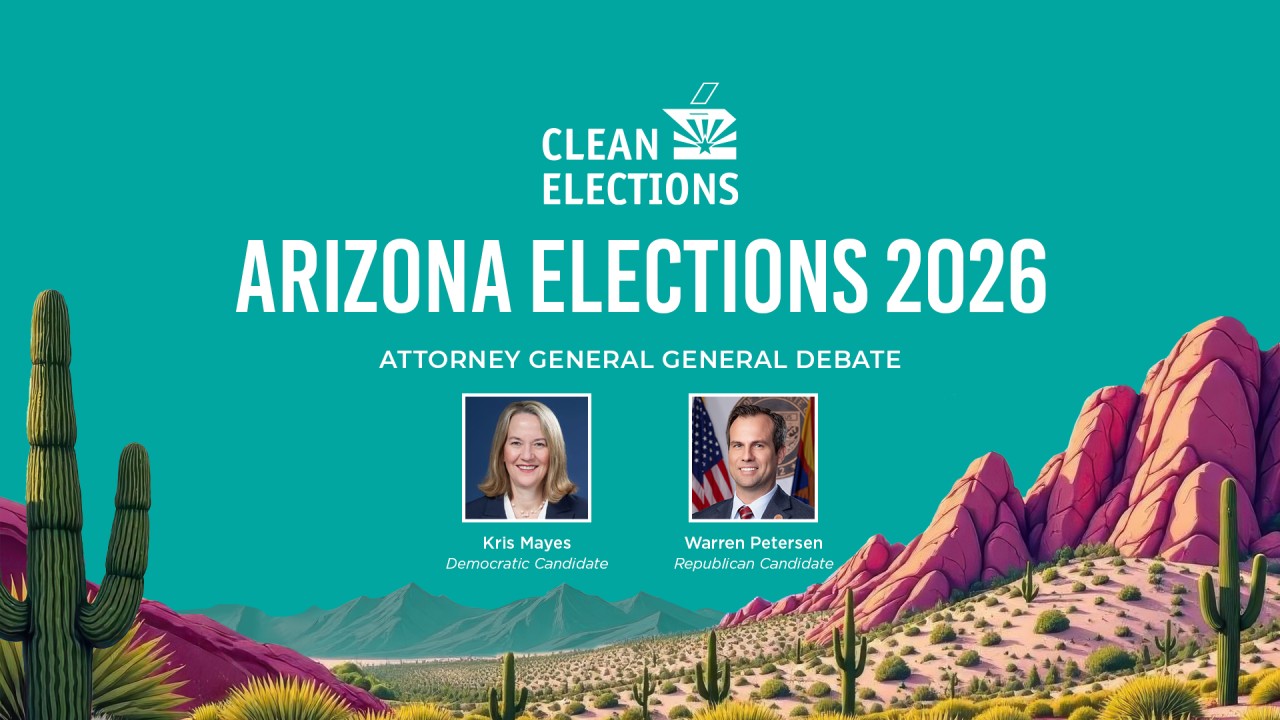
Arizona attorney general candidates Kris Mayes and Warren Petersen confronted voters’ concerns over federal lawsuits, border enforcement, data-centre expansion and rising utility bills during a televised debate in Phoenix.
The contest pitted Democratic incumbent Mayes against Petersen, the Republican president of the Arizona Senate, ahead of the general election on November 3. Both candidates have made public safety and consumer protection central to their campaigns, but they offered sharply different approaches to the powers of the state’s top legal office.
One of the clearest divisions centred on Mayes’s legal battles with the Trump administration. Her office says Arizona has joined or led dozens of federal actions challenging policies on tariffs, voting, healthcare, immigration, public funding and other issues.
Petersen has criticised that strategy and said he would abandon the lawsuits against the White House on his first day in office. He has argued that the attorney general should concentrate more heavily on crime, border security and the day-to-day concerns of Arizona residents.
Mayes has defended the litigation as part of the attorney general’s responsibility to protect state authority and Arizona consumers. Her office’s current list of federal cases includes a challenge to a proposed Immigration and Customs Enforcement detention facility in Surprise, as well as legal action over federal policies affecting healthcare and public programmes.
Border enforcement and local policing
Immigration enforcement was another major fault line. Petersen has backed closer co-operation between local law enforcement and federal immigration authorities, including agreements under the federal 287(g) programme, and has supported Arizona legislation intended to expand the state’s role in border enforcement.
Mayes has taken a different emphasis, arguing that state resources should be directed towards drug cartels, fentanyl trafficking and organised crime rather than placing local officers in charge of immigration work. Her office has also issued legal opinions finding that policies adopted by Phoenix and Pima County did not unlawfully restrict federal immigration enforcement.
The disagreement reflects a broader argument over whether the attorney general’s office should act primarily as an extension of federal immigration policy or focus on prosecutions and enforcement led by the state.
Data centres and their effect on Arizona’s water supplies and power network also featured prominently. Mayes called in August for a moratorium on new data-centre projects, citing concerns over water consumption, electricity demand and the possibility that households could be left paying for infrastructure built to serve large technology companies.
Her office is challenging the Arizona Corporation Commission’s approval of a private energy agreement linked to Tucson Electric Power’s Project Blue, a planned hyperscale data-centre complex. The attorney general says the arrangement could allow the utility and the developer to set electricity rates without adequate public oversight.
According to the attorney general’s office, the project could require 286 megawatts of power by 2028, roughly equivalent to the electricity needed to cool 57,000 homes. Mayes has called for a full evidentiary hearing into the agreement.
Petersen has not supported an outright statewide pause on data-centre development. Republicans and business groups have argued that the projects could bring investment, jobs and technological capacity, provided they are subject to appropriate safeguards.
Utility bills provided another point of contention, with Mayes opposing proposed rate increases from major power companies and warning that the costs of expanding generation and transmission should not be shifted to residential customers. The debate comes as Arizona regulators face growing pressure over how electricity demand from data centres will be allocated between businesses and households.
The race is expected to be closely fought. Mayes won her first term in 2022 by 280 votes after a recount, while Petersen secured the Republican nomination in July by defeating Rodney Glassman.
Recent polling has shown Mayes with a narrow lead, although a significant share of voters remain undecided. The debate gave both candidates an opportunity to define the attorney general’s role as more than a criminal prosecutor: as an official who can challenge federal policy, regulate powerful interests and influence the cost of living across Arizona.
