


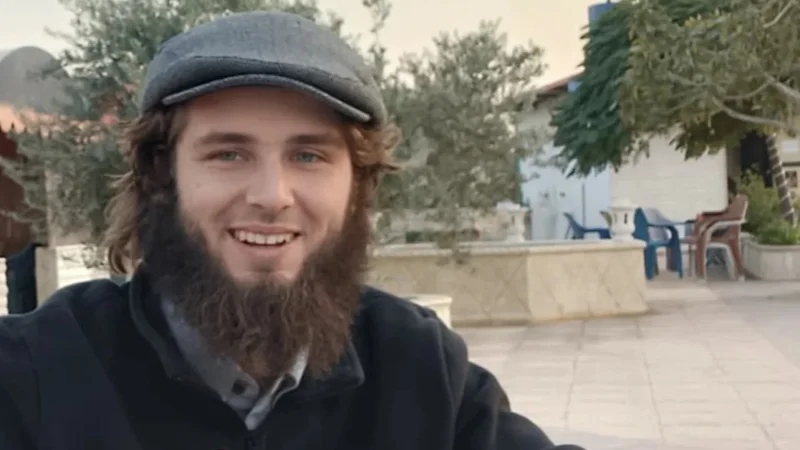
An Australian man facing the death penalty in Syria will undergo a medical assessment for possible mental impairment after his mother and a human rights lawyer travelled to the region to support him.
Patrick Stevenson, 20, a Muslim convert from the Gold Coast, is accused of murdering another Australian convert, Abdullah Glen Burgess, in Idlib province late last year. Prosecutors allege he shot Burgess eight times with an AK-47 inside the dead man’s apartment.
Stevenson’s mother, Angela Bell, and lawyer Bernadette Zaydan went to Syria after Burgess’s widow declined to accept diya, or blood money, instead of a death sentence under Islamic law.
The widow, who is also Australian, has not been named because she claims identifying her would put her at risk. She is a witness in the case and, according to Bell, told the court that financial compensation would not bring her husband back.
Bell and Ms Zaydan dispute that Stevenson was guilty of premeditated murder. They say he has ADHD, serious learning disabilities and probably autism, and that his condition has been worsened by a recent head injury and months in a prison where nobody speaks English.
Australian man in Syria to undergo mental assessment
After a hearing on Wednesday night Australian time, Ms Zaydan said she and a Syrian lawyer appointed by the Australian Government had made a plea of mental impairment, which the court accepted. The court ordered that Stevenson be medically assessed.
“His legal team was granted permission to be present at the assessment. Patrick was present, but he didn’t understand what was going on,” Ms Zaydan said.
Bell said she had visited her son three times since arriving in Syria. “He is confused. He tells me he does not know why he is here. He has significant problems with his memory… He struggles to concentrate… His thinking appears slowed,” she said.
“There are long pauses. He struggles to process what we are saying to him and has difficulty expressing himself. And he is simply not the same child I knew before this.”
Bell said Stevenson had a large wound to the back of his head and remembered waking confused in police custody while the injury was being stitched.
She and Ms Zaydan also challenged the prosecution’s claim that Stevenson confessed, arguing that he speaks no Arabic. Bell said he had previously worked as a mobile phone technician.
The court hearing the case is a religious court established by the local Islamist administration in Idlib province and is understood to focus predominantly on punishing foreign fighters. The province is controlled by Hay’at Tahrir al-Sham, an organisation the Australian Government considers to be terrorist.
Bell said Burgess’s widow told the court through an interpreter that the dispute which preceded the killing concerned a debt of about 10 dollars. She said the widow told Stevenson he could have the money back, but that he did not respond.
An application for Stevenson’s electronic devices to be returned was rejected without reasons, according to Ms Zaydan. The lawyer and Bell negotiated permission for his mother to visit him daily in prison.
“I won’t leave. I won’t leave him here. It’s not right. Who else is going to visit him in jail and speak English?” Bell said.
“He’s not a foreign fighter,” she said. “I do truly believe Patrick decided to come here on his own silly self, on a big lark.”
