


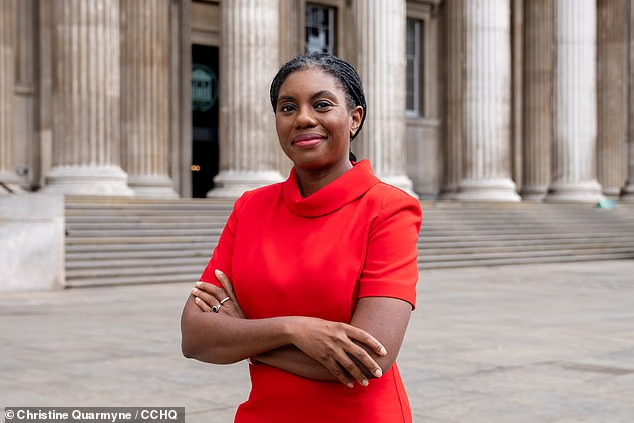
Kemi Badenoch has confirmed that the Conservatives are examining ways to abolish inheritance tax, saying the party wants to ease the burden on families who have spent their lives working, saving and building businesses or homes.
The Conservative leader said she had asked her team to find “fiscally responsible ways” to tackle the levy, which she described as a burden on estates. She indicated that no announcement would be made until a clear plan had been developed.
There is growing speculation that the policy could be unveiled at the Conservative Party conference in Birmingham next month.
Mrs Badenoch said inheritance tax mainly affected middle-class homeowners, savers and small-business owners as a result of rising house prices and accumulated assets.
“The super-wealthy can afford trusts and sophisticated tax planning or move abroad,” she said, arguing that ordinary families were more likely to be affected by the tax.
Her comments came after Reform UK’s Robert Jenrick said it would be “morally wrong” to prioritise abolishing inheritance tax over removing income tax for low earners.
Mrs Badenoch responded: “I think it is morally wrong to punish people for doing the right thing – spending a lifetime working, saving, building up a business or a home to pass on to the next generation.”
She acknowledged that Conservative supporters would sometimes include wealthy people, but said the party also represented millions who had “paid their dues” and wanted what they had built to benefit their children or communities.
“We are on their side,” she said. “But we won’t make any announcement till there’s a clear plan.”
Andrew Griffith, the new shadow chancellor, has said inheritance tax would be his first choice for abolition if he could remove one levy. The proposal would follow Mrs Badenoch’s pledge to abolish stamp duty if she became prime minister.
Mr Jenrick, a former Conservative leadership rival, said inheritance tax was a bad tax but questioned whether its abolition should take priority given the state of the public finances.
“You are choosing to help the wealthiest 5 per cent, while we want to raise the tax-free personal allowance to £15,000 to benefit 97 per cent of workers instead,” he said.
Mrs Badenoch also criticised Reform donors including Christopher Harborne, one of two cryptocurrency tycoons whose donations of £72 million have prompted a row over political funding.
She claimed such donors did not need to worry about ordinary inheritance tax planning because they kept money in cryptocurrency or outside the country.
