


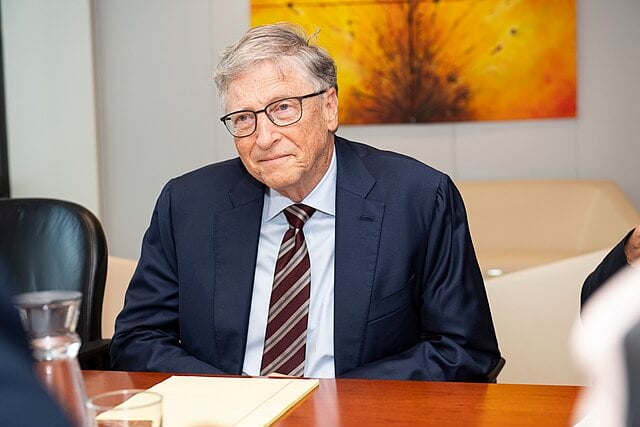
The Microsoft co-founder has agreed to appear before the House Oversight Committee next month, joining a widening list of prominent figures being drawn into the legislative inquiry into the late financier’s activities.
What the June Hearing Will and Will Not Address
Bill Gates is scheduled to appear before the House Oversight Committee on 10 June, lawmakers have confirmed, to answer questions about his interactions with Jeffrey Epstein. A spokesperson for the billionaire told the BBC that Gates was “looking forward to answering all the committee’s questions to support their important work.”
A critical caveat sits at the centre of the story. Gates has not been accused of misconduct by any of Epstein’s victims, and the inclusion of his name in investigative files carries no implication of criminal activity. The committee’s interest is informational rather than accusatory: it is seeking to understand the networks and relationships that surrounded Epstein, the breadth of his access to powerful figures, and the circumstances under which those relationships developed.
The letter formally requesting Gates’ testimony was issued on 3 March, forming part of a broader pattern of high-profile appearances before the committee. Former President Bill Clinton and former Secretary of State Hillary Clinton testified in February. Commerce Secretary Howard Lutnick and former Attorney General Pam Bondi are both expected to appear in the coming weeks.
Why These Documents Are Now in the Public Domain
The sequence of events that has led to Gates’ congressional appearance began with legislation signed by Donald Trump in November last year. That law, passed by Congress, required the Department of Justice to release all material from its investigations into Epstein — a mandate that has already resulted in the publication of more than three million documents earlier this year, though millions more remain undisclosed.
It was through this disclosure process that details of Gates’ communications and relationship with Epstein became public. The documents themselves do not allege wrongdoing on Gates’ part, but their appearance in the public record has intensified questions about the nature and extent of his contact with a man later convicted of serious sex offences.
The transparency legislation has fundamentally altered the landscape surrounding the Epstein investigation. For years, the limited availability of official records left much of the story to speculation and selective leaking. The mass release of justice department material has provided investigators, journalists and legislators with a far richer evidentiary base — and, in the process, drawn a wider circle of figures into public scrutiny than many had anticipated.
The Philanthropist’s Own Account
Gates has addressed his links to Epstein on multiple occasions, offering a narrative that combines acknowledgement of poor judgement with a firm denial of any improper conduct. In an interview earlier this year with 9News in Australia, he said his interactions with Epstein had been limited to dinners and that he had never visited the late financier’s island. “Every minute I spent with him I regret and I apologise that I did that,” he told the broadcaster.
A more candid account reportedly emerged during a meeting with staff at his charitable foundation, where, according to the Wall Street Journal, Gates apologised and said he had conducted two affairs with Russian women — information that Epstein subsequently came to know about. In relation to Epstein himself, Gates was reported as saying: “I did nothing illicit. I saw nothing illicit.”
The Gates Foundation confirmed in a statement that Gates had spoken candidly during the staff meeting, addressing several questions in detail and taking responsibility for his actions. A spokesperson for Gates reinforced that position in a separate statement to the BBC, saying that while meeting Epstein had been a serious error in judgement, Gates unequivocally denied any improper conduct related to Epstein or the activities for which the financier became notorious. The same statement confirmed that Gates had never attended parties hosted by Epstein and had no involvement in any illegal activity connected to him.
A Pattern of Scrutiny Drawing in the Powerful
The congressional inquiry is producing something rare in American political life: a sustained, bipartisan effort to map the networks of influence that surrounded a convicted sex offender who moved comfortably among presidents, royalty, academics and business leaders for decades. The committee’s decision to call figures as varied as the Clintons, a sitting cabinet secretary, a former attorney general and one of the world’s best-known philanthropists reflects both the breadth of Epstein’s social reach and a growing political appetite for accountability that crosses party lines.
Gates occupies an unusual position in this cast. Unlike political figures whose appearances carry obvious electoral implications, his relevance is rooted in the intersection between global philanthropy, private wealth and the opaque personal arrangements of the ultra-rich. The questions he is likely to face in June will almost certainly extend beyond the specific details of his meetings with Epstein to the broader matter of how such a figure came to enjoy the access he did — and what, if anything, those around him understood about the conduct that would eventually bring him down.
For Gates, the hearing represents both a risk and, in his own framing, an opportunity to place his version of events on the congressional record. For the committee, it is another step in an investigation that continues to pull at the threads of a story many powerful people had hoped was concluded with Epstein’s death in 2019. It is becoming increasingly clear that it was not.
