


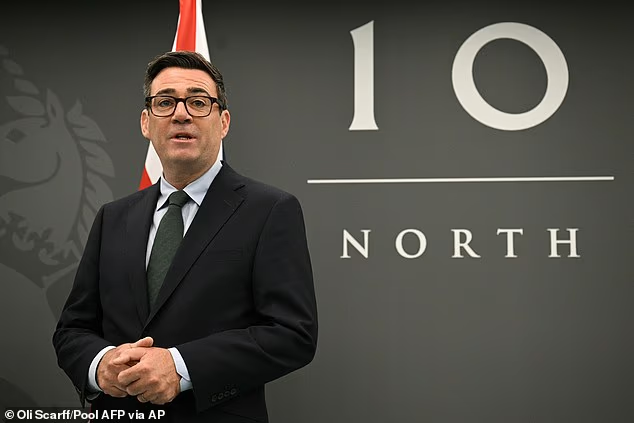
Andy Burnham is preparing for his first face-to-face meeting with Donald Trump in New York, where the pair are due to hold talks during the United Nations General Assembly.
The meeting will take place against a backdrop of disagreements between Britain and the US over the war in Iran, the Falkland Islands, Irish unification and the regulation of artificial intelligence.
Mr Trump is also expected to use his address to world leaders to criticise allies he believes have failed to support the conflict with Iran and efforts to reopen the Strait of Hormuz.
Downing Street is understood to be seeking a relatively brief encounter, reducing the risk of an awkward exchange. As the talks are not due to take place in the Oval Office, Mr Burnham is also unlikely to face one of the US president’s impromptu press conferences.
Justice minister Alex Davies-Jones told reporters that the two men would “get on famously”, despite remarks Mr Burnham has previously made about Mr Trump.
The president has a series of prominent meetings scheduled in New York, including talks with Chinese leader Xi Jinping and Ukrainian president Volodymyr Zelensky.
Relations between Mr Trump and Keir Starmer were initially viewed as successful, but later deteriorated after the British leader declined to take part in offensive strikes against Iran. Last week, Mr Trump described Mr Starmer as “a very nice guy” but “on the liberal side”.
Mr Trump has also appeared to support a possible merger between Northern Ireland and the Republic of Ireland, a position rejected by the UK Government. In recent weeks, he has hinted that the US might not back Britain if Argentina again sought to claim the Falkland Islands.
He linked the issue to the UK’s reluctance to join the US and Israel in military action against Iran, a conflict that has disrupted global energy supplies.
US officials are also reported to have privately raised concerns about Britain’s online safety legislation and the possibility of banning under-16s from social media. The two countries have taken different positions on the development of artificial intelligence, with Mr Trump rejecting the need for “guardrails” beyond having a president with “a very high IQ”.
Mr Burnham previously said he would not give Mr Trump “the time of day” and suggested he might refuse a meeting. But last month he said politicians could move beyond remarks made in public.
“Everyone says things as politicians. In the moment you meet people where they’re at, and you find a connection with people, and that’s always been my style,” he said.
“I’ve had a habit of saying what I feel over the years and I’ll continue to do that.
“But, at the same time, I am somebody who works with people, tries to find common ground, and obviously that’s what I should be doing in this job in the British public’s interest, and I will always take that approach.
“So, I’m looking forward actually to my first meeting. We had a good phone call on my first day in office and looking forward to meeting in person.”
