


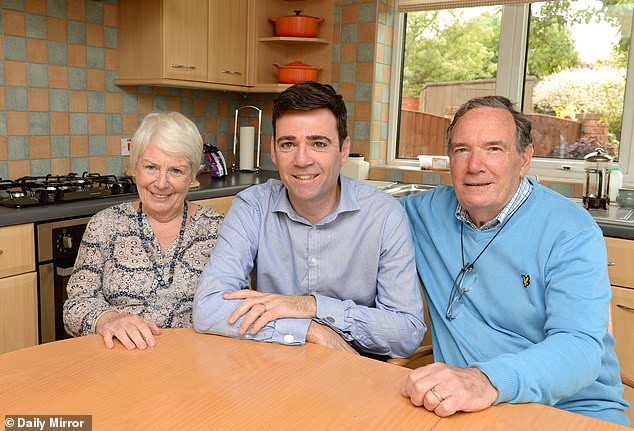
Andy Burnham has described how his mother was left “sinking” under the strain of caring for his father, as he backed the Dementia Carers Together appeal for greater support for unpaid carers.
Mr Burnham said his family had focused so heavily on his father Roy’s Alzheimer’s that they failed to recognise the toll his condition was taking on his mother, Eileen. He said they may also have waited too long before moving him into a care home.
“From what I experienced, the emotional toll is a burden that is unbearable,” he said. “The weight is unbearable – it gets too big.
“I saw it directly – I saw my mum sinking under the size of that weight.”
Roy Burnham died from Alzheimer’s in September, aged 85. The Prime Minister has previously said that his father was unaware his middle son had become Prime Minister.
Mr Burnham said he and his brothers had been so concerned with the needs of the person living with dementia that they overlooked the impact on the wider family.
“There was a tendency to focus on the person with dementia and miss some of what was going on around, and particularly the impact of carrying that daily burden on my mum,” he said.
Support for dementia carers
The Dementia Carers Together appeal is raising funds for a nationwide network of six-week courses for relatives and friends caring for people with dementia.
Run in partnership with Alzheimer’s Society, the sessions will provide practical information, advice on carers’ rights and details of available services. They will also give attendees the opportunity to meet others facing similar circumstances.
Mr Burnham said his family could have benefited from such support rather than struggling on with little practical help. He said the courses could help address the loneliness, exhaustion and overwhelming responsibilities that often follow a dementia diagnosis.
There are currently 2.5 million people in the UK providing some form of care for someone with dementia, while four in five have reached crisis point at least once.
Mr Burnham said his family had tried to keep his father out of a care home for as long as possible, but had not properly considered the effect this was having on his mother, a former GP’s receptionist.
“We had basically worked on the principle for many years that we wouldn’t want to see my dad going into care – that we would find a way of keeping him at home,” he said.
“Because perhaps we were looking at my dad all the time, not necessarily looking at my mum, I think it took possibly too long to make that decision.”
The family eventually changed course after noticing that Eileen had become weary and exhausted, and was not getting enough sleep. Mr Burnham said the care home had provided good care and that moving his father there had been the right decision, although “it was a tough journey”.
He also criticised the limitations of short home-care visits, saying 15-minute calls could quickly become inadequate for people with dementia and their families. Visits to his father had been “quite chaotic at times”, he said, with carers sometimes struggling to move him from his bed to an armchair within the allocated time.
Mr Burnham said his plans for a National Care Service would offer better support to unpaid carers and help prevent them from becoming overwhelmed.
Reflecting on his family’s experience, he said that practical help after his father’s diagnosis had largely amounted to paperwork and pamphlets.
“It would have helped to have had some more practical advice as to how things will progress and what you need to be ready for,” he said. “From experience, just a little bit of help can make something feel bearable or doable that without it, would all of a sudden just overwhelm somebody.”
Michelle Dyson, chief executive of Alzheimer’s Society, said no one caring for a person with dementia should be left without the support they needed.
She said the Dementia Carers Together courses would offer vital advice, support and the chance for carers to connect with others who understood their situation.
Number 10 said the Government had ended the Carer’s Allowance cliff edge, meaning unpaid carers no longer lose their entire allowance for earning a penny over the weekly limit. It also said it was delivering commitments in its unpaid carers action plan to make services and support easier to access.
