


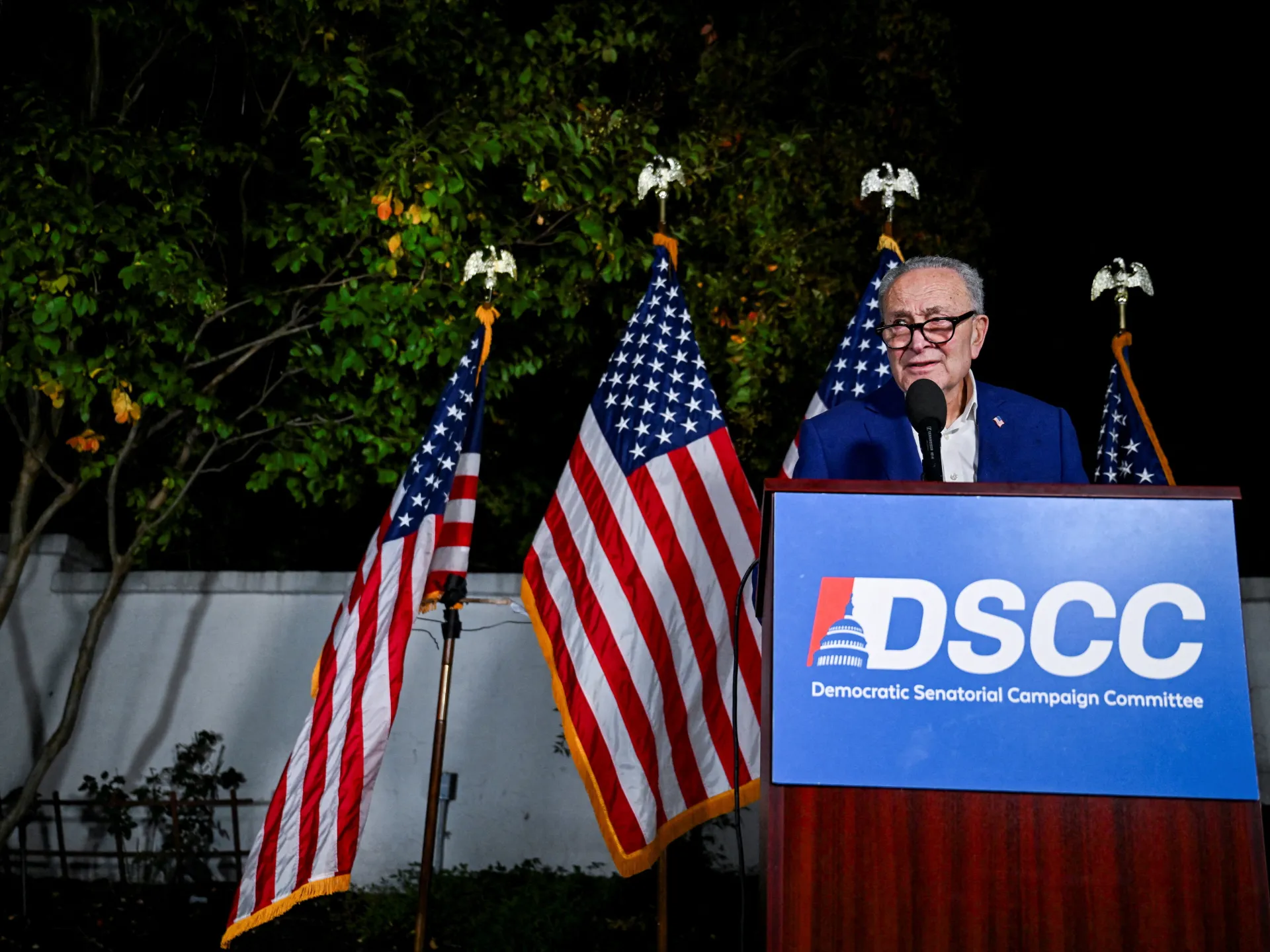
The 2026 US midterm elections have been portrayed as a major rejection of Donald Trump, but the Democrats’ gains may also signal the beginning of a broader shift within the party towards economic populism and working-class issues.
The result does not amount to a guarantee of lasting support. The argument is that voters have given the Democrats another opportunity to prove they can improve people’s lives — and that failing to do so could trigger the same anti-incumbent anger at the next election.
The Democrats’ economic populist shift
A notable feature of the campaign was the rise of Democratic candidates who directly challenged powerful corporations and presented themselves as advocates for working people.
That included calls for universal healthcare, more affordable housing and childcare, greater regulation of artificial intelligence and higher taxes on the wealthy. Messages centred on affordability and economic insecurity became increasingly common among Democratic candidates and officeholders.
The change was supported by a network of progressive organisations, including Justice Democrats, the Working Families Party, Democratic Socialists of America and the Sunrise Movement. Local and state groups also worked to recruit and support candidates seen as champions of working-class voters.
Over the past decade, that organising has weakened the Democratic establishment’s near-monopoly over candidate recruitment. The 2026 midterms demonstrated a greater capacity to put forward candidates with an explicitly working-class agenda for congressional elections.
The development followed a much longer period in which conservative anti-establishment politics had built an electoral infrastructure within the Republican Party. After the 2008 financial crisis, the Tea Party channelled anti-establishment sentiment into Republican primary contests, with activists eventually helping to unseat House Speaker Eric Cantor in 2014.
On the left, Occupy Wall Street helped popularise the idea of a conflict between the 99 per cent and the richest one per cent. But the movement was reluctant to operate within electoral politics, and it was not until Bernie Sanders’s 2016 presidential campaign and the 2018 election of Alexandria Ocasio-Cortez and other progressive Democrats that the left began to develop a comparable electoral presence.
Trump’s impact on Democratic strategy
The argument that the party has changed more decisively in 2026 rests partly on the political consequences of Mr Trump winning a second term. His victory damaged Democratic voters’ confidence in the party’s leadership and its electoral strategy.
The party’s warnings that Mr Sanders was too far to the left, and its emphasis on winning affluent suburban swing voters, came under renewed scrutiny after the Democrats lost further working-class support in 2024. The decline was also said to have spread among Black and Latino voters.
That experience helped create an opening for candidates offering a more direct economic message. Rather than relying primarily on the strategies favoured by party leaders, they focused on the cost of living, corporate power and the difficulties facing working families.
A further boost came in 2025, when Zohran Mamdani won the Democratic nomination for mayor of New York City and then won the election. His campaign was built around the issue of affordability, while Mr Sanders and Ms Ocasio-Cortez travelled across the country on their “Fighting Oligarchy” tour.
Together, those developments helped make economic populism appear to many Democrats to be the party’s most credible electoral offering ahead of the midterms. Party leaders, including Senate Democratic leader Chuck Schumer and House minority leader Hakeem Jeffries, did not derail the emerging message, despite remaining unpopular.
The result was a more coherent campaign narrative among rank-and-file Democrats and a newer generation of candidates. The analysis argues that the change was not simply a response to Mr Trump’s shortcomings, but also evidence of the party beginning to rebuild itself around working-class concerns.
A chance to deliver
The explanation for the Democrats’ previous difficulties remains contested. One view is that the party has been constrained by its reliance on wealthy donors and corporate interests. Another is that political operatives have been shaped by an elite culture that distorted their understanding of how to win elections.
Either way, it took a decade after Mr Trump’s first presidential victory for economic populism to move from the margins towards the centre of Democratic politics. The argument presented by the election is that Mr Sanders was not out of step with the country when he ran for president, but with a party establishment that failed to recognise the direction of public opinion.
The 2026 midterm results therefore offer the Democrats both an opportunity and a warning. Voters may have rejected Mr Trump’s record without developing a permanent allegiance to the opposition party.
To retain that support, Democrats will need to turn their promises on affordability, healthcare, housing, childcare and corporate accountability into tangible improvements. The party has been given another chance; whether it can use it will depend on what it delivers next.
