


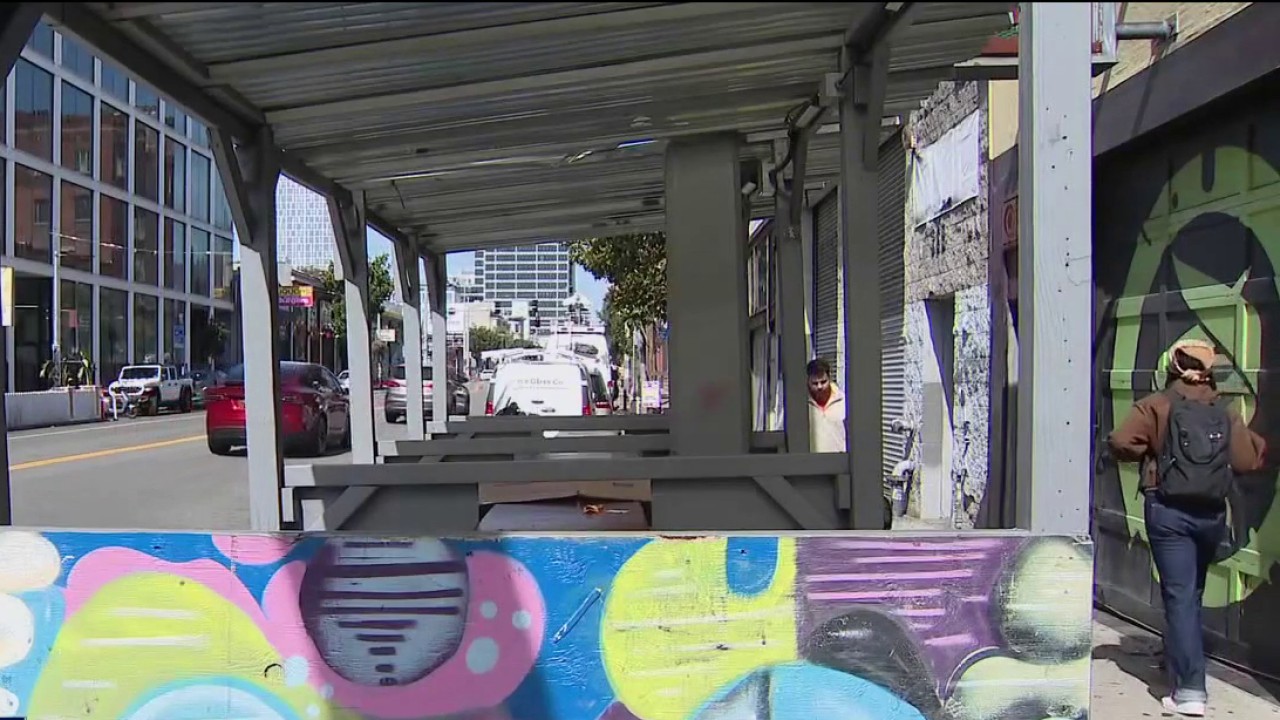
San Francisco’s DNA Lounge faces a daily fine unless it removes a long-standing parklet outside its SoMa premises, in a dispute with the city’s transport authorities over bus access and accessibility.
The nightclub’s owner, Jamie Zawinski, says the structure has been in place for about 15 years and is an important part of the business. The San Francisco Municipal Transportation Agency (SFMTA), however, says the parklet is not fully permitted and the space is needed for a bus loading area.
A notice posted at the site gives the business two weeks to dismantle the parklet, after which fines of $500 a day are expected to begin, according to the owner.
The structure stands outside DNA Lounge and DNA Pizza on 11th Street. Zawinski says the parklet was originally installed in 2011 before being rebuilt and reduced in size in 2017 following changes to the surrounding street layout.
He claims the earlier plans and discussions referred to a bus stop able to accommodate 40ft vehicles. The authorities are now requiring space for 60ft buses, he says, leaving the parklet obstructing the proposed loading zone.
The owner says the loading area would run through the existing structure and in front of DNA Pizza’s entrance. He has suggested moving or redesigning the parklet, but claims the city has insisted that it must be removed.
DNA Lounge parklet dispute
Zawinski says the parklet cost more than $15,000 to build and reconfigure, with financial support from the local community. He argues that it is heavily used by customers and helps keep activity off the pavement.
The nightclub has also contacted San Francisco mayor Daniel Lurie’s administration and local representatives in an effort to halt the enforcement action, according to the owner. He says the business is seeking negotiations over whether the parklet can be retained in a modified form.
The SFMTA’s position is that the site must provide sufficient room for bus loading and accessible movement. The agency’s demand has put one of San Francisco’s best-known independent nightlife venues at odds with the city’s efforts to preserve clear and usable space for public transport.
