


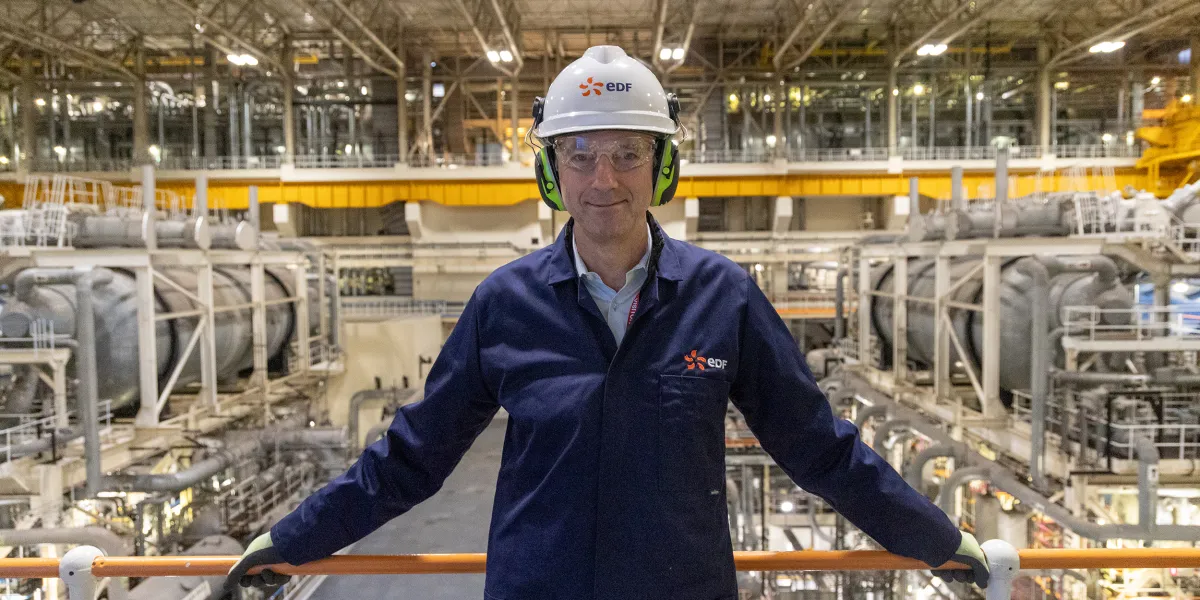
Britain’s energy costs have created a “competitiveness deficit” that the Government can no longer tolerate, Sir Alex Chisholm, the UK chair of EDF, has warned.
Chisholm said industrial electricity users in the UK were paying almost one and a half times more than businesses elsewhere in Europe, as companies and ministers face mounting pressure to reduce energy bills.
“The UK has a competitiveness deficit now in its energy costs—that is a real call to action,” he said. “We’re now nearly one and a half times more expensive [than the rest of Europe] for industrial users of electricity, and that is not a position we can continue to tolerate.”
Business gas and electricity costs have risen by 25% since February, according to Cornwall Insight, with the increase largely attributed to conflict in the Middle East. The Confederation of British Industry has warned that persistently high prices risk “putting the brakes on the country’s growth ambitions”.
Chisholm said reducing energy costs for businesses and households should be a priority for the Government. EDF was among 120 organisations calling for so-called hidden taxes, including levies supporting renewable energy projects, to be removed from bills.
Nuclear power seen as part of the answer
He also argued that nuclear power would be important to the UK’s energy security, supply and efforts to reduce reliance on fossil fuels.
EDF is involved in two new nuclear projects in Britain. Hinkley Point C, which is majority owned by the French state-owned energy company, is expected to generate enough electricity for six million homes when it comes online in 2031. EDF owns a 12.5% stake in Sizewell C, which is due to become operational in the mid to late 2030s.
The projects will be the first new nuclear power stations built in the UK since the 1990s, but both have faced delays. Hinkley Point C was initially scheduled to open in 2025, with an estimated cost of £18 billion, but that figure has since doubled. Sizewell C has also faced setbacks after delays to two access roads.
Chisholm said the difficulties reflected wider problems affecting major infrastructure projects in Britain, including what he described as a heavy regulatory burden.
Hinkley Point C required a 55,000-page development consent order to secure planning approval. Natural England also advised EDF to install an underwater acoustic deterrent, known as a “fish disco”, to stop marine life entering the cooling pipes used by the plant’s turbines.
“We spent almost a billion pounds on changes to the plant, which relate to reducing the impact on fish,” Chisholm said. “We all love fish but you could have achieved a lot more for fish numbers and welfare at a much lower cost than that.”
He said he respected environmental standards and nuclear safety but questioned whether the regulatory process had become disproportionate.
“The question is, how much is enough?” he said, arguing that the system could lead to rules being developed that “make no sense”.
The Fingleton Review of nuclear regulation, led by John Fingleton, recommended a more balanced approach to environmental protection and was adopted in full earlier this year. Fingleton said Hinkley Point C had “more fish protection measures than any other power station in the world”.
The proposed reforms are intended to accelerate planning for new nuclear projects by changing environmental impact assessments. Wildlife charities and environmental groups have criticised the approach, saying it creates a false choice between protecting nature and development.
Chisholm said a more efficient planning system could benefit the wider economy as well as the energy sector. “If it was easier to get things built in this country, if it was easier to get things done, then we would all be better off,” he said. “It would make Britain the best country in the world to do business.”
Chisholm, who stepped down as permanent secretary at the Cabinet Office in 2024, said his work at EDF had given him a closer view of the infrastructure needed to power the country. He also serves as a non-executive director at BT and as a senior adviser to Boston Consulting Group.
“It’s good for people like me who spent probably a bit too much time hanging around Whitehall offices to get out to sites where the real work is done by people to power the nation,” he said.
