


Fashion stylist Jessica Carroll has set out where shoppers should spend more on their wardrobe and where a cheaper alternative can do the job just as well.
Her advice is based on durability, fabric and cost per wear rather than the size of a price tag. Timeless designs and hard-working essentials are worth considering carefully, while items prone to damage or loss may not justify a designer price.
Fashion expert’s guide to investment pieces
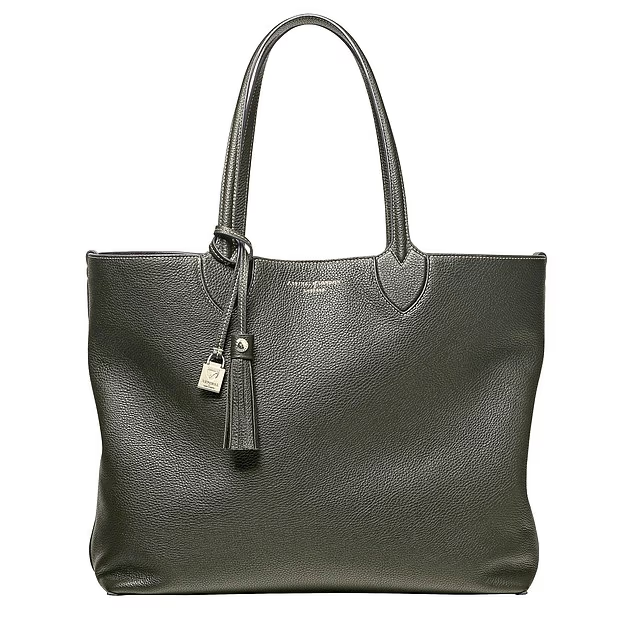
A well-made leather handbag is one area where spending more can pay off. Carroll points to a timeless tote, such as an Aspinal design, as the kind of piece that can last for years when made by skilled craftspeople.
Plastic bags can become tatty, she says, whereas real leather develops character as it is used. Although a bag costing around £600 is a significant purchase, its longevity can make it a worthwhile investment.
White T-shirts also deserve more attention than their basic reputation suggests. A substantial cotton style with a boxy shape can lift an outfit, with Cos’s version recommended by YOU fashion director Sophie Dearden-Howell.
For outerwear, a wool coat is another item where quality is noticeable. Wool is warmer and more breathable than polyester and gives a coat a more structured finish, while the difference in price and construction can be apparent in a garment worn regularly.
Shapewear is another suggested splurge, with the original Skims designs favoured for their ability to improve the fit of an outfit. A versatile dress is also considered a sound investment, as the right style can be dressed up or down for different occasions.
Carroll also recommends putting money into gymwear that fits well. Comfortable, well-fitting kit can make a difference to confidence when exercising, unlike sagging tracksuit bottoms.
Neutral ankle boots with a comfortable kitten heel are described as a lasting wardrobe staple. Their understated shape means a quality pair can remain useful across seasons.
Where shoppers can save
Trainers are among the items where a lower price may be sensible. They endure heavy use and, unlike some other footwear, generally cannot be resoled, so affordable versions inspired by Miu Miu designs are presented as a practical alternative.
Sunglasses are another category where designer labels may not be necessary. Since they can be scratched, broken or lost easily, on-trend pairs costing less than £60, provided they offer UV protection, can represent better value.
Denim can also look more expensive than it is. Carroll advises choosing jeans with a high cotton content and a dark wash to create a more polished appearance without paying designer prices.
A leather belt is similarly identified as an area for a modest purchase. A well-chosen style can sharpen an outfit, with a less expensive design offering the look of the viral Déhanche belt.
There is little reason to pay hundreds for designer loafers when a well-priced pair made from 100 per cent leather can offer comparable longevity. The recommended M&S pair is cited as an example.
Cashmere, meanwhile, is not automatically a guarantee of better wear. Even a knit costing £800 can develop bobbles and be vulnerable to moths, making a popular high-street alternative a more economical choice.
Jewellery made with PVD plating is suggested as a substitute for gold, whose price is described as being beyond many budgets at more than £3,000 an ounce. The coating does not tarnish and can provide a similarly expensive-looking finish.
Finally, a wax-look jacket inspired by Barbour can be found for less than £50. Unlike the original style, the cheaper option is washable, which can help it retain its appearance over time.
Carroll’s selections suggest that the best value lies in judging how an item will be used, how long it is likely to last and whether its materials justify the cost, rather than assuming that the most expensive option is always the best.
