


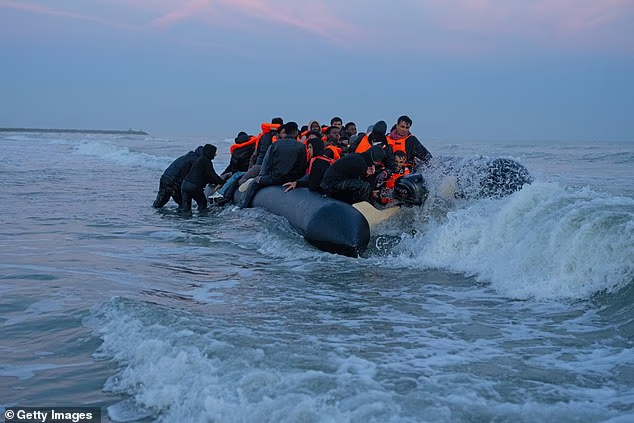
French police have been told not to damage migrant boats in shallow waters as they attempt to cross the Channel to the UK, France’s interior minister has said.
Laurent Nunez said officers must instead intercept the dinghies on land or intervene at sea only when a vessel is at risk of capsizing and lives need to be saved.
Giving evidence to a parliamentary commission examining UK-French migration treaties, Mr Nunez was questioned about footage which appeared to show French police wading into the water and slashing a small boat.
He said damaging the dinghies was “unacceptable”, adding: “Regarding the actions you mention, which allegedly involve damaging boats to prevent them from setting sail again, I repeat that our priority is saving human lives.”
Mr Nunez said the French authorities’ priority was to prevent migrants from entering the water, while interventions at sea operated under a separate set of rules.
“The doctrine for intervention at sea is a different matter; it is an operation carried out under the authority of the maritime prefect under extremely strictly defined conditions,” he said.
He outlined two situations in which French police could stop small boats. Officers may intercept them on land, while an elite, specially trained unit can intervene at sea when it is considered absolutely necessary to protect lives.
The minister said the unit had stopped ten dinghies since being established a few months ago. He stressed that sea interventions would take place only when needed to prevent people from drowning or being put at serious risk.
His comments came after 1,129 asylum seekers crossed the Channel over four days. On Wednesday, 781 migrants arrived in the UK, the highest daily total recorded so far in 2026.
Despite the recent arrivals, the number of Channel crossings this year is down by more than 40 per cent compared with last year.
A total of 18,579 migrants have travelled to Britain across the Channel so far this year.
