


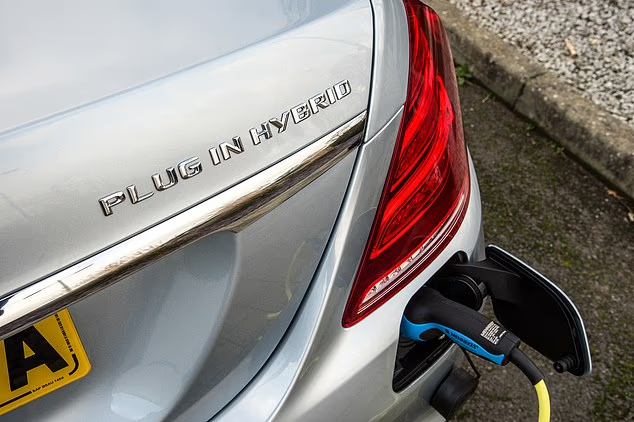
UK EV sales targets are expected to be cut significantly this week, under plans that would allow carmakers to sell more hybrid vehicles before 2030.
The proposed change follows intense lobbying from manufacturers and the wider motor industry, which have warned that meeting the existing requirements is becoming increasingly costly. Downing Street has stressed that no final decision has been made.
Under the current Zero Emission Vehicle (ZEV) mandate, manufacturers must ensure that an increasing proportion of the new cars they sell are fully electric. The requirement is due to rise from 33 per cent this year to 80 per cent by 2030.
The Government is expected to lower the 2030 threshold, with reports suggesting it could fall to 55 per cent. That would give manufacturers greater scope to sell conventional hybrids and plug-in hybrids alongside fully electric cars.
The existing timetable requires all new car sales to be zero-emission by 2035. Labour has already relaxed the rules to allow hybrids to remain in showrooms until that date, after previously presenting 2030 as the deadline for ending sales of new cars relying solely on petrol and diesel engines.
Louise Haigh is expected to make an announcement following a Cabinet meeting on Wednesday. However, the Government said the consultation on the ZEV mandate had only recently closed and that ministers were still considering the responses.
A Government spokesman said: “The Government is united in its commitment to the ZEV Mandate, and no decisions have been taken.
“We are committed to the phase out of all new cars relying solely on petrol and diesel engines by 2030, and to 100 per cent of new car and van sales being zero emission by 2035, and our legally binding net zero targets.
“Our consultation on the Mandate will not change this, and will ensure we are taking a pragmatic and balanced approach to the ZEV transition.”
What a change to EV sales targets could mean for drivers
A lower target would allow manufacturers to keep a broader selection of hybrid models in production for longer. Drivers unwilling or unable to switch immediately to a fully electric car could have more choice across different vehicle types and price ranges.
Chinese manufacturers including Chery are already offering plug-in hybrids with electric-only ranges of up to 93 miles and a combined range of 745 miles. European brands are also producing models such as the Audi A3 TFSI e, which has an electric range of 88 miles.
The European Union’s decision to support proposals allowing more combustion-engined cars to be sold after 2035 could also encourage manufacturers to continue producing hybrid vehicles in greater numbers.
However, relaxing the mandate could affect the price of fully electric cars. Carmakers have been using discounts and incentives to meet the targets, with average support estimated at about £11,000 per vehicle in analysis by the Society of Motor Manufacturers and Traders.
If manufacturers face less pressure to sell EVs before 2030, some of those discounts could be reduced. Technological and manufacturing improvements may offset the impact, with the cheapest electric model in the UK currently priced at £11,990.
There are also concerns that a weaker mandate could slow the expansion of public charging infrastructure. The charging industry has warned that uncertainty over future demand could make it harder to justify investment, particularly in areas where chargers are expected to be used less frequently.
Guy Bartlett, chief executive of charging network Believ, said the company had committed more than £300 million to infrastructure ahead of demand, supporting the 35 to 40 per cent of UK households without access to a driveway.
“That investment was made on the strength of the ZEV mandate,” he said.
“Any softening of the framework risks slowing EV uptake, creating greater uncertainty for infrastructure investment and making it harder to justify rollout in lower-utilisation areas.
“That would directly disadvantage drivers and communities relying on public charging.”
Carmakers press for greater flexibility
The motor industry has been calling for the ZEV mandate to be amended, arguing that the recent rise in electric car sales has been supported by discounts that cannot continue indefinitely.
Through the SMMT, manufacturers have urged ministers to reduce the pressure created by the annual sales quotas and give them more flexibility over how they meet the requirements.
A cut to 55 per cent would mean hybrids could account for just under half of all new-car registrations. The Department for Transport has also proposed reconsidering the role of plug-in hybrids and examining how drivers can be encouraged to use them in electric mode more often.
Plug-in hybrid registrations rose by 30 per cent to reach a 15 per cent market share in October, according to SMMT figures. Carmakers argue that the vehicles can provide a bridge between petrol and diesel cars and fully electric models while helping them comply with the mandate.
Industry critics have warned that repeatedly changing the timetable for ending combustion-engine car sales could undermine confidence among buyers and manufacturers. They say uncertainty makes it more difficult for companies to plan investment, develop new models and compete in a market facing high energy costs, increased export tariffs and growing competition from China.
The Government’s expected announcement will therefore be watched closely by both the motor industry and charging providers, even as ministers insist that their wider commitments to the 2030 and 2035 deadlines remain in place.
