


Peter Hitchens has launched a fresh attack on Russell Brand, claiming that Britain’s liberal establishment remains more sympathetic to the comedian’s views on drugs than to his own opposition to drug liberalisation.
The columnist said he was too prejudiced to judge whether Brand was guilty of the crimes for which he had been convicted, but added that he was “sure beyond reasonable doubt” that Brand was “a rather nasty person”.
Mr Hitchens also argued that Brand was unfit for any significant role in public life and dismissed his reputation as a comedian, writing that the evidence against him had shown him to be “very unfunny indeed”.
He recalled encountering Brand three times in 2012, including during a Google debate and a BBC appearance. Mr Hitchens said Brand responded to criticism with personal abuse, repeatedly heckled him on the BBC and at one point threatened to kiss him.
The dispute centred on drug policy. Mr Hitchens criticised the BBC for employing Brand to present a BBC3 series on the subject, arguing that the corporation favoured drug liberalisation and weaker laws.
He suggested Brand had been chosen to represent that position while his own appearance was intended to provide the appearance of balance. The BBC had previously fined itself £150,000 after the 2008 Sachsgate scandal, when Brand and Jonathan Ross left crude voicemail messages for actor Andrew Sachs, with Brand resigning from the corporation.
Despite that episode, Mr Hitchens questioned why Brand was regarded as suitable to return as a presenter four years later.
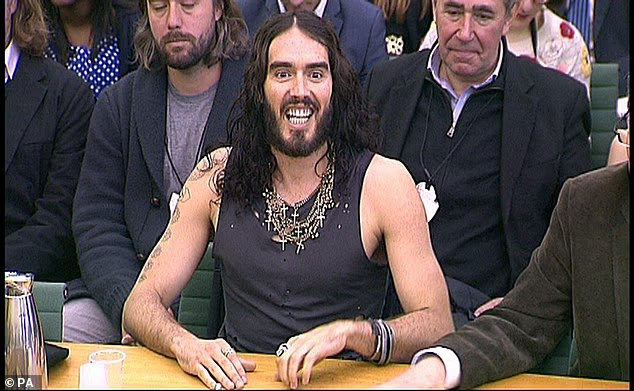
Both men later gave evidence to a House of Commons select committee examining drug policy. Mr Hitchens said he believed the committee had treated Brand more sympathetically, arguing that Brand’s view of drug abuse as a disease was broadly in line with prevailing liberal opinion.
By contrast, Mr Hitchens said his own views were outside the mainstream and that Brand was “far more in tune with the spirit of this age” than he was.
His comments amount to a wider criticism of the BBC and the political establishment’s approach to drugs, as well as a personal denunciation of Brand, whom he portrayed as having retained influence despite the controversy surrounding him.
