


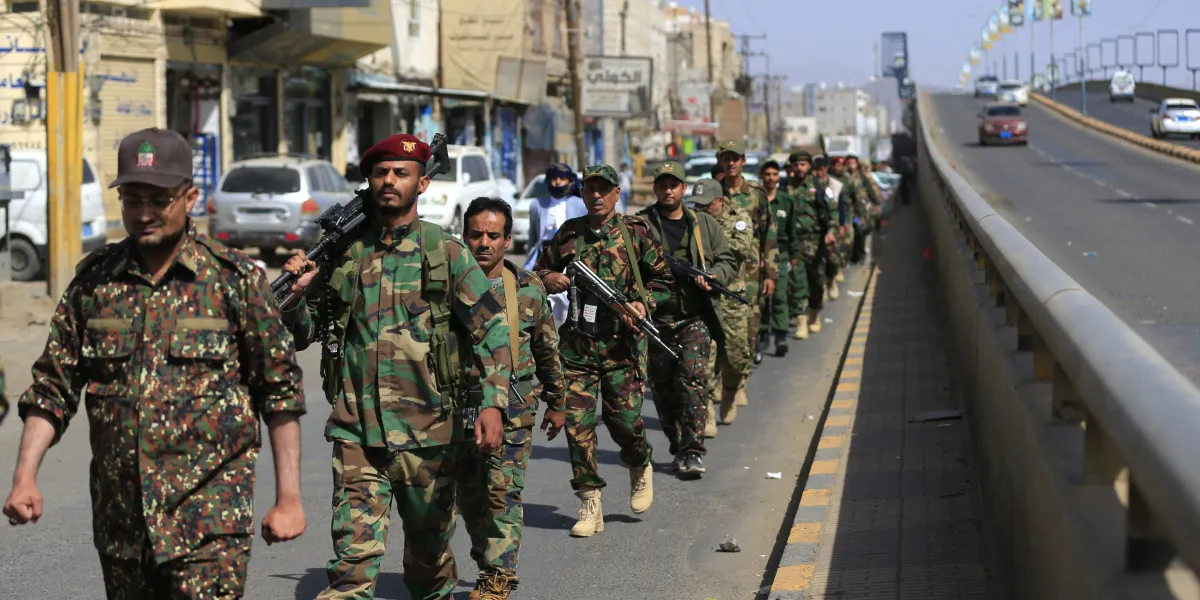
Saudi Arabia has shut down a crucial east-to-west oil pipeline after drone attacks, as advances by Houthi rebels in Yemen threaten the kingdom’s alternative export route through the Red Sea and have unsettled global markets.
The move comes after the Houthis seized the port city of Mokha and a Red Sea island from Saudi-backed Yemeni government forces over two days, strengthening their ability to disrupt shipping through the Bab el-Mandeb strait.
Riyadh said the attacks on the pipeline originated in Iraq, where Iran supports powerful militias. Regional officials have said the Houthis helped Iraqi militias carry out attacks, although the claim has not been independently established.
The pipeline links major oilfields in eastern Saudi Arabia with the Red Sea coast in the west. Its closure removes one of the kingdom’s main ways of bypassing the Strait of Hormuz, which has been effectively shut to much shipping during the conflict with Iran.
Saudi oil exports hit by Houthi attacks
Saudi oil exports to Asia fell from about 3.4 million barrels a day in June to 128,000 in August, according to figures compiled by trade monitor Kpler. Exports had recovered to about 700,000 barrels a day this month.
The latest Houthi gains follow the collapse of a fragile period of calm. The rebels resumed large-scale attacks in July and declared a blockade of Saudi shipping, four years after their previous campaign had subsided.
Saudi Arabia fought the Houthis from 2015, but its allies made little progress. The conflict killed an estimated 150,000 people and at times pushed Yemen towards famine before a ceasefire in 2022.
Neil Quilliam, a Middle East expert at Chatham House, said Riyadh had spent years trying to move beyond the Yemen war and concentrate on economic transformation and regional stability.
“Recent Houthi gains increase pressure on Riyadh to respond, but every available option carries significant costs and uncertain outcomes,” he said.
Michael Ratney, a former US ambassador to Saudi Arabia, said the developments were “incredibly frustrating” for the kingdom.
“Despite their antipathy for the Iranians, this is a war they had never asked for, they had great trepidation about. And once it started, all of their … worst-case scenarios started coming true,” he said.
Uncertainty over US support
Saudi Arabia could intensify military operations against the Houthis, but analysts warned that doing so could prolong the conflict and expose the kingdom’s energy infrastructure to further attacks. Houthi weapons are now more sophisticated than during the earlier war, while Saudi stocks of interceptor missiles may have been reduced by the US-Iran conflict.
Diplomacy with the Houthis or Tehran is another possibility. However, the rebels have demanded an end to the Saudi-led blockade, which could allow them to strengthen their position, while Iran is seen as having little incentive to stabilise the region without major concessions from Washington.
A Saudi official, speaking anonymously because they were not authorised to brief the media, said the kingdom would defend itself and work with partners, including the United States, to protect freedom of navigation in the Red Sea. The Saudi government did not respond to a request for comment.
For decades, Saudi Arabia and other Gulf states have relied on US security guarantees. Those assurances have come under strain, with President Donald Trump facing an unpopular Middle East war and congressional elections approaching.
Trump launched an air campaign against the Houthis last year after attacks on Red Sea shipping linked to the war in Gaza. But US forces are now heavily deployed around the Strait of Hormuz, where they are blockading Iran and trying to protect shipping.
The fighting has strained the US military and reduced supplies of sophisticated interceptors. A further campaign in Yemen could also deepen political problems for Republicans in close House and Senate contests.
Trump said Iran was “probably” behind the Saudi pipeline attack. Asked about a recent call with Crown Prince Mohammed bin Salman, he said: “He’s a good friend of mine, and I can just say everything’s going to work out fine and dandy.”
The White House did not say whether it intended to intervene in Yemen. Trump has also indicated that electoral considerations could influence decisions over whether to increase military pressure on Iran.
Ratney said Saudi Arabia would struggle to achieve its aims without consistent US backing. “My understanding at this point is the White House is not enthusiastic about getting involved,” he said.
