


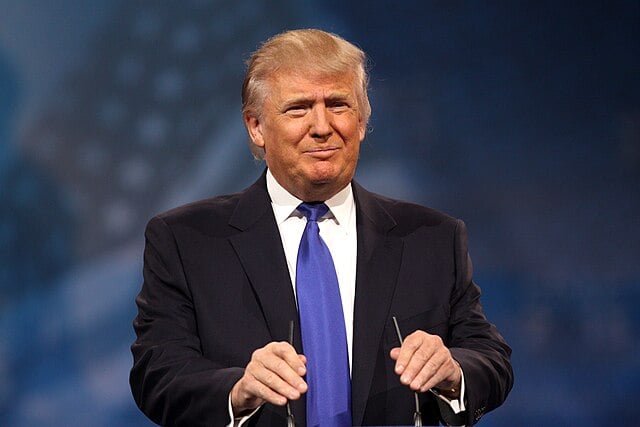
The White House pressed its most explicit warning yet to Tehran on Tuesday, as Donald Trump told reporters that Iran faces a stark choice between reaching an agreement by nightfall or enduring a wave of strikes he described as the most destructive of the conflict so far.
A Deadline With Teeth
The 48-hour window Trump had granted Iran extended, he said, out of seasonal goodwill the day after Easter expires at 20:00 on Tuesday local time. What follows, the president made clear, will not be limited. “They’re going to have no bridges,” he told reporters gathered in the White House briefing room. “They’re going to have no power plants. Stone Ages, yeah.” The remarks echoed a threat he had made previously, now restated with fresh urgency.
Defence Secretary Pete Hegseth reinforced the message from the same podium, confirming that Tuesday would see the largest volume of strikes against Iran since the conflict began — and that Wednesday’s would surpass even that. “Iran has a choice,” Hegseth said, adding that the country should “choose wisely” given that “this president does not play around.”
Whether Tehran is in a position to respond coherently remains in doubt. Trump himself acknowledged that one of the principal obstacles in negotiations is the inability of Iranian officials to communicate effectively a breakdown he attributed to the condition of the regime’s leadership structures.
The Mission That Shaped the Moment
Overshadowing the diplomacy was a remarkable military operation that had played out over the Easter weekend, and which dominated much of Tuesday’s briefing. Two US F-15 crew members, downed over Iranian territory, had been recovered in what Trump described as a “heroic” undertaking involving 155 aircraft among them four bombers, 64 fighters, 48 refuelling tankers and 13 rescue aircraft.
One of the airmen evaded capture for nearly 48 hours on the ground before being extracted. CIA Director John Ratcliffe, who addressed reporters alongside the president, described the operation as a “no fail mission” executed against an enemy that was actively hunting the missing personnel. “A race against the clock,” he called it, acknowledging that both human and technical assets had been deployed, and that a deliberate deception campaign had been used to mislead Iranian forces about the airman’s location.
It was, Ratcliffe said, agents receiving confirmation on Saturday night that the missing service member had found refuge in a mountain crevice “still invisible to the enemy but not to the CIA” — that had enabled the final phase of the rescue to proceed.
General Dan Caine, chairman of the Joint Chiefs of Staff, added further operational detail. A US A-10 aircraft sent to locate one of the downed pilots had itself come under fire from gunmen and was forced to divert to a nearby friendly country, where its pilot ejected safely. As the search for the second crew member continued, Iranian forces were simultaneously mounting their own effort to capture him. Caine was unequivocal about what the mission demonstrated. “The United States of America will recover our war fighters, anywhere in the world, under any conditions when we want to,” he said.
The Leak That Enraged the President
Trump’s relief at the outcome did not extend to those he holds responsible for what he described as a dangerous breach of operational security. The president was unambiguous in his anger at news organisations that he said had published details of the rescue while it was still under way — an act he characterised not as journalism but as a threat to American lives.
“We are going to go to the media company that released it and we are going to say: national security, give it up or go to jail,” Trump said. He added that the leak had complicated the mission significantly, and demanded the source be identified. Several US outlets had, it later emerged, voluntarily withheld reporting on the rescue until the operation was concluded.
Oil, Allies, and an Awkward Conversation About Britain
On the question of what an acceptable deal with Iran would actually entail, Trump was direct. Any agreement, he said, must guarantee the free flow of oil through the Strait of Hormuz. He rejected the notion of Iran charging tolls for passage through the waterway, expressing a preference instead for the United States to collect such fees a position rooted, he suggested, in the logic of military victory. “We won,” he said. “They are militarily defeated.”
His frustrations extended beyond Tehran. Trump said he had been disappointed by NATO allies who declined to join the Iranian mission, singling out the United Kingdom as the source of his greatest displeasure. The British military, he remarked, operates “two old broken aircraft carriers” that “barely work” a blunt assessment that is certain to attract attention in London.
A Regime Under Pressure — and Its People
From a Mountain Crevice in Isfahan to the Oval Office: The Rescue That Couldn’t Defuse a Crisis
Despite the combative posture, Trump was careful to draw a distinction between the Iranian government and its population. Asked about the prospect of a popular uprising, he said Iranians “should do it”, and claimed the United States had intercepted communications suggesting ordinary Iranians were calling for strikes against the regime to continue. He also suggested that the population would endure significant hardship in pursuit of political change, saying they were “willing to suffer to have their freedom.”
Whether that reading of Iranian public sentiment reflects the reality on the ground is difficult to assess independently. What is clear is that the administration is holding open two possibilities simultaneously a negotiated settlement, and an intensified military campaign — while the clock counts down to its self-imposed deadline.
