


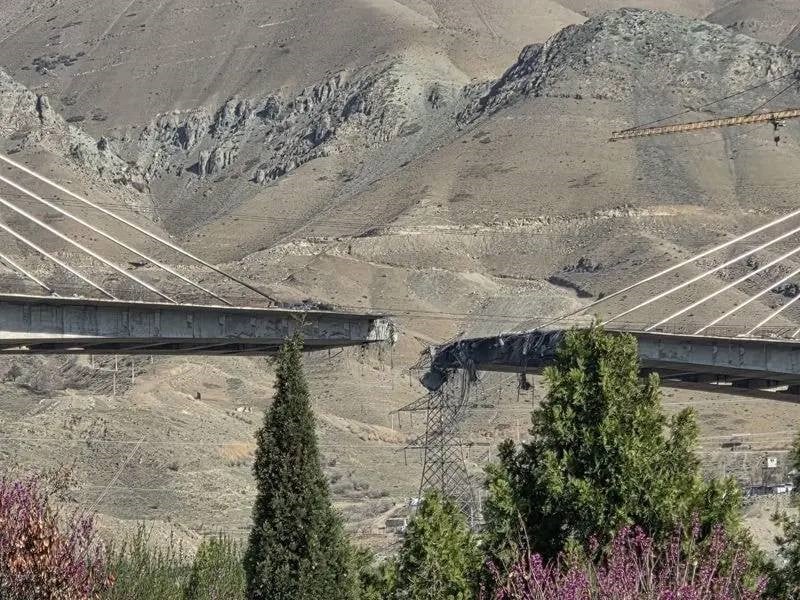
Iran’s leadership has issued a defiant response following a devastating strike on a major bridge connecting two of the nation’s largest cities, which claimed eight lives and left 95 people wounded. State media outlets confirmed the casualty figures after footage emerged showing thick smoke rising from the 1,000-meter structure that serves as a critical transportation link between major urban centers. Foreign Minister Abbas Araghchi dismissed any notion that the attack would force Iran into submission, characterizing the strike as evidence of adversarial weakness rather than strength. “It only conveys the defeat and moral collapse of an enemy in disarray,” Araghchi stated, pledging that reconstruction efforts would result in superior infrastructure. He emphasized that while physical structures can be rebuilt, the diplomatic consequences for those responsible would prove irreparable, specifically citing potential damage to America’s international reputation.
Why Europe Won’t Join The US-Israel War On Iran And Why They Won’t Give Up Their Bases
The Iranian diplomat delivered a pointed warning regarding the region’s strategic importance in global energy markets. Araghchi highlighted what he termed a “striking difference” between modern geopolitics and ancient times, noting that Middle Eastern oil and gas infrastructure now plays an indispensable role in the world economy. His remarks came as a direct counter to recent US threats, questioning whether American leadership had fully considered the ramifications of escalating regional tensions. The exchange underscores mounting tensions between Tehran and Washington, with both sides engaging in increasingly sharp rhetoric. Iranian officials appear determined to project resilience despite the casualties and infrastructure damage, while simultaneously warning of broader economic consequences that could extend far beyond the immediate conflict zone.
