


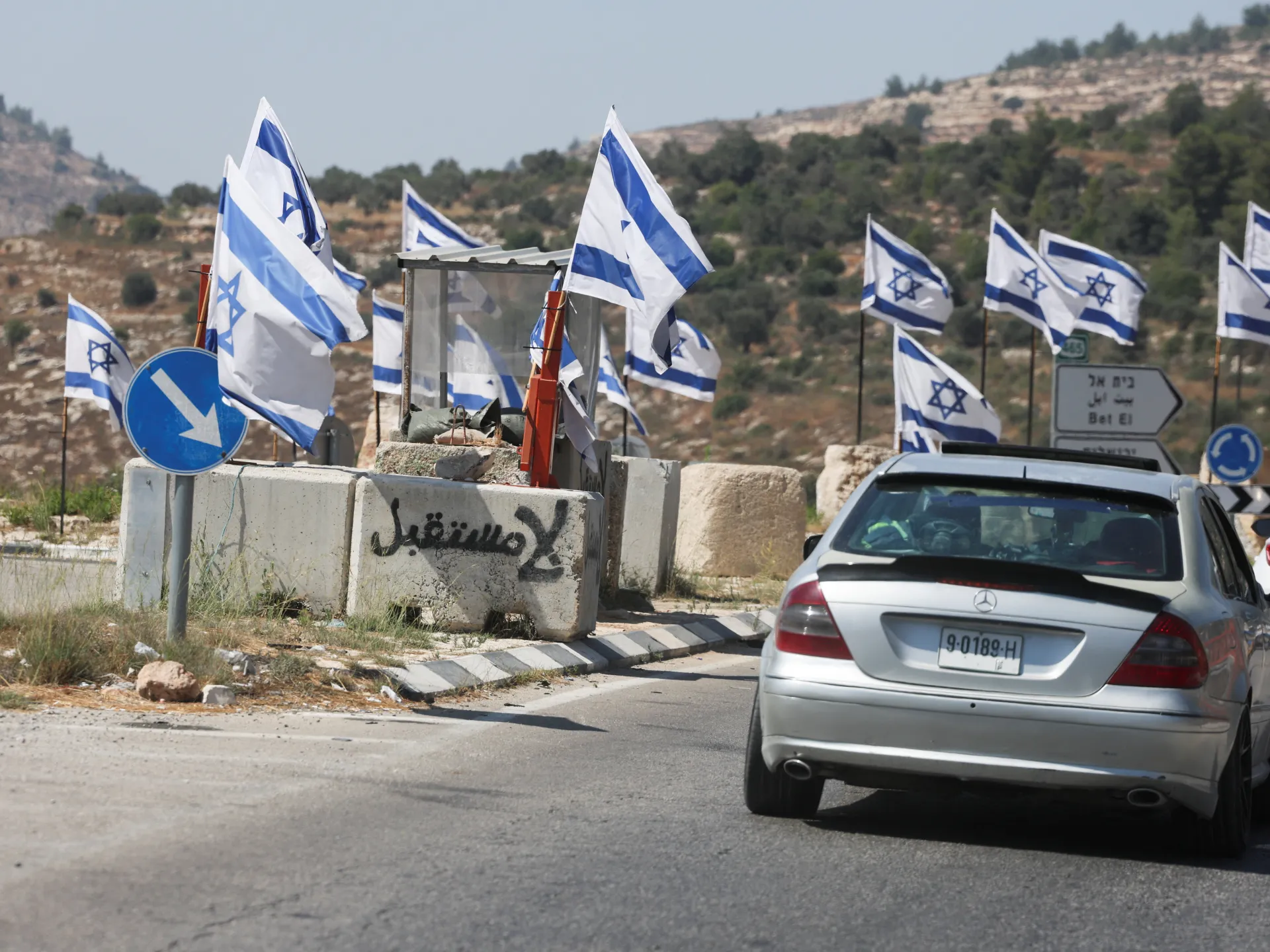
A new B’Tselem report has described Israeli policies in the occupied West Bank as a coordinated effort to make Palestinian life unsustainable and establish permanent Israeli control over the territory.
The Israeli human rights organisation said violence, movement restrictions, economic pressure, attacks on institutions and the removal of communities should not be viewed as unrelated incidents. Instead, it argued, they form what it called “a comprehensive mechanism of elimination”.
The report, based on nearly 2,000 Palestinian testimonies, said the process was dismantling Palestinian society by weakening its institutions, economy, freedom of movement and social life.
B’Tselem report identifies five fronts
B’Tselem said the campaign operated across five connected areas: violence and intimidation, restrictions on movement, economic strangulation, the destruction of social and political life, and the removal of Palestinians alongside the expansion of Israeli control over land.
It linked the approach to a 2017 “Decisive Plan” written by Bezalel Smotrich, now Israel’s finance minister. According to the organisation, the plan presented Palestinians with three choices: accept Jewish supremacy while abandoning national claims, leave, or face violent suppression.
The report said the underlying policy had operated for decades but had become more severe and explicit since Israel’s current far-right government took office in late 2022. It said the escalation had intensified further after the start of the war in Gaza in October 2023.
In early September, Israeli forces killed two teenagers during a raid in al-Mughayyir, east of Ramallah, according to the report’s account. Days later, demolitions in Khirbet al-Tabban, in Masafer Yatta, left about 70 people, including 30 children, without homes.
In Qusra, south of Nablus, three Palestinian families have been kept inside their homes for more than a month by settlers who cut off their water and electricity, B’Tselem said.
The organisation said such incidents illustrated how pressure was applied both through direct violence and through conditions that made it increasingly difficult for Palestinians to remain on their land.
About 3.5 million Palestinians in the West Bank and occupied East Jerusalem face roads they cannot use, land they cannot access and growing limits on where they can live, work and move, the report said.
By December 2025, Israel had established at least 925 physical obstacles across the West Bank, the highest number recorded by the United Nations in two decades.
Yusef Kashur, a driver and father of six from Dura, south of Hebron, told B’Tselem that gates and checkpoints had made his work a “torment”. He said he was forced to use lengthy and dangerous back roads and reject fares he had previously depended on.
“These drives are exhausting, take a very long time, and the fuel costs so much that I don’t make enough to cover our household needs,” he said.
Economic pressure and settlement expansion
The report said movement restrictions were contributing to a wider economic crisis in the West Bank, where Israel controls borders, trade and revenue. Unemployment had risen to 27.5 per cent by the end of last year, roughly double the level recorded in October 2023.
B’Tselem linked the increase partly to the freezing of work permits for about 115,000 Palestinians. It argued that families unable to earn a living were more vulnerable to being uprooted, while those who returned to agriculture faced pressure on their land.
Jamil Abu Rayan, who lost his job inside Israel, turned to his grapevines near Halhul. He said settlers had established an illegal outpost on his main plot, while soldiers prevented him from reaching another area by declaring it Israeli “state land”.
He told the organisation that he had lost about 60 per cent of his 2025 grape harvest and could no longer properly cultivate his land.
Isma’il Khalayleh described a late-January attack in the South Hebron Hills, where Palestinian communities face forcible displacement. He said a settler held a rifle to his forehead and told him: “I’m giving you 24 hours to leave this place.”
Peace Now, an Israeli settlement-monitoring organisation, has said agricultural and grazing outposts have taken violent control of nearly 20 per cent of the West Bank. More than 1,600 settler attacks were recorded by the UN Office for the Coordination of Humanitarian Affairs last year.
Palestinians also face severe restrictions on construction, with Israeli authorities making it “virtually impossible for Palestinians to obtain building permits”, according to the UN agency. Families who build without permits risk having their homes demolished.
As Palestinian communities are cleared, Israeli settlements continue to expand. The current Israeli government has approved 104 new settlements since 2022, described in the report as a record number.
Raids, closures and lethal force
B’Tselem said the pressure extended to organisations that support Palestinian society, including charities, trade unions and universities. The group documented raids and closure orders affecting those institutions.
Ahmad Dweikat told the organisation that soldiers ransacked an association he co-founded in Nablus in May 2026 to assist women, children and families. Computers and cash were confiscated, including funds intended for orphans, he said.
The report also counted about 1,087 Palestinians killed by Israeli forces in the West Bank since October 2023, around a quarter of them children.
One of those killed was Jamil Hanani, a 17-year-old from Beit Furik who was shot during an army raid on the town. His father, ‘Atef Hanani, told B’Tselem: “It’s as if they go out hunting, only they’re hunting human beings.”
B’Tselem argued that international calls for Israel to show restraint failed to address the nature of the problem. In its assessment, demolitions, closures and violence were not breakdowns within the system but part of how it functioned.
It said measures such as sanctioning an individual settler, reopening a single road or halting one settlement plan would “leave intact the structure that produces violence, dispossession, and oppression”.
The organisation said the West Bank could not be separated from Gaza, describing the two areas as “different manifestations of the same regime project, directed against Palestinians’ ability to exist as a people”.
Its report characterised the situation as “neither a temporary crisis nor a collection of random human rights violations”, but as “an accelerated and explicit phase in an ongoing project of elimination”.
