


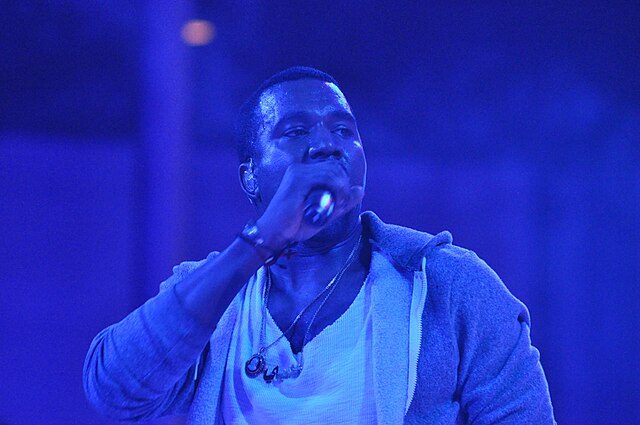
A growing political consensus is forming around blocking the rapper from headlining in London this summer, as corporate partners abandon the event and Jewish community leaders demand action.
The Commercial Unravelling of a Festival Booking
Before the political debate had fully taken shape, the money was already walking away. A succession of major brands severed their ties with Wireless Festival over the weekend and into Monday, triggered by the announcement that Kanye West — now known as Ye — would headline all three nights of the event in Finsbury Park from 10 to 12 July.
Rockstar Energy became the latest to withdraw on Monday, following its parent company stablemate Pepsi, which pulled out on Sunday. Diageo, one of the world’s largest drinks companies, removed its support from the festival as currently constituted. PayPal confirmed it would no longer permit its branding to appear on promotional material for the event. British mineral water brand Drip went further, clarifying that it had agreed several weeks ago not to participate in this year’s festival at all, a decision taken before the headline booking was publicly announced.
The commercial retreat has placed Festival Republic, the event’s parent company, and its managing director Melvin Benn under intense pressure. Neither has responded to requests for comment. With pre-sale tickets due to open on Tuesday and general sale on Wednesday for a festival expected to draw 50,000 people per day, the entire event now hangs in considerable uncertainty.
Why Westminster Is Converging on a Single Answer
The political response has been unusually swift and unusually unified. Prime Minister Sir Keir Starmer described the prospect of West headlining the festival as “deeply concerning.” Education Secretary Bridget Phillipson went further, calling the rapper’s past comments “completely unacceptable and absolutely disgusting” and stating directly that he should not appear at the event. She declined, however, to confirm whether the government would intervene on the visa question.
Ministers possess the legal power to refuse entry to any foreign national whose presence is deemed not conducive to the public good — a broad discretionary tool that has been used in the past to bar individuals considered to pose a threat to community cohesion or public order. It is understood that ministers are actively considering whether to exercise that power in West’s case.
The Conservatives have sought to force the pace. Shadow home secretary Chris Philp urged the government to refuse the visa outright, arguing that West’s record amounted to a sustained pattern of antisemitic behaviour rather than an isolated lapse. Permitting someone with that track record to headline a major public event, he said, would send entirely the wrong message.
There is precedent for such a decision. Australia cancelled West’s visa last year after he released a song titled Heil Hitler. The Mayor of London’s office is understood to have previously turned down a request for West to perform at the London Stadium, owned by the Greater London Authority, on grounds of likely community concerns and reputational risk. Tottenham Hotspur Football Club reportedly also refused to host the rapper at their north London ground.
What West Said, What He Sold and What He Later Retracted
The controversy is rooted in a catalogue of antisemitic and pro-Nazi statements and actions accumulated over recent years. West posted an image appearing to combine a swastika with the Star of David and declared he would go “death con 3 on Jewish people.” Last year he released a song called Heil Hitler and sold T-shirts bearing swastika imagery.
In January this year, West took out a full-page advertisement in the Wall Street Journal in which he stated he was neither a Nazi nor an antisemite. He attributed his behaviour to episodes of mania linked to bipolar disorder, saying the condition meant that when manic, he did not recognise he was unwell. He wrote that he had lost touch with reality and expressed deep regret and mortification for his actions during those periods.
Whether that apology is sufficient to rehabilitate his public standing is the question now confronting ministers, festival organisers and the communities most directly affected by his remarks.
Jewish Community Leaders and the Question of Accountability
For Britain’s Jewish community, the booking provoked dismay that extended beyond West himself to the commercial logic that enabled it. Michael Weiger, chief executive of the Board of Deputies of British Jews, said it would be entirely appropriate for the home secretary to find a way to refuse the rapper entry to the country. The Board went further, accusing Festival Republic and Melvin Benn of profiteering from racism — a charge that strikes at the heart of the event industry’s relationship with controversy and commercial calculation.
Stephen Silverman from the Campaign Against Antisemitism described the booking as “astonishing,” questioning how any promoter could have considered it appropriate to headline an artist who, less than a year ago, released a music video for a track called Heil Hitler. He welcomed the withdrawal of sponsors, but the underlying question lingered: how had the decision been made in the first place?
Locally, the leader of Haringey Council, Councillor Peray Ahmet, expressed deep disappointment at the booking, noting that it was at odds with the borough’s values, particularly given the concerns raised by its sizeable Jewish community. She acknowledged the council could not dictate who performed but pledged to work to ensure public safety and to make the strength of local feeling clear.
The coming days will determine whether the festival proceeds as planned, whether its headline act is replaced, or whether the government takes the more decisive step of refusing entry altogether. The commercial infrastructure supporting the event is already fracturing. The political will to intervene appears to be building. What remains is the formal decision — and the signal it sends about where Britain draws the line between artistic freedom and the consequences of sustained public hatred.
