


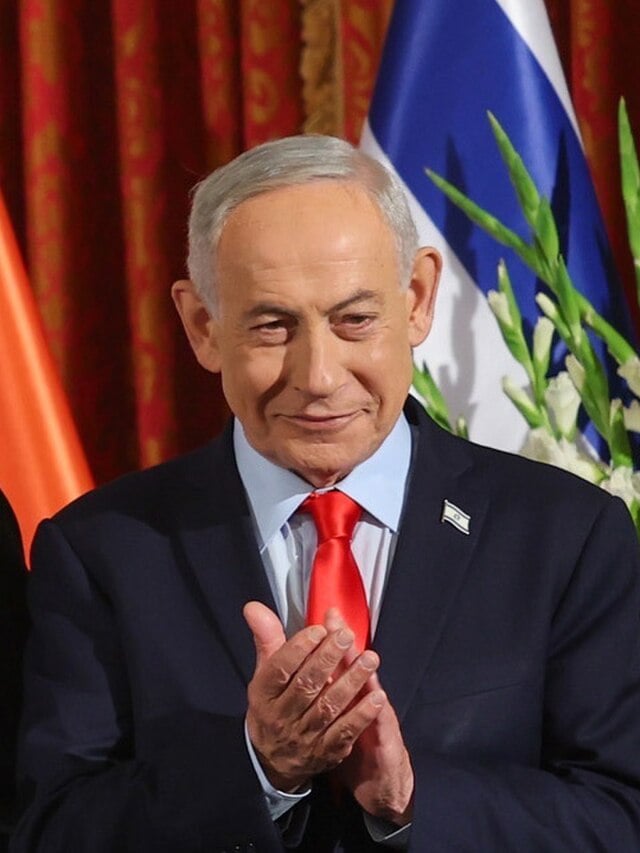
Benjamin Netanyahu has never been a man who does things quietly. But the military campaign now unfolding against Iran represents something on an entirely different scale — a conflict that analysts are increasingly describing as the most consequential decision of his long and deeply controversial political career.
The Israeli Prime Minister has spoken about the threat of Iranian nuclear capability for the better part of three decades. From the floor of the United Nations to private meetings in Washington, the message has remained consistent: Iran’s nuclear ambitions represent an existential danger, and military force may ultimately be the only solution. What has changed is that Netanyahu now appears to believe the moment to act has arrived.
A Window of Opportunity — Or A Dangerous Gamble?
The timing of the conflict has raised significant questions among foreign policy observers. Israel launched its campaign at a point when Iran was assessed by intelligence sources as being in a period of relative internal vulnerability. The operation targeted senior figures within the Iranian leadership structure, with Israeli officials reportedly describing the intelligence work behind it as among the most sophisticated in the country’s history.
But the strategic logic underpinning the campaign remains deeply contested. Critics have pointed to the absence of any publicly defined end goal. There is no stated threshold for what would constitute success, no framework for what comes after the bombing stops, and no publicly articulated plan for the political vacuum that could follow if the Iranian government were to collapse or fracture under sustained military pressure.
These are not abstract concerns. The parallel with Gaza is difficult to avoid. More than two years of military operations in the strip produced undeniable tactical results. It did not produce a political solution, a successor governance structure, or a defined exit. Many of the same questions now hang over the Iran campaign — and the stakes are considerably higher.
The Trump Factor
Central to the entire undertaking is Netanyahu’s relationship with US President Donald Trump. The two men share a remarkably close political alignment, and the United States has provided crucial support for the campaign. The question of whether Washington was drawn into a conflict largely of Israel’s making, or whether the two governments arrived at the decision together, is one that continues to generate significant debate in American political and media circles.
What is clear is that the consequences extend well beyond the Middle East. Oil prices have climbed sharply since the conflict escalated, with global markets reacting to the uncertainty surrounding Iranian output and regional shipping routes. The economic ripple effects are already being felt in Europe and beyond.
In Britain, Prime Minister Sir Keir Starmer has convened multiple emergency Cobra meetings to address the domestic cost-of-living implications as energy prices climb. The Bank of England has held interest rates steady in part due to the instability generated by the conflict. Petrol prices at UK forecourts have hit levels not seen in years.
A Leader Who Defies Political Gravity
Netanyahu’s ability to remain in office — and to retain the support of a substantial portion of the Israeli public — in the face of what many outside observers regard as extraordinary political and legal pressures is a phenomenon that continues to confound analysts.
He entered this conflict under the shadow of an International Criminal Court arrest warrant, issued over alleged crimes against humanity in connection with the Gaza campaign. He is simultaneously facing a long-running domestic criminal trial. He led the government during the October 7 attacks of 2023 — the deadliest day in Israel’s history. And yet polling data consistently shows him as the most popular individual politician in the country, and his party as the largest in the Knesset.
Understanding this requires understanding something about how Israeli politics functions. Netanyahu has spent years cultivating a political identity built on security and strength. Every conflict — regardless of its outcome — reinforces that identity in the eyes of his supporters. The war with Iran has reportedly drawn backing from an overwhelming majority of the Israeli public in its opening weeks, consistent with historical patterns in which military operations command broad initial support.
What Comes Next
The trajectory of the conflict remains deeply uncertain. Diplomatic channels have not been formally closed, but there is little visible momentum towards a negotiated halt. Iran has signalled defiance. The US position has shifted at various points, with some reports suggesting tension between Washington and Jerusalem over the pace and scope of the campaign.
What is not uncertain is the global dimension of this conflict. The Middle East has produced energy crises before, but the combination of direct US and Israeli military involvement, Iranian retaliation capacity, and the absence of any clear diplomatic off-ramp makes this moment particularly difficult to read.
For Netanyahu, the political calculus may appear straightforward: a conflict of this scale, framed around a threat he has warned about for thirty years, consolidates his position as Israel’s indispensable security leader. For the rest of the world, the arithmetic is considerably more complicated.
World Politics | Dispatch Times
