


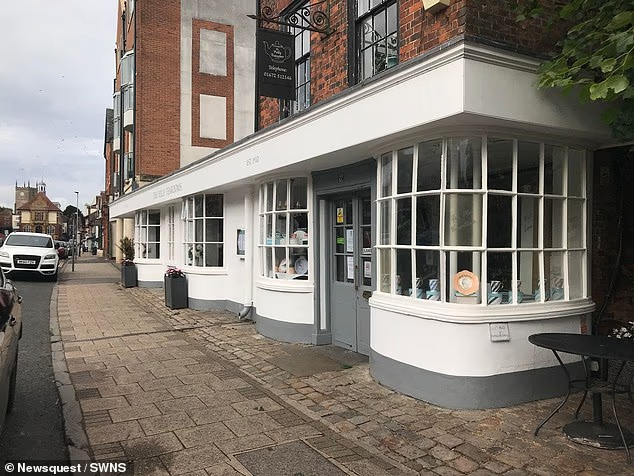
The Polly Tea Rooms in Marlborough, Wiltshire, has closed after 114 years, with its owner blaming “relentless tax rises” and higher minimum wages for making it impossible to continue trading.
The historic High Street business, founded in 1912, was a popular destination for generations of Marlborough College pupils, tourists and local residents. Customers were told of the closure by a notice placed on the door on Monday.
It said the decision followed “relentless tax rises and minimum wage increases all at a time when there is an ongoing cost of living crisis affecting our customers’ ability to eat out”.
The notice added: “It is simply impossible to run a High Street business in these circumstances,” before thanking staff and customers.
Owner David Clarke MBE said he had used his own savings to keep the tea room going while hoping the Budget would provide assistance for businesses such as his.
“There was no help at all for us just increases in our costs – yet another minimum wage increase and ‘help’ for small businesses on business rates which only applies to much smaller businesses than ours,” he said.
Mr Clarke also criticised Labour’s spending and taxation policies, saying: “Labour are spending far too much money on the wrong things and then taxing the very people who would be able to create growth to the level that they have nothing left to achieve any of it.”
He added: “So, along with literally hundreds of other businesses, I have no option but to give up trying to make it work.”
Marlborough tea room was a celebrity favourite
The Polly Tea Rooms was established in a Georgian building in Marlborough High Street, reputedly the widest High Street in England. The premises had previously been a public house and its upper floors were destroyed by fire in the 1960s.
It was founded by suffragette Janet McCloud and her partner Jean Leith Hay, and became known for cream teas, cakes and knickerbocker glories. Waiting staff dressed in formal lace dresses, hats and frilly aprons as part of the tea room’s old-fashioned presentation.
The Princess of Wales was said to have visited regularly while attending nearby Marlborough College in the late 1990s, often with friends for blueberry muffins.
Other well-known customers included Cary Grant, who regularly had breakfast there, Robbie Williams, Rupert Everett and the Bee Gees. The late Sir Patrick Stewart was also a favourite visitor, while former poet laureate Sir John Betjeman once filmed inside the tea room.
News of the closure prompted dismay among residents. Reform MP Danny Kruger, who represents East Wiltshire, said he was “appalled” and described the business as a Marlborough institution which had survived two world wars.
He called for cuts to VAT on hospitality and employer National Insurance contributions, as well as the scrapping of the Employment Rights Act, which he described as the “anti-employment act”.
Local craftsman Mark “Binzy” Nash said he was surprised by the number of empty premises on the High Street, despite Marlborough being considered affluent.
“I wonder what will be left in another 18 months with rents, rates, energy costs and the living wage rise. It’s a recipe for extremely hard trading times,” he said.
