


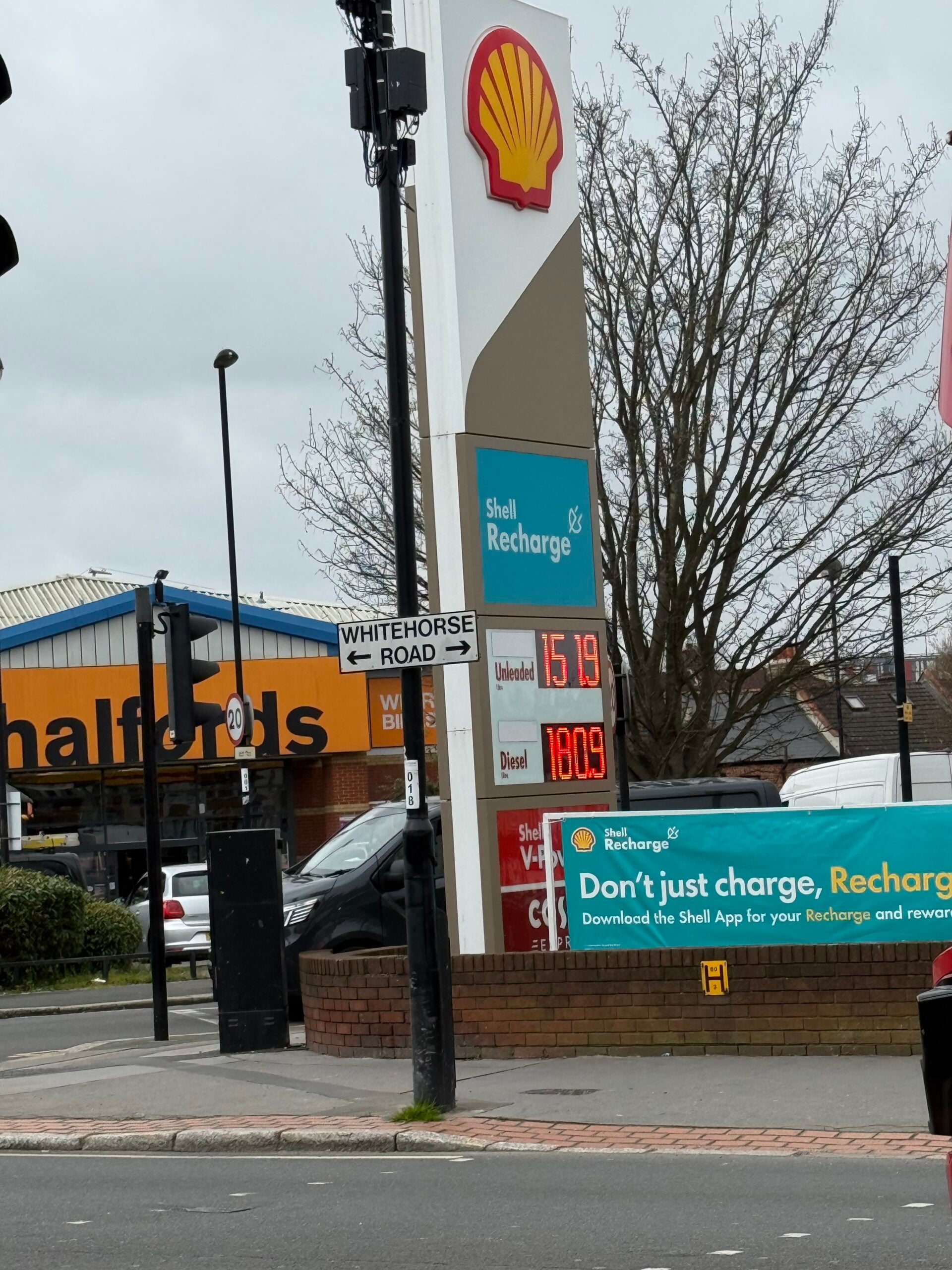
What the latest figures show at the forecourt
British motorists are continuing to pay more to fill up their cars, with petrol and diesel prices nudging upwards again as financial markets weigh whether the recently brokered ceasefire between the United States and Iran will actually take hold.
Figures from the RAC put the average cost of unleaded at 158.03p a litre on Thursday, while diesel reached 191.11p — both marginally higher than the day before. The cumulative effect since the conflict erupted on 28 February has been substantial: a full tank of petrol now costs £86.92, an increase of £13.86, while diesel drivers are paying £105.11 to brim their tanks, some £26.80 more than before the war.
Wholesale crude, the principal raw material behind forecourt prices, has climbed roughly 35 per cent over the same period. Brent touched $99 a barrel on Thursday before easing slightly on news that Israel and Lebanon had agreed to open direct talks.
Why the ceasefire has failed to deliver relief
Oil had initially tumbled when the pause in hostilities was announced, but the optimism proved short-lived. Markets turned again after Israel launched fresh strikes on Lebanon, prompting Tehran to threaten what it called a “regret-inducing response” should the bombardment continue. President Donald Trump, for his part, has insisted that American forces will stay in the region until Iran honours what he described as the “real” ceasefire.
At the heart of the unease lies the Strait of Hormuz. Guaranteed safe passage through the waterway — through which a substantial share of global oil and gas flows — was a central plank of the agreement. Yet reports that Iran intends to keep the corridor closed in protest at the Israeli strikes have revived fears of a prolonged squeeze on supplies. Iran’s navy has warned that any vessel attempting to cross without permission “will be targeted and destroyed”, according to information passed to BBC Verify by the shipping brokerage SSY.
Saeed Khatibzadeh, Iran’s deputy foreign minister, told the BBC the country would “provide security for safe passage” through the strait, but only “after the United States actually withdraw this aggression” — an apparent reference to the Lebanon strikes. Whether Lebanon falls within the scope of the ceasefire remains disputed. Vice-President JD Vance is expected to join talks with Iranian representatives in Pakistan on Saturday.
A waterway barely moving
In practical terms, the strait has all but seized up. Only a small number of ships have transited since the truce was declared, against a pre-war norm of roughly 130 vessels a day. Maritime tracking firm Pole Star Global estimates it would take at least ten days simply to clear the backlog, even if normal traffic resumed immediately. Windward, a maritime intelligence company, said activity through the strait had been “unchanged in risk profile and numbers transiting” since the deal, cautioning that “weeks are required to move stranded gas and oil cargoes, and months for global trade to approach pre-crisis levels”.
Some governments, among them Malaysia, India and the Philippines, have struck their own arrangements to secure safe passage for their vessels. For commercial operators, however, the picture remains murky. Nils Haupt of Hapag-Lloyd, which still has six ships in the Persian Gulf, told BBC Radio 4’s Today programme that planning was “very difficult” because “every day you get very different news”. He warned that the imposition of transit fees running into the millions would be “quite ridiculous for the entire industry”, dwarfing the cost of using the Panama or Suez canals.
The view from the trading floor
The mood in equity markets mirrored the broader uncertainty. Wednesday’s sharp rally partially unwound on Thursday, with Japan’s Nikkei 225 closing 0.7 per cent lower and the FTSE 100 essentially flat, down 0.05 per cent by the end of trading in London. Frankfurt’s Dax shed 1.14 per cent and the Cac in Paris slipped 0.22 per cent. Wall Street was steadier, with the Dow up around 0.2 per cent in early afternoon trading and the S&P 500 and Nasdaq posting modest gains.
Victoria Scholar, head of investment at Interactive Investor, said the pullback reflected jitters about the durability of the truce. “I think there’s a little bit of nervousness in global markets,” she said. “Markets are giving back some gains… and I think that reflects a lot of uncertainty over whether the Strait of Hormuz is actually open.”
Whether drivers will see savings
Forecasts for what happens next at the pumps diverge. The RAC has cautioned against expecting any swift or dramatic fall in prices. The AA struck a more optimistic note, pointing out that wholesale costs had already eased since the start of the week. Its pump prices spokesman, Luke Bosdet, said: “Based on the fuel industry’s rule of thumb of a 10 to 14-day lag between wholesale cost movements and those at the pump, drivers should expect prices on forecourts to level by next weekend and then fall – providing the ceasefire holds.”
That last condition remains the central caveat. Until the situation in the Gulf settles, drivers — and the wider economy — are likely to remain hostage to events several thousand miles away.
