


Saudi Arabia has shut down a major oil pipeline after it was attacked by drones from Iraq, raising fears of further pressure on global fuel prices and energy supplies.
The East-West pipeline, which runs for 745 miles across the Arabian Peninsula, was closed as a precaution, according to the Saudi Energy Ministry. Both Baghdad and Riyadh said the drones originated in Iraq, where Iranian-backed militias operate.
The line has carried between four million and five million barrels of crude a day in recent months, equivalent to about 4 to 5 per cent of global supply, according to analysts and ship-tracking companies.
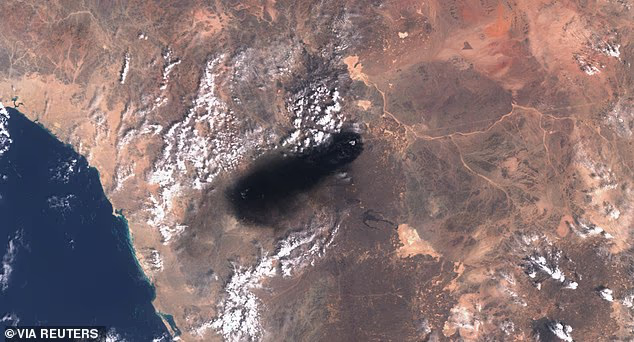
Satellite images showed black smoke rising from the pipeline south of Medina. Saudi Arabia’s Foreign Ministry said there had been injuries and damage, which was still being assessed, but gave no details on the effect on exports.
Iraq dismissed a military commander on Saturday following the attack. Responsibility for the strikes had not been established.
The closure comes as crude prices have risen above 100 US dollars a barrel and tanker traffic through the Strait of Hormuz has slowed sharply during the six-month war between the United States and Iran.
The pipeline has allowed Saudi Arabia, the world’s largest crude oil exporter, to bypass the strategic waterway. The kingdom has increasingly relied on routes through the Red Sea, but those alternatives have also come under threat from Yemen’s Iranian-backed Houthi rebels.
Houthi threat adds to pressure on Saudi oil exports
Hours before the pipeline closure, the Houthis captured the strategic island of Mayun at the southern entrance to the Red Sea. The seizure was confirmed by a senior military official from Yemen’s internationally recognised government and by a Houthi official.
The rebels have threatened “escalation for escalation” against Saudi Arabia and said maritime navigation was safe for all companies “except for Saudi vessels”. They have attacked Saudi shipping in the Red Sea since declaring a blockade in July, as well as targeting oil infrastructure inside the kingdom.
Shipping through the Bab al-Mandeb Strait has fallen by about 60 per cent since Houthi attacks on vessels began in late 2023. Activity increased this year as Saudi Arabia sought an alternative to Hormuz, but renewed threats have curtailed that traffic, according to Lloyd’s List Intelligence.
Saudi Arabia has also been forced to consider sending crude north from the Red Sea to the Mediterranean, either through the Suez Canal or via a pipeline through Egypt. That is a substantially longer route for customers in Asia, and the Houthis have threatened it too after striking a Saudi vessel in the northern Red Sea in late August.
US President Donald Trump, speaking in Dublin after meeting Irish President Catherine Connolly, was asked whether he could help move traffic through the Strait of Hormuz amid the latest concerns. “Everything will work out just fine,” he said.
