


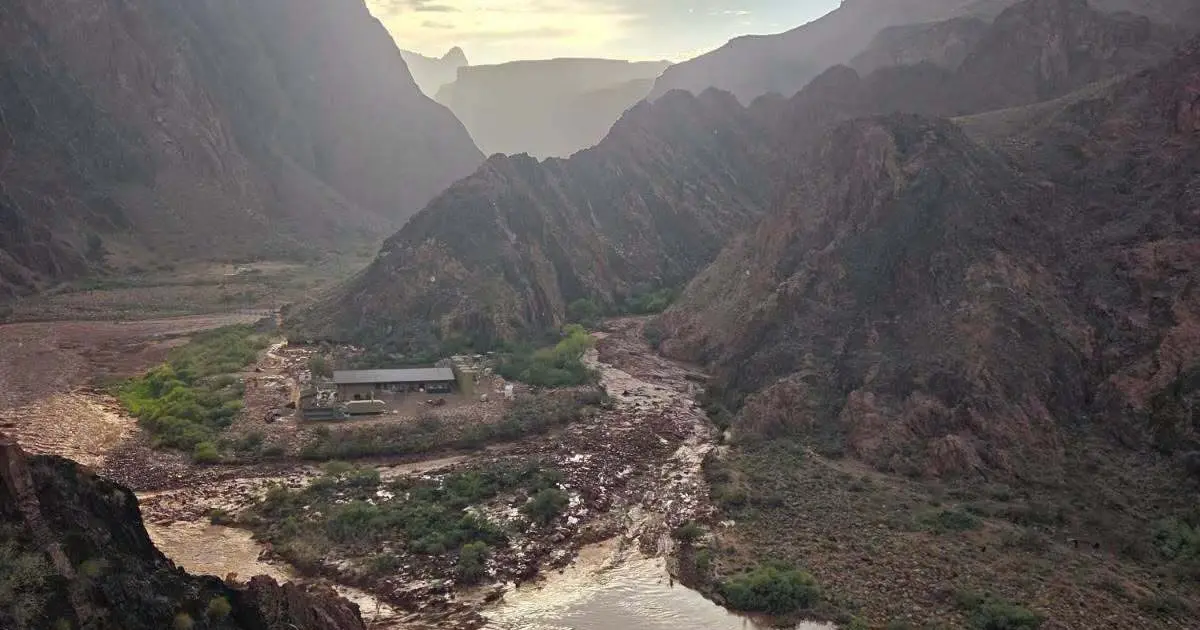
Water services at the Grand Canyon’s South Rim could begin to be restored in November, following a deadly flash flood that destroyed vital infrastructure and left the park operating under severe restrictions.
The National Park Service said pumping from a temporary intake at Bright Angel Creek to a new South Rim treatment plant could start on 16 November. Distribution to homes and concessionaires is expected to begin by Thanksgiving on 26 November, allowing overnight businesses to resume services in phases.
The timetable remains provisional and depends on construction being completed. Once pumping begins, officials estimate it will take about 45 days to refill the park’s storage tanks fully.
Grand Canyon flood damage and water restrictions
Park officials are seeking an agreement to bring in about 200,000 gallons of water a day to replenish the tanks and maintain operations until the temporary intake is ready. That plan assumes daily consumption remains at roughly 137,000 gallons.
The 29 August flood damaged a water intake pump and extensive sections of the legacy Transcanyon Waterline, including about 40 per cent of the old pipeline between the Phantom Ranch area and the North Rim. The Bright Angel Creek and Roaring Springs intake areas were also badly affected.
A further flash flood on 17 September damaged temporary water infrastructure being built as part of the recovery operation. Crews are assessing the impact on the timetable, although the newer pipeline infrastructure on the south side of the canyon was not damaged by either flood.
The disaster killed three people. The victims included John Giusti, 46, and Brent Rosenkranz, 42, both from Granbury, Texas. Human remains found in the canyon on 14 September were identified as 53-year-old Timothy Smith.
Stage 4 water restrictions remain in force across the South Rim. Residents and visitors have been asked to use portable toilets, handwashing stations and potable-water tanks, while bringing their own drinking water whenever possible.
The South Rim and North Rim remain open, but the National Park Service warned of modified operations and closures in affected inner-canyon areas. Visitors have been urged to check conditions before travelling and to conserve water during their stay.
