


There is a strip of water so narrow you could almost call it unremarkable. At its tightest point, the Strait of Hormuz measures just 21 miles across — less than the distance between Dover and Calais. And yet right now, in the spring of 2026, that sliver of sea between Iran and Oman has become the most consequential piece of geography on earth. What happens there in the coming weeks will determine whether households across Britain and Europe face another devastating energy crisis, whether global food prices spiral out of control, and whether the world tips into a recession that makes the post-Covid recovery look straightforward.
This is not an exaggeration. This is simply where we are.
What Is The Strait Of Hormuz — And Why Does It Matter So Much?
Think of the Strait of Hormuz as a tap. A very large tap. It provides the only sea passage from the Persian Gulf to the open ocean — a single chokepoint through which flows roughly a quarter of the world’s entire maritime trade in crude oil and petroleum products. In practical terms, that means around 20 million barrels of oil every single day. Oil that heats homes, fuels cars, powers factories, and keeps aeroplanes in the sky.
The countries that depend on it most are in Asia. China receives around a third of its oil through the strait. Japan, South Korea, and India are all heavily reliant. But Europe is far from immune. Between 12% and 14% of Europe’s liquefied natural gas arrives from Qatar via this same route. And crucially, Europe entered this crisis in a fragile state — gas storage levels at the end of February 2026 stood at just 46 billion cubic metres, dramatically lower than the 60 billion recorded at the same point in 2025 and the 77 billion the year before that.
That detail matters enormously. A continent going into an energy shock with full reserves has options. Europe, this time, did not.
So What Actually Happened?
On 28 February 2026, the United States and Israel launched military strikes on Iran, killing Supreme Leader Ali Khamenei. The response from Tehran was swift and unambiguous. Iran’s Revolutionary Guards began broadcasting warnings that passage through the Strait of Hormuz was no longer permitted. Within days, the situation had escalated beyond rhetoric. Iranian forces declared the strait formally closed and began attacking vessels attempting to transit the waterway.
The message from one Revolutionary Guard commander left no room for interpretation: the strait was closed, and any ship that entered would be set ablaze.
Shipping companies did not need to be told twice. Tanker traffic collapsed — falling by around 70% almost immediately, with over 150 vessels anchoring just outside the strait rather than risk the crossing. Shortly after, traffic dropped to essentially zero. What makes this particularly striking is that Iran did not require a traditional naval blockade to achieve it. A series of drone strikes in the vicinity of the waterway was sufficient. Once insurers decided the route was too dangerous to cover, the commercial shipping industry made its own calculation. The tap was turned off.
By mid-March, Iran had carried out 21 confirmed attacks on merchant vessels. The world’s most important energy corridor had, for the first time in history, been operationally closed.
The Oil Price Shock — And What It Means For Your Bills
The market reaction was immediate and brutal. Brent crude surpassed $100 per barrel on 8 March — the first time in four years — before climbing to a peak of $126. The US benchmark, West Texas Intermediate, rose by more than 40% from its pre-conflict level. These are not abstract financial figures. They translate directly into the cost of filling a car, heating a home, and running a business.
For Europe, the consequences fed quickly into gas markets. European benchmark gas prices surged by more than 50% within two weeks of the conflict beginning. UK inflation is now forecast to breach 5% in 2026 — a figure that will be deeply unwelcome for a country that spent much of the previous three years trying to drag price rises back under control.
British households are currently shielded by Ofgem’s price cap, which was set before the crisis escalated. But that protection runs only until July. If prices remain at current levels through the spring — and there is little sign they will fall significantly — the next cap decision in May will reflect the full weight of the crisis, landing on household bills at the worst possible moment.
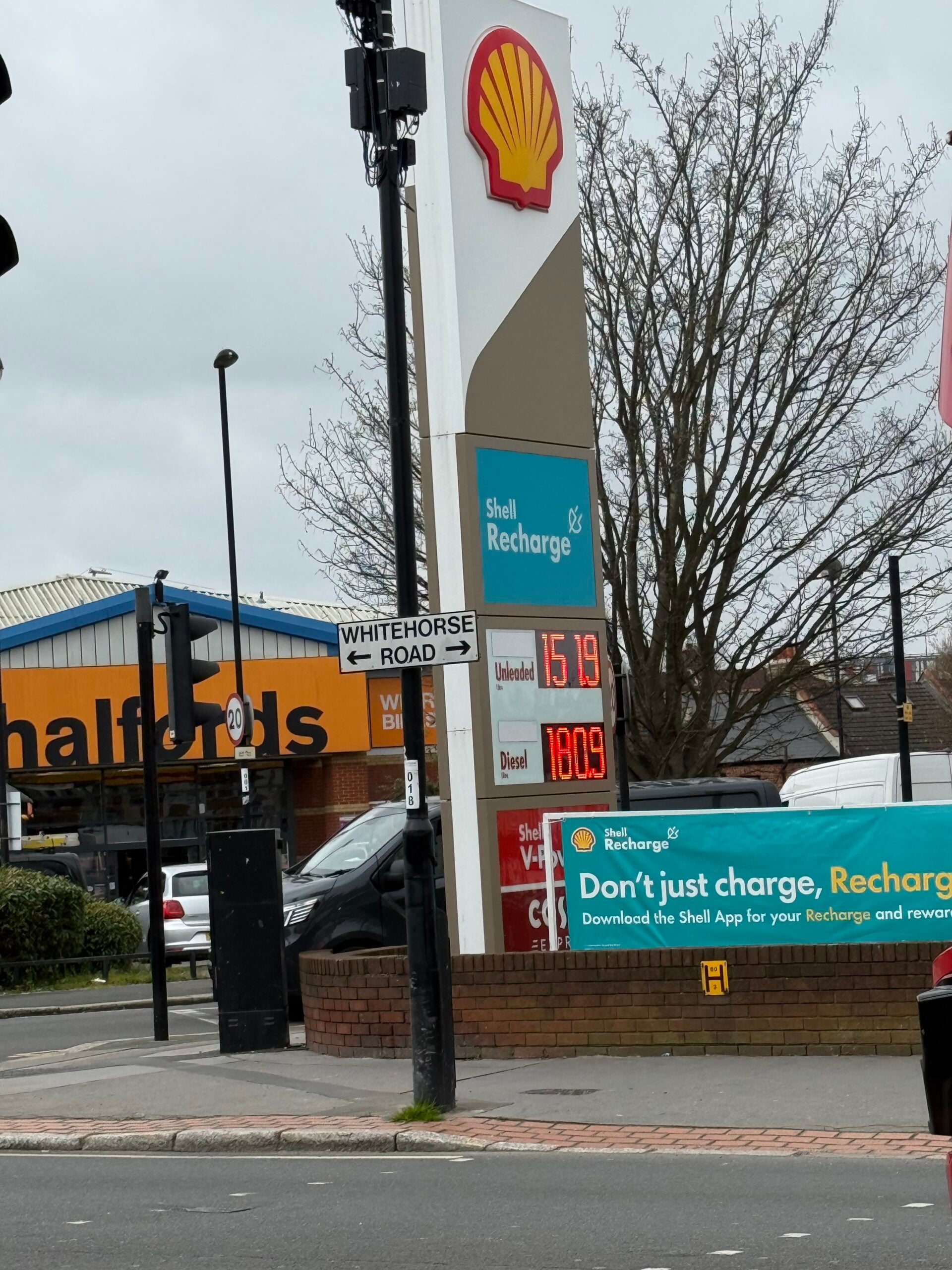
At the pump, drivers across Europe are already feeling it. Fuel prices have crossed the €2 per litre threshold in several countries. In the UK, petrol has hit levels not seen in years, with diesel threatening to follow close behind.
This Is Not Just An Oil Story
Here is the part receiving far less attention than it deserves. The closure of the Strait of Hormuz is not simply an energy crisis. It is simultaneously a food crisis, an industrial crisis, and a supply chain shock — all arriving at once.
Alongside the oil, the strait carries the world’s LNG, its sulphur, helium, aluminium, petrochemicals, fertilisers, and liquefied petroleum gas. All of it is now bottled up inside the Gulf, unable to reach the markets that depend on it.
Consider fertiliser. Around a third of the world’s supply passes through the strait. Urea prices have already risen by 50%. This matters not just for farmers this season — it matters for food prices well into 2027. The disruption is hitting during the spring planting season in the northern hemisphere, threatening yields of crops that feed livestock across the United States and beyond. The knock-on effects for meat, dairy, and food prices globally are likely to be felt long after the guns fall silent.
Then there is aviation. Approximately 30% of Europe’s jet fuel originates from or transits through the strait. Jet fuel prices have roughly doubled since the crisis began. Airlines are already announcing surcharges. For anyone planning summer travel, cheaper flights are not coming.
European industry is also absorbing the blow directly. Chemical and steel manufacturers across the continent have imposed surcharges of up to 30% to offset surging energy costs. Germany, one of the continent’s most energy-intensive economies, entered the crisis with gas storage sitting at just over 20% capacity. The Netherlands was even lower.
Can The Strait Be Reopened?
The United States has not stood still. In mid-March, American forces launched a military operation aimed at restoring freedom of navigation through the strait. Trump offered naval escorts for commercial vessels and proposed government-backed risk insurance for tankers willing to make the crossing. But experts have been sceptical about how much this can achieve in practice.
Even with insurance on offer, many shipping companies are unwilling to risk their vessels and crew in an active war zone. The concern is not merely commercial — a stricken supertanker in a 21-mile-wide waterway represents an environmental catastrophe of the first order, on top of the human cost.
Iran, meanwhile, has moved to formalise its control over the strait in a way that goes beyond a simple blockade. The Revolutionary Guards have established what analysts are describing as a toll booth system — a vetting process that ships must submit to before being granted passage. Some vessels have reportedly paid $2 million for the right to cross. Iran’s parliament is now moving to codify this arrangement through legislation, effectively asserting sovereign authority over an international shipping lane.
In Europe, France has signalled its intention to lead an EU effort to help reopen the strait. But progress has been slow and the obstacles are considerable. Many European governments are reluctant to commit military assets to what would, in effect, mean operating in an active conflict zone alongside American and Israeli forces.
The Bigger Picture: A Crisis Decades In The Making
What makes this moment so significant is not just what is happening now — it is what it reveals about how the global economy has been structured for the past half-century. The assumption baked into every trade agreement, every energy deal, and every supply chain calculation was that the Strait of Hormuz would remain open. That assumption has now been broken.
Senior figures in global energy policy are not understating the scale of what has unfolded. The head of the International Energy Agency has described the current situation as the greatest global energy security challenge in recorded history — exceeding even the twin oil shocks of the 1970s in its potential consequences.
Economic modelling from leading institutions suggests that removing 20% of global oil supplies from the market could reduce global GDP growth by close to three percentage points on an annualised basis. If the disruption runs for three quarters or longer, the cumulative damage pushes multiple economies into outright recession territory. For a world still navigating elevated debt levels and post-pandemic fragility, that is a deeply uncomfortable place to be.
What Happens Next
The honest answer is that nobody knows with certainty how or when the strait reopens. Diplomatic channels have not been entirely closed, but there is no visible momentum towards a resolution. Iran has shown no indication of backing down. The US military campaign to reopen the waterway is ongoing. And every week that passes adds to the economic damage accumulating across the global economy.
What is clear is that this crisis did not begin on 28 February 2026. It was built over decades — through an energy system that concentrated too much of the world’s oil and gas supply behind a single chokepoint, through geopolitical decisions that have now exploded into open conflict, and through an assumption in Western capitals that the Middle East’s energy arteries would always remain open.
That assumption is gone. And the bill, for Britain, for Europe, and for much of the world, is only just beginning to arrive.
World Analysis | Dispatch Times
