


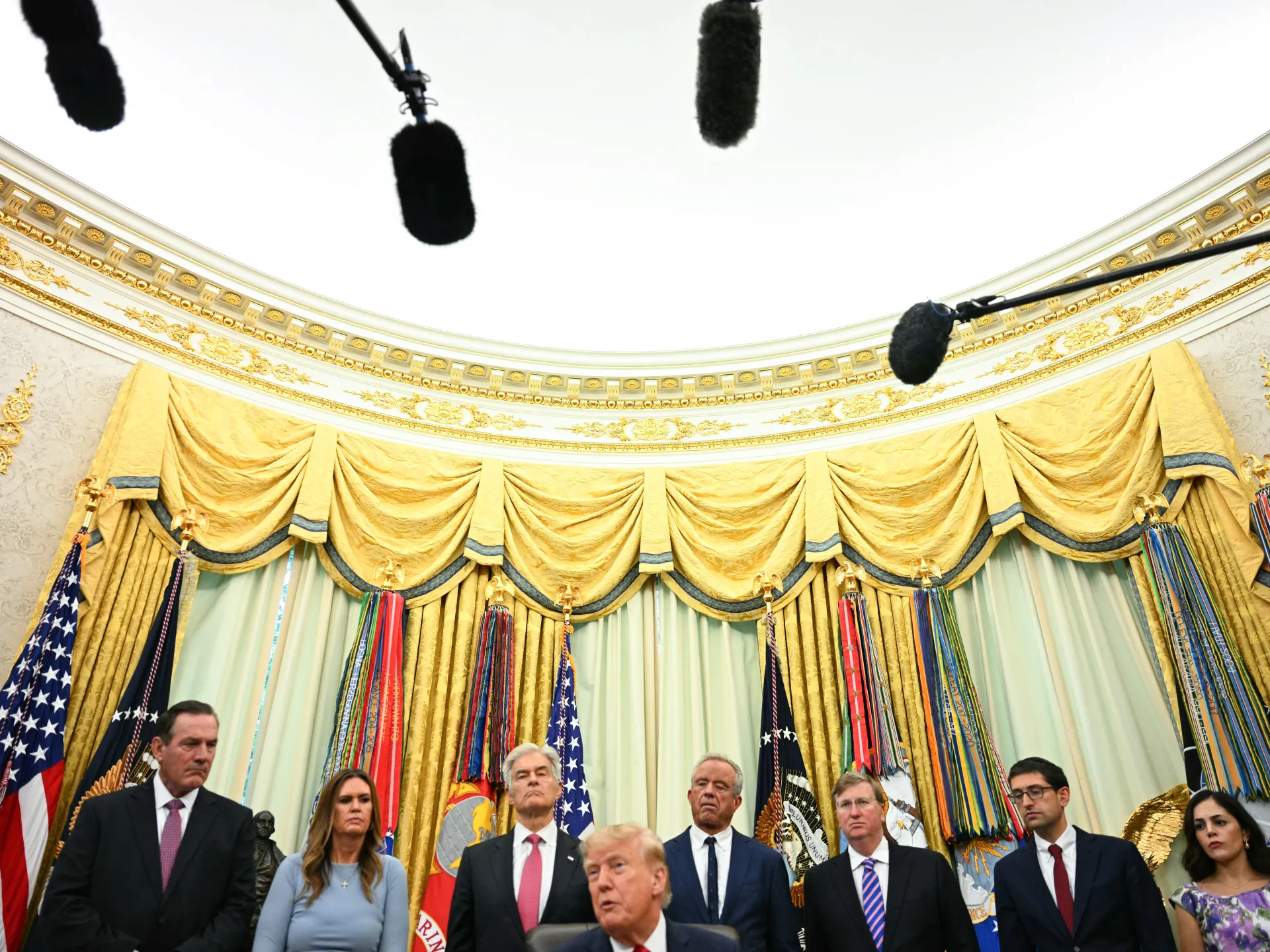
Donald Trump has signed a sweeping Russia sanctions package into law, giving the United States new powers to target the Kremlin’s finances and pressure Moscow towards negotiations over the war in Ukraine.
The legislation, signed on Friday, imposes measures on Russian President Vladimir Putin, senior officials and oligarchs, as well as banks and other financial institutions. It also targets Russia’s energy and defence industries and the so-called shadow fleet of tankers used to move Russian oil around Western sanctions.
Known as the Lindsey O Graham Sanctioning Russia and Iran Act of 2026, the law honours the Republican senator who spent more than a year negotiating it before his death in July. It was co-written by Democratic Senator Richard Blumenthal.
A central provision allows Mr Trump to impose tariffs of up to 100 per cent on the five largest buyers of Russian oil and gas. The measure is expected to affect China and India most heavily, as the two largest importers of Russian crude.
The legislation also extends sanctions against Iran’s energy and weapons sectors.
Congress passed the bill with rare bipartisan backing. The Senate approved it last month before the House passed it on Wednesday, with 58 Democrats joining Republicans in support. It is the first major Ukraine-related bill to clear Congress in more than two years.
Supporters say the sanctions are intended to cut off funds sustaining Russia’s war effort and encourage Putin to enter negotiations. Ukrainian President Volodymyr Zelenskyy, who had lobbied lawmakers before the vote, described the law as “an extremely powerful tool”.
House Speaker Mike Johnson said it applied “maximum pressure” to what he called “the Russian war machine”. Mr Blumenthal said he hoped the measures would bring Moscow to the negotiating table, telling Putin: “We have your number.”
Opposition came from some Democrats, including House Minority Leader Hakeem Jeffries. He warned that the tariff powers could increase costs for American families and said the sanctions provisions contained “loopholes”.
India, which faces particular exposure to the tariff threat, said it “remains firmly committed to ensuring energy security for its 1.4 billion people”. Mr Trump signed the law about a week before he is due to host Chinese President Xi Jinping at the White House.
