


The American president has warned that “a whole civilisation will die tonight” if Iran fails to reopen the Strait of Hormuz, as fresh strikes targeted the country’s most strategically vital oil terminal and Tehran signalled its readiness to retaliate beyond the region.
The Hours Before the Deadline
Donald Trump’s intervention on Truth Social, delivered with characteristic intensity, set a stark frame for what may prove one of the most consequential nights of the war. “A whole civilization will die tonight, never to be brought back again,” the president wrote, before adding that he did not want such an outcome but believed it would probably come to pass. He went on to suggest that “Complete and Total Regime Change” had already taken place in Iran, raising the prospect that “something revolutionarily wonderful” might still emerge.
The post arrived against a hard deadline. Trump has given Iran until 20:00 EDT on Tuesday — 01:00 BST on Wednesday — to reopen the Strait of Hormuz, the narrow maritime chokepoint through which a substantial share of the world’s oil supply passes. He framed the moment as the conclusion of “47 years of extortion, corruption, and death.”
Hours earlier, American forces conducted fresh strikes on military targets on Iran’s Kharg Island, according to a US official cited by CBS News, the BBC’s American media partner. Reports of the strikes first emerged via Iranian state news agency MEHR and the US outlet Axios. The official told CBS that oil infrastructure had not been targeted in the overnight operation — a notable distinction given that Kharg houses the terminal handling the bulk of Iran’s crude exports and is widely regarded as the country’s economic lifeline. The island had previously been struck in March, when Trump declared its military targets had been “totally obliterated.”
Why Tehran Is Unlikely to Bend
The question hanging over the next 24 hours is whether Trump’s ultimatum will produce the concessions he is demanding. The BBC’s security correspondent Frank Gardner offered a sceptical assessment: Iran rarely responds to overt threats and ultimatums in the manner Western governments anticipate. Having absorbed more than a month of sustained airstrikes from two of the world’s most advanced militaries, the Islamic Republic finds itself in considerable pain — but not in any mood to surrender.
Part of the explanation lies in ideology. Iran’s revolutionary tradition places a high value on martyrdom, and its threshold for absorbing punishment is correspondingly higher than that of most Western states. The Strait of Hormuz, moreover, represents Tehran’s strongest negotiating card. It is unlikely to be relinquished without something far more substantial than the cessation of bombing — including, in all probability, an end to Israel’s parallel campaign against Hezbollah.
The Islamic Revolutionary Guard Corps issued its own statement on Tuesday, warning that the restraint it had shown in selecting targets for retaliation against the US and its regional partners would no longer apply. “From this point forward, all such considerations will be set aside,” the statement said. The IRGC went further, declaring that any American crossing of red lines would prompt a response extending beyond the region — targeting US infrastructure and that of its partners, and disrupting oil and gas supplies for years to come.
The implications for the Gulf states are considerable. Iran has made clear that whatever civilian infrastructure the US strikes on Tuesday night, it will respond in kind against equivalent targets in the Gulf. Kuwait, Bahrain, Saudi Arabia, the United Arab Emirates and possibly Qatar are now bracing for the possibility that they will be drawn directly into a conflict they have spent months trying to remain on the periphery of.
Vance Outlines Two Pathways from Budapest
While Trump issued his ultimatum from Washington, Vice President JD Vance offered a more measured framing of the American position from Budapest, where he was meeting Hungarian Prime Minister Viktor Orban. Asked by the Washington Post whether any new development suggested a deal could be reached, Vance said the United States had “fundamentally” completed its military objectives in Iran. From this point, he argued, the manner in which the war ends rests with the Iranians themselves.
Vance set out two possible routes. The first envisages Iran deciding to become “a normal country” — one that ceases funding terrorism and integrates itself into the international system of commerce and exchange. The second is bleaker: continued resistance, leading to an economic situation Vance described as “very, very bad” and worsening.
The contrast between Vance’s tone and Trump’s apocalyptic rhetoric was unmistakable. Whether this reflects a deliberate good-cop, bad-cop dynamic between the White House and the vice president’s office, or a more fundamental divergence within the administration about how the next phase should be handled, remains unclear.
A Widening Theatre of Violence
As the diplomatic and military pressure intensified, the conflict’s reach extended well beyond Iranian territory. Iran launched fresh missiles at Israel on Tuesday, with the Israel Defense Forces saying its defence systems were working to intercept them. The IDF had earlier urged civilians to shelter, before lifting the alert and allowing people to leave protected spaces.
Inside Iran, the human cost continued to accumulate. Iranian state news agency IRNA reported that two people had been killed and three injured in a strike on the Yahya Abad railway bridge in Kashan, citing Akbar Salehi, deputy security officer of the governor of Isfahan. The BBC has not been able to verify the claim independently. The reported attack came hours after the Israeli military issued a public warning to Iranians to avoid rail travel “for the sake of your security,” and a day after Trump threatened the “complete demolition” of Iranian infrastructure. Following the Israeli warning, Iran’s Fars news agency reported that all railway services in the north-eastern city of Mashhad had been cancelled until further notice, with the governor citing precautionary concerns.
In Istanbul, three people were initially reported killed and two police officers injured in a shooting near the Israeli consulate. The city’s governor Davut Gül later clarified that one attacker had been killed and two others “neutralised.” Turkey’s interior minister said the suspects had been identified, with one reportedly having ties to “an organisation that exploits religion.” The connection, if any, to the wider regional conflict remains unestablished.
The Ripple Effect on Global Energy Markets
The economic shockwaves are travelling far beyond the Middle East. In Sri Lanka, President Anura Kumara Dissanayake announced the largest relief package in the country’s history, aimed at supporting farmers, fishermen and low-income households as energy costs surge. The island nation depends heavily on Middle Eastern oil, and fuel prices have risen by roughly a third since the war began on 28 February. The government is now in talks with Russia about backup supplies of gas, coal, fuel and fertiliser — a striking indication of how rapidly the conflict is reshaping established trade relationships.
The price of a barrel of oil has climbed from around $70 in late February to roughly $110 in early April, a trajectory that places intense strain on import-dependent economies and threatens to feed into inflation worldwide. Should Trump act on his threat against Iranian infrastructure, and should Tehran follow through on its pledge to retaliate against Gulf state energy facilities, that trajectory could steepen sharply within hours.
For now, the world is waiting on a deadline. Whether it passes with a diplomatic breakthrough, a calibrated escalation, or something closer to the catastrophe Trump invoked in his Truth Social post, will be known by Wednesday morning in London. What is already clear is that the consequences — military, economic and humanitarian — will extend far beyond the borders of either the United States or Iran.
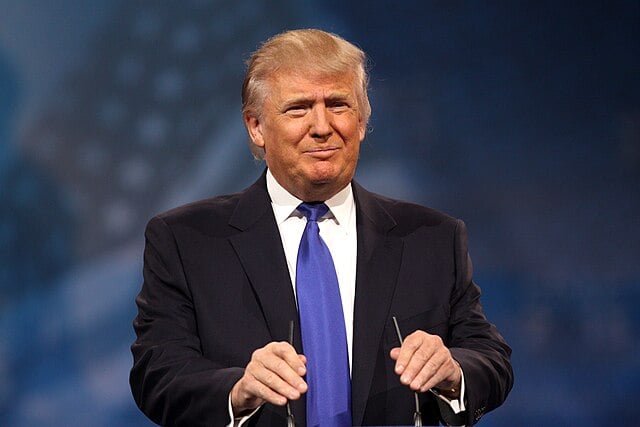
Trump: ‘Entire civilization could die tonight’ if Iran rejects deal amid US strikes on Kharg Island

Lucas Bennett
Politics & Economy Ronan Walsh is a freelance journalist covering politics and the economy. He reports on UK and international political developments, public policy, and economic trends, with a focus on clarity, accountability, and real-world impact.
Keep Reading
Add A Comment
Subscribe to Updates
Subscribe to our newsletter and stay updated with the latest news and exclusive offers.
© 2026 Dispatch Times. All rights Reserved.