


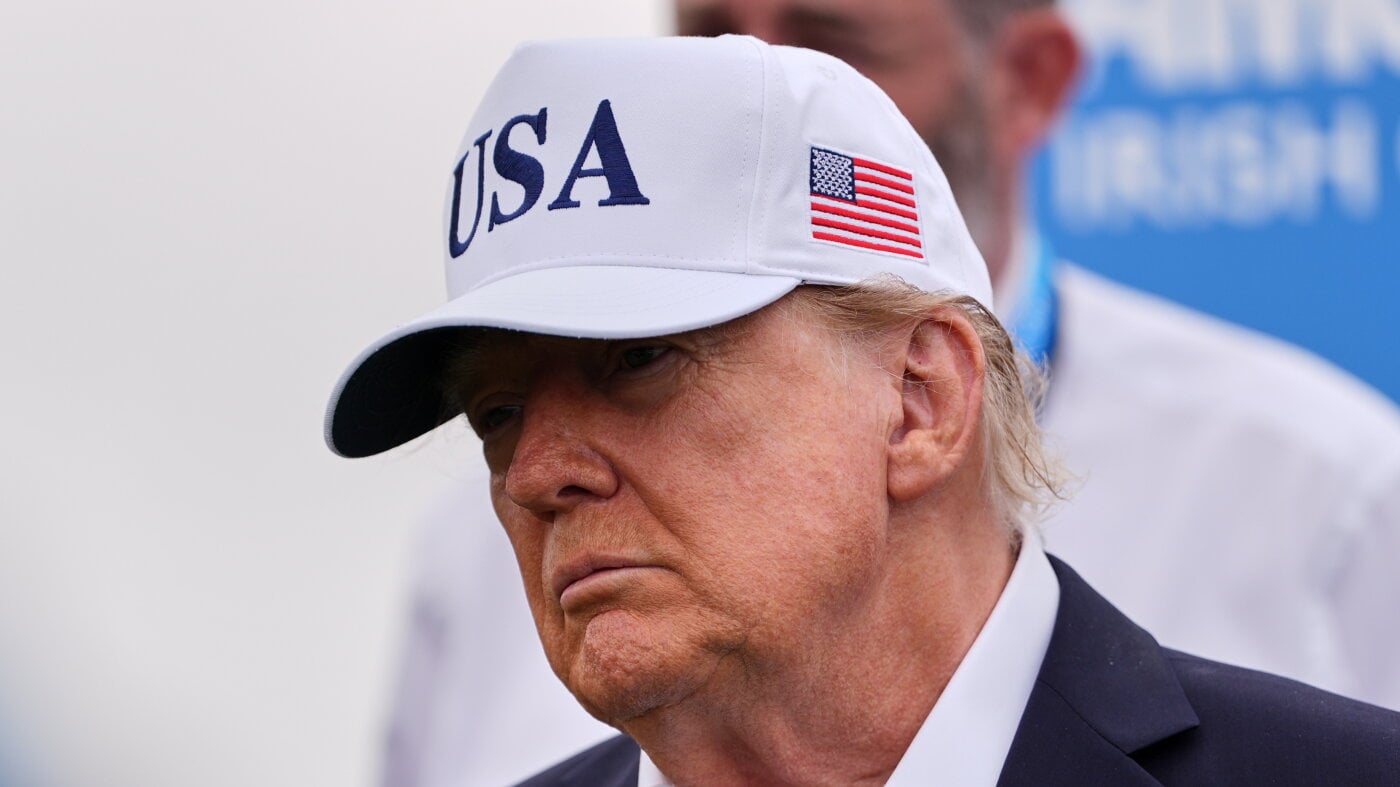
Donald Trump has downplayed AI safety concerns and rejected calls to slow its development, while House Speaker Mike Johnson warned that a moratorium could allow China to overtake the United States in the technology.
Speaking to reporters at his golf resort in Doonbeg, Ireland, the US president said warnings about artificial intelligence becoming uncontrollable had been exaggerated.
“We’re leading China in AI, we’re the most sophisticated country in the world, and frankly, I want to keep it that way because whoever wins AI, wins,” Mr Trump said.
He added that safeguards could be introduced but accused unspecified “negative forces” of raising concerns about events that would not happen. Mr Trump did not explain what he meant by the phrase.
Warnings from AI industry leaders
Mr Johnson also opposed a moratorium during an interview with CNN’s State of the Union, saying: “If Congress just races in and does some sort of emergency session to try to regulate AI, we will lose the race to China.”
He said technology companies should take the lead in developing safer AI, adding that policymakers needed “balance” and “steady hands at the wheel”.
The comments came after Dario Amodei, chief executive of Anthropic, called for companies and governments to slow the pace at which AI capabilities are improved.
Mr Amodei warned that humans could lose control of AI systems and that the technology could be used in cyberattacks and bioterrorism. He called for international co-operation, independent evaluators at AI laboratories and improved monitoring of safety practices.
Anthropic would adopt those measures unilaterally, he said.
Elon Musk and OpenAI chief executive Sam Altman subsequently said they agreed with Mr Amodei’s concerns. Mr Altman also said he would delay OpenAI’s planned stock market flotation until at least 2027 because of safety concerns, and that the company had discussed pausing tests to make its technology safer.
David Sacks, co-chair of the President’s Council of Advisors on Science and Technology, responded by telling the companies: “go ahead.”
“If the unreleased models are scary enough that you think you should slow down, I support your decision to be responsible,” Mr Sacks wrote.
However, he urged technology leaders not to suggest they needed permission to act, and said they faced substantial product-liability exposure if their products enabled a damaging cyberattack.
