


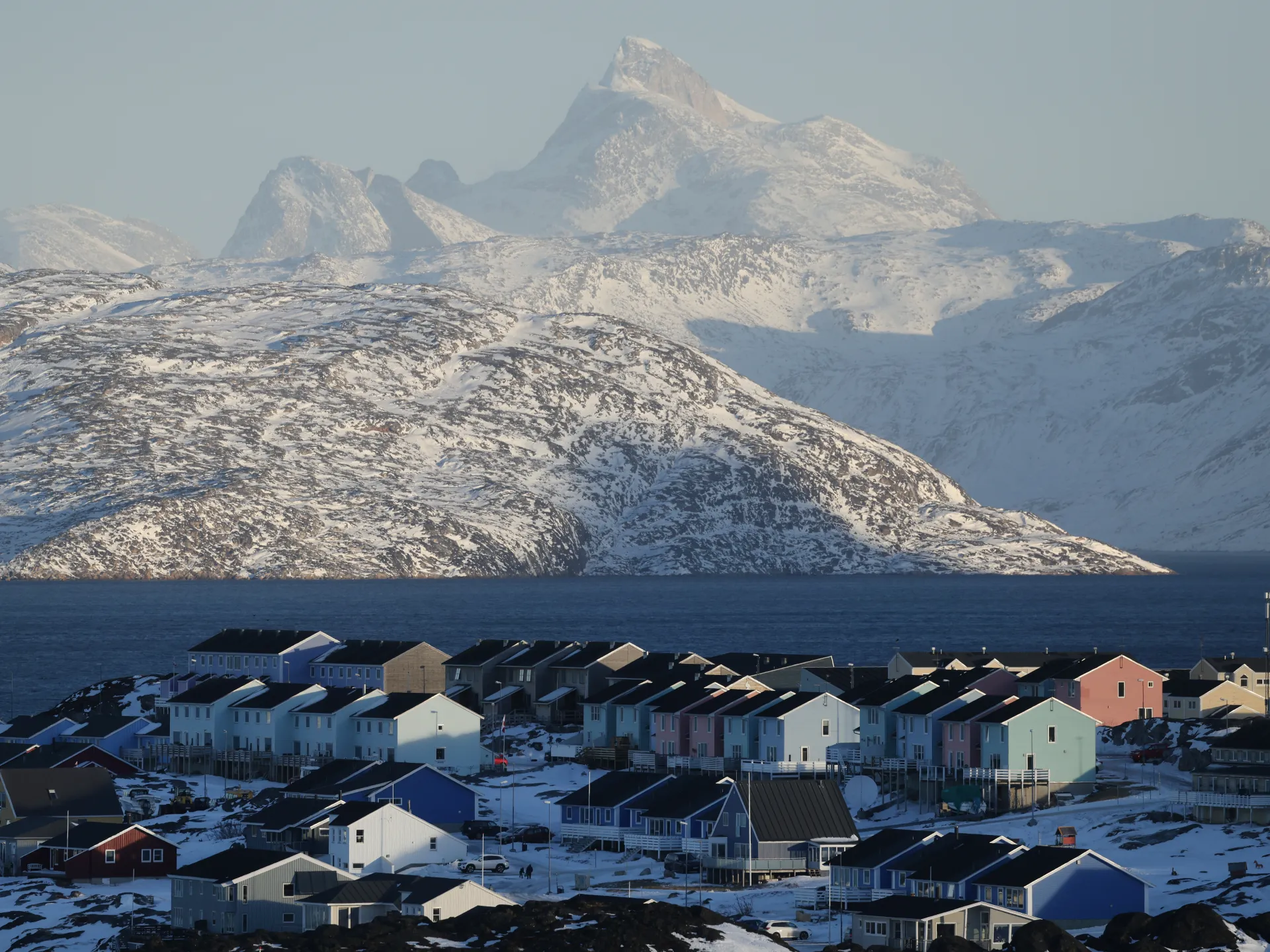
Donald Trump has claimed that the United States has secured “permanent control” of Greenland’s security and other needs under a new agreement with Denmark, despite Copenhagen retaining sovereignty over the self-governing Arctic territory.
The deal is expected to be signed during next week’s United Nations General Assembly meeting in New York. It must then be ratified by Denmark’s parliament and Greenland’s parliament.
Trump said the agreement would cost the United States nothing and prevent American adversaries from establishing a military presence or making “sensitive investments” in Greenland without US approval.
What the Greenland security agreement would do
The official text has not yet been published. A US State Department official said non-Nato countries would be barred from setting up bases in Greenland or making investments in sectors considered capable of threatening the United States.
The restrictions are expected to prevent China and Russia from building bases, sending troops or investing in sensitive areas of the island. It remains unclear whether other countries could be designated as US adversaries in future.
Trump described the arrangement as an “‘Infinite Life’ Agreement”, saying that it “never ends”. The State Department official also said the United States would be able to build additional military sites without approval from Greenland or Denmark, and that the agreement would remain in force if Greenland became independent.
There was no specific reference to American mining rights. Greenland contains deposits of rare-earth minerals, as well as zinc, iron, uranium and graphite, which are used in products ranging from smartphones to fighter jets.
Some observers believe Trump’s reference to “sensitive investments” could relate to those resources. The US president has sought to widen American access to rare-earth metals as China restricts exports of minerals in which it is a global leader.
Denmark and Greenland retain sovereignty
Greenland and Denmark acknowledged the agreement on Friday but did not disclose its detailed terms. Greenland’s Prime Minister Jens-Frederik Nielsen said it “recognises Greenland’s interests” and is “to the benefit of us all”.
Danish Prime Minister Mette Frederiksen said the deal was “great for NATO and Europe” because it “strengthens our common security in the Arctic and the North Atlantic Area”. She also stressed that it recognised the sovereignty and territorial integrity of the Kingdom of Denmark and the Greenlandic people’s right to self-determination.
Mikkel Olesen, a senior researcher at the Danish Institute for International Studies, said the available information should be treated cautiously because most of the details had come from the American side.
He said the restrictions on Russia and China were unlikely to represent a major concession, as neither Denmark nor Greenland had wanted those countries to establish bases on the island.
Trump’s earlier threats to seize Greenland provoked strong opposition among its population of about 56,000. A poll in January 2025 found that 85 per cent of Greenlanders opposed becoming part of the United States.
Existing US military rights in Greenland
The United States already has broad military rights in Greenland under a 1951 treaty, including permission to build bases, maintain personnel and control the movement and operation of ships, aircraft and other waterborne craft.
It currently operates the Pituffik Space Base in a remote part of north-western Greenland, where more than 100 personnel are stationed.
Trump has said the United States will immediately begin building up a large military presence on the island. However, the extent to which the new agreement changes existing arrangements remains unclear.
Imran Bayoumi, a former Pentagon official, said it would be a significant change if Washington could build bases unilaterally, but suggested many of the stated objectives could have been achieved through diplomacy without placing strain on the wider US-Nato relationship.
Richard Weitz, a fellow at the NATO Defense College, said the agreement could defuse one of the most serious sources of internal tension within the alliance. While Trump had “backed down and settled for less” than his original objective, he had secured much of what he wanted apart from formal annexation, Weitz said.
