


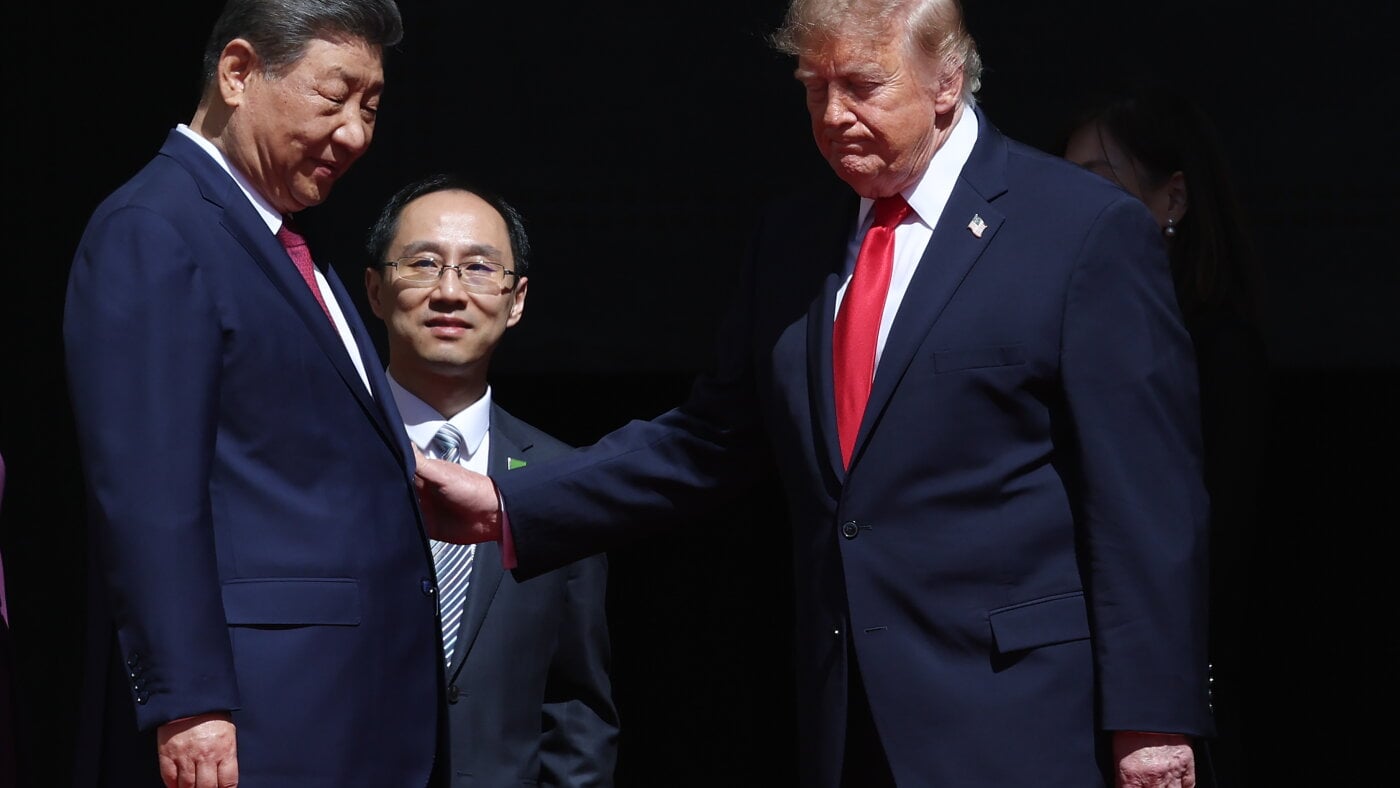
Donald Trump’s state visit for Xi Jinping in Washington has produced an extension to a fragile US-China trade truce, but few substantive agreements, with ceremony and personal diplomacy taking centre stage.
The Chinese president’s first state visit to the United States since 2015 brought a red-carpet welcome at a politically significant moment for both leaders. Mr Trump is around six weeks from midterm elections, while Mr Xi faces a key Communist Party meeting next month ahead of an expected announcement that he will rule for another five-year term.
The two countries said their trade truce would be extended by two months. The arrangement allows the US continued access to rare earth elements from China, while China retains access to some advanced American semiconductor chips.
However, the delegations did not announce details about two proposed trade and investment boards, Boeing purchases or pending Chinese agricultural purchases. The outcome instead relied heavily on warm remarks from both presidents, leaving major economic tensions unresolved.
Trump and Xi emphasise stability despite deep differences
Mr Trump highlighted his personal relationship with Mr Xi during their time together, including a tour of the White House South Lawn, the new helipad and the Marine One helicopter. The two leaders and their delegations spent about three hours in meetings on Thursday.
Mr Xi adopted a broader geopolitical tone, invoking the “Thucydides trap” – the idea that conflict can arise when a rising power threatens a declining one. China’s account of the talks described “aspirations for the future” and called the discussions a significant step towards finding how the two countries could coexist.
Mr Trump said he planned to attend the Asia-Pacific Economic Cooperation summit in southern China in November, while Mr Xi is expected to attend the G20 Leaders’ Summit in Miami in December.
At a state dinner attended by about 145 guests, Mr Xi toasted Mr Trump’s health and spoke of a “new chapter” in relations. Mr Trump referred to the long history of trade between the two countries and praised their shared efforts during the Second World War.
“Look at the greatness that we had together fighting in World War II,” Mr Trump said.
Lucy Hornby, author of an forthcoming biography of Mr Xi, said the Chinese leader had used familiar themes of Chinese diplomacy, including panda diplomacy. She said that when Mr Xi meets an American president, he presents the two countries as equals capable of tackling global problems together.
Taiwan and artificial intelligence remain disputed
Significant disagreements remained beneath the cordial exchanges. Before the meeting had concluded, China’s state news agency called on the United States to oppose formal Taiwanese independence.
The US has no formal diplomatic relations with Taiwan and has long maintained a policy of strategic ambiguity over whether it would defend the self-ruled democracy militarily if China used force.
Artificial intelligence was another area of tension. China urged the two countries to work together to prevent the “misuse and abuse” of AI, while Mr Trump has argued against regulating frontier technology.
American and Chinese officials also discussed a possible information-sharing system to warn of AI incidents linked to national security. Samm Sacks, a senior fellow at New America, said a formal agreement was unlikely, but that the discussions had created a mechanism for continued contact.
“The bar is low, but they’ve set up a mechanism to keep talking,” Ms Sacks said.
Pageantry offers a pause in a tense relationship
The scale of the welcome prompted concern among some former officials who have worked on US-China relations. Nicholas Burns, a former US ambassador to China, said Americans expected their president to be civil towards a foreign leader, but argued that excessive flattery would not sway Mr Xi.
“This is our most difficult relationship in the world,” Mr Burns said.
Others said the ceremony could provide useful breathing space after a period of severe tension between the world’s two largest economies. Ms Sacks said the pageantry itself could be stabilising, even if it did not resolve disputes over rare earth minerals, trade or safeguards around AI.
The visit therefore delivered a measure of stability and a limited trade understanding, while leaving the central disagreements between Washington and Beijing largely intact.
