


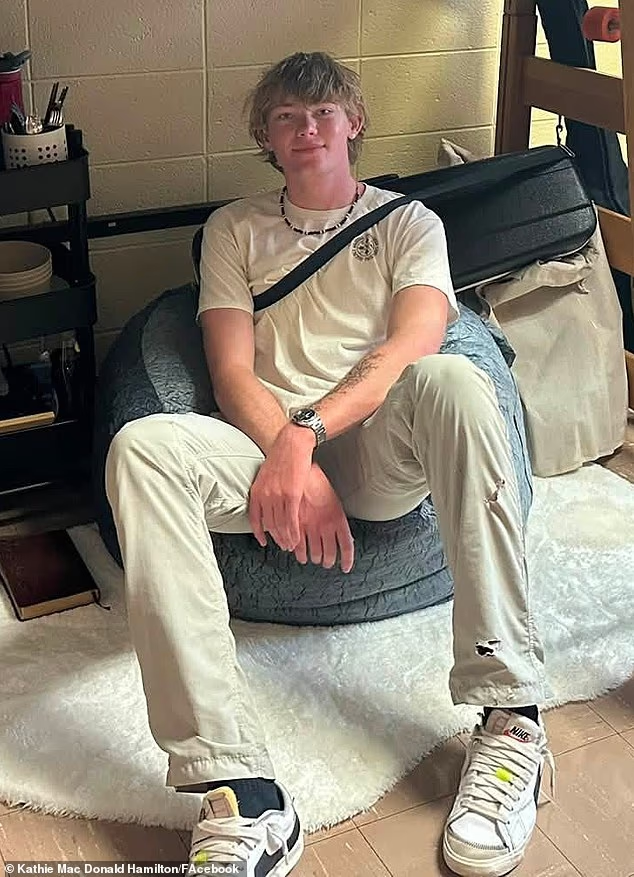
Two people have been arrested after two students died in suspected kratom overdoses near the University of Mississippi, although police have not linked the arrests to the deaths.
Yahya Mohamed Mosleh, 51, and Islam Mohamed, 18, were detained following a raid on a smoke shop about a mile from the university campus in Oxford, Mississippi.
Oxford Police said the pair had been booked on charges of possessing Schedule 1 drugs with intent to distribute. Officers recovered more than 500 units of kratom, as well as THC cartridges, gummies and other suspected drugs, the force said.
The raid came days after the deaths of Aidan Hamilton, 18, and Robert Strang, 20. Hamilton was a freshman from Colorado, while Strang was a junior from Georgia.
Police said the owner of the business, Amer Alowdi, 40, had previously been indicted for drug trafficking and had since left the country.
“This remains an active investigation. Additional information will be released when appropriate,” Oxford Police said.
Authorities have not established whether kratom or any other substance played a role in the students’ deaths.
Kratom found during both death investigations
The Lafayette County Metro Narcotics Unit said packaged kratom had been found during both investigations. The substance was also recovered from the shop during the police raid.
Kratom is an unregulated herbal extract used by some people for energy, pain relief and to manage withdrawal. In larger doses, it can act as an opioid.
Police have warned people not to ingest kratom or other substances that have not been prescribed by a medical professional.
Hamilton was found in Stewart Hall, where law enforcement officers attempted CPR, according to reports from friends and local student media. Strang was later found dead at an off-campus house on Van Buren Avenue.
Their deaths were announced by the university’s vice chancellor for student affairs, Dr Shawnboda Mead. She later urged students not to speculate about the circumstances or repeat unconfirmed claims after rumours circulated on social media that other students might be unaccounted for.
Strang’s family said they were “heartbroken by the loss of our dear son and are trying to process this unimaginable loss”. In a statement issued through family attorney Scott Sayres, they added: “We are deeply grateful for the incredible outpouring of love, prayers and support by so many beloved friends and family. Their kindness has meant more to our family than we can ever express.”
Local, state and federal agencies are working together to establish what happened, while police said they were supporting the families and asking that their privacy be respected.
The university has also reminded students that Narcan, an over-the-counter medicine used to reverse an opioid overdose, is available in vending machines across the campus.
