


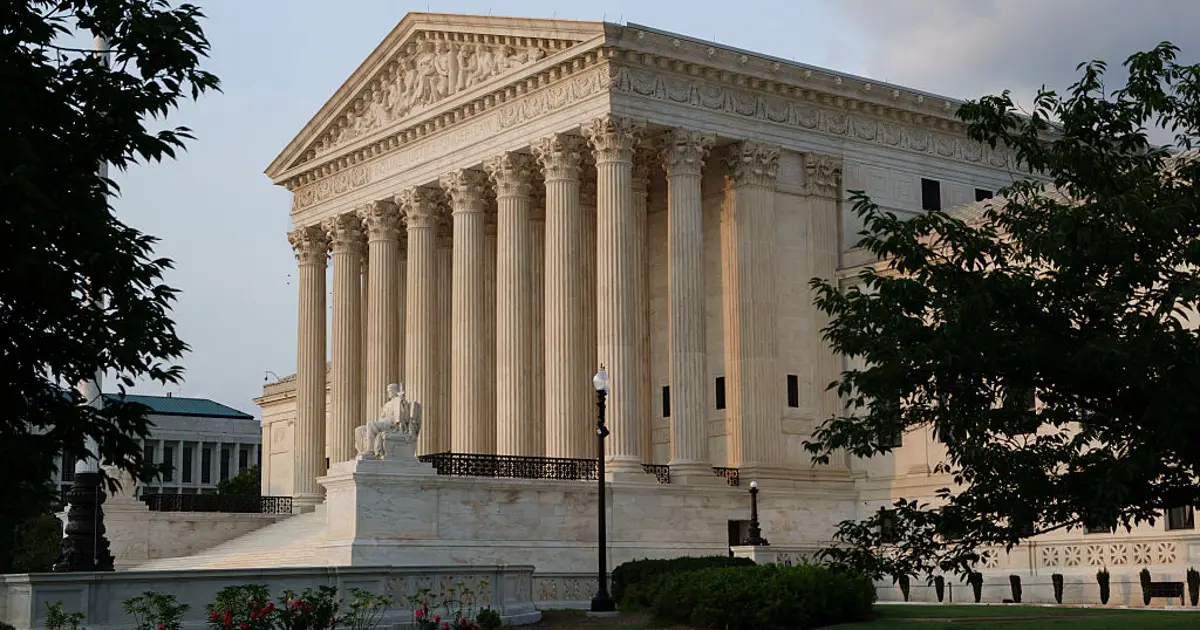
The US Supreme Court has declined to intervene in a bitter surrogacy dispute involving a seriously ill baby born in Texas, leaving a California couple recognised as the child’s legal parents.
Justice Elena Kagan rejected an emergency application from McKenna West, an Alaskan surrogate who had asked the court to suspend a California judgment naming Omar Ahmed and Nausheen Gilkar as the child’s parents. No reason was given for the decision on Tuesday, September 22.
Supreme Court leaves parents’ legal status intact
The ruling means a Texas order giving effect to the California judgment remains in place. West’s bid for conservatorship — which would have allowed her to take part in decisions about the baby’s medical treatment — has also been rejected by courts in California, Alaska and Texas.
West gave birth in Dallas on August 12 after refusing a request to terminate the pregnancy. She calls the boy Gabriel, while Ahmed and Gilkar refer to him as Rumi.
The child was diagnosed before birth with hypoplastic left heart syndrome, a life-threatening condition in which the left side of the heart is severely underdeveloped. Babies with the condition commonly require several operations, and the boy underwent surgery shortly after he was born.
West has argued that the couple’s earlier request for an abortion raised concerns about whether they would agree to life-saving treatment. She sought authority to make medical decisions herself and said she feared the child might not receive the care he needed.
Ahmed and Gilkar have denied that they intend to withhold necessary treatment. Their lawyers told courts that the couple is committed to following medical advice and argued that West’s involvement would create uncertainty over who had authority to consent to treatment.
A court-appointed guardian for the child told the Texas Supreme Court that doctors had no concerns about the couple’s medical decision-making and had followed recommendations “to a T”, according to court filings. The baby’s doctor also recommended that his remaining treatment take place at a Los Angeles hospital, where the couple live.
The parents’ lawyer, Adam Wolf, said they were grateful that Rumi could continue receiving the treatment he needed and accused West’s legal challenges of undermining their ability to care for him.
West’s lawyer, Lincoln Davis Wilson, said she was disappointed by Justice Kagan’s decision but maintained that the legal campaign had secured public assurances from the couple that they would provide life-saving care. He said that had been West’s objective “from day One”.
The case has drawn national attention because it combines a dispute over surrogacy and parental rights with a disagreement about abortion and the treatment of a child with a severe congenital heart condition.
