


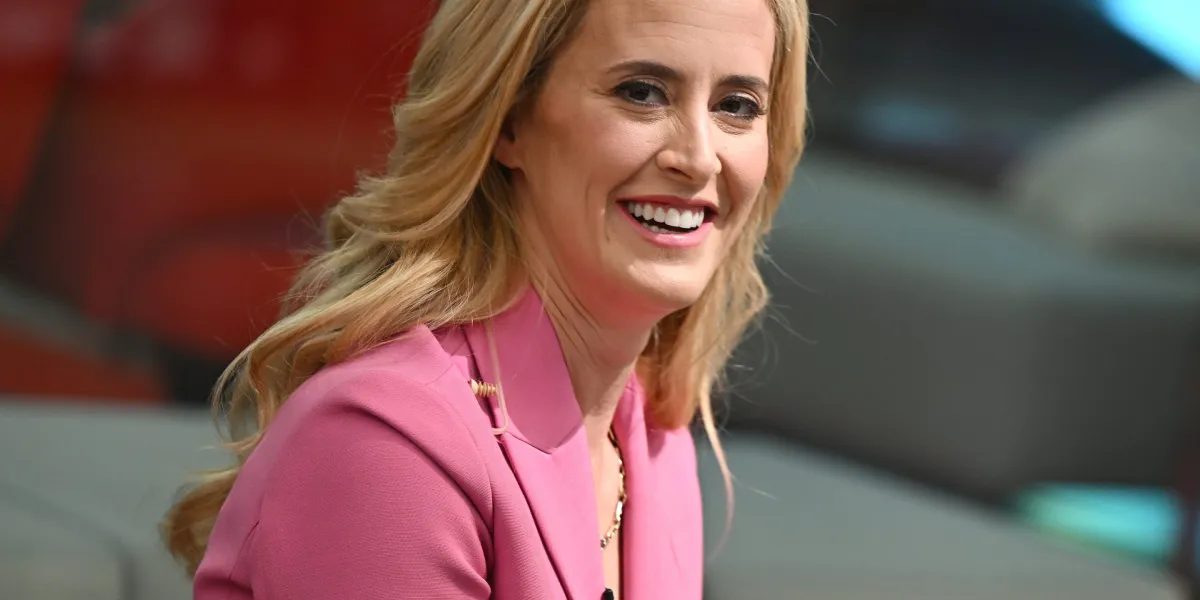
Olivia and Tom Walton have pledged an initial $100 million over five years to help halve the US maternal death rate, in a campaign aimed at attracting further public and private investment.
The commitment to Healthy Moms, Healthy Babies America (HMHBA) will support state-matching grants, partnerships and healthcare infrastructure. The organisation said the funding would be used as a springboard for wider efforts rather than as a standalone programme.
Olivia Walton founded HMHBA in May through Heartland Forward, a “think and do” tank focused on issues affecting the US heartland. She said the campaign was shaped by her own experience of motherhood.
“It was more dangerous for me to give birth to my children than it was for my mother to give birth to me in the 1980s,” she said. “That is inexcusable—and it is fixable.”
Walton said many of the measures needed to reduce maternal deaths already exist, including earlier access to care, longer-lasting postnatal support and services designed around the needs of families.
“Nearly 90 percent of maternal deaths are preventable,” she said. “We know what works, and states across the country are already proving it.”
Maternal mortality remains high in the US
The US recorded nearly 19 maternal deaths for every 100,000 live births in 2023, despite a fall from the previous year. The Centers for Disease Control and Prevention recorded 669 deaths from maternal causes that year.
The burden is not shared equally. The rate for Black women was 50.3 deaths per 100,000 live births, more than three times the rate for white women.
HMHBA said two-thirds of maternal deaths occur during the year after birth, while 40 per cent of mothers do not receive follow-up care. Women in rural areas can face additional difficulties as hospitals continue to close obstetric units.
Robin Reck, HMHBA’s executive director, said 87 per cent of maternal deaths were preventable and 65 per cent occurred after the baby had been born.
“The US spends more money for worse outcomes on maternal health. Far more than any other country in the entire world,” Reck said. “That is unacceptable. And it is un-American.”
A Heartland Forward study estimated that poor maternal health outcomes in 2020 cost the US economy $165 billion. HMHBA said preventing half of those avoidable outcomes could save nearly $80 billion a year.
The financial impact is also reflected in the cost of premature births. A healthy, full-term delivery costs about $6,400, while an extremely premature birth can cost $238,000. Medical costs during the first year are roughly four times higher for premature infants than for those born at full term, according to the March of Dimes.
A bipartisan push for maternal health
The Walton initiative is being presented as a bipartisan effort. A national poll of more than 1,000 registered and likely voters released in July found that 86 per cent believed maternal health needed to improve, while 79 per cent said they would vote for a candidate supporting reforms.
All 15 policy proposals tested in the poll received majority backing from Republicans, Democrats and independents.
HMHBA is supporting the Rural Obstetrics Readiness Act, sponsored by senators Maggie Hassan, Susan Collins, Katie Britt and Tina Smith. The legislation would fund training, equipment and teleconsultation for rural facilities without obstetricians so they can respond to delivery emergencies.
The bill cleared the Senate health committee in July and is awaiting a vote by the full chamber. HMHBA is also backing the NIH IMPROVE Act, led in the Senate by Britt and Cory Booker, which would authorise seven years of funding for a National Institutes of Health maternal-health research initiative.
Tom Walton is the grandson of Walmart founder Sam Walton. The family’s philanthropic interests include education, the environment and causes in north-west Arkansas, while Olivia Walton has focused on the arts and women’s issues and founded Ingeborg Investments to support female start-up founders.
“America should be the safest place in the world to have a baby,” Olivia Walton said. “We have the evidence and we have the solutions. Now we need the urgency and investment to make them available to every mom, across the country.”
