


Two young people are dead and fifteen more are in hospital after a meningitis outbreak tore through Canterbury in a matter of days — and the strain behind it is one that the vast majority of British university students have no protection against.
The victims are a sixth-form pupil at Queen Elizabeth’s Grammar School in Faversham and a student at the University of Kent. Some of those hospitalised are understood to have been placed in an induced coma. ITV Meridian Health officials are now scrambling to contain the damage, but the question being asked by families and doctors alike is a simple one: why are students not vaccinated against this in the first place?
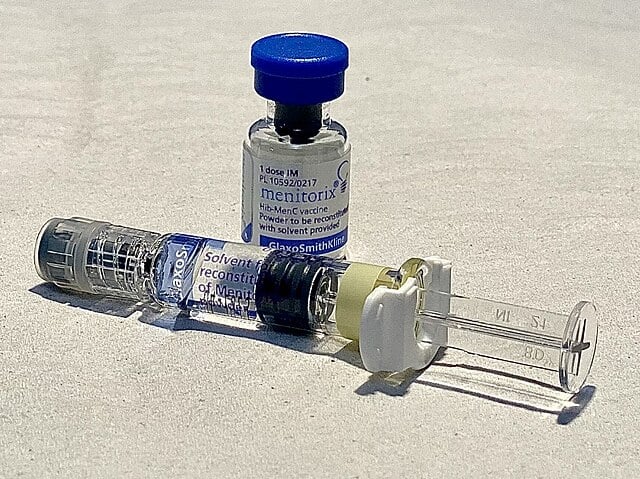
The MenB vaccine has been available on the NHS since 2015, but only as part of routine childhood immunisations — meaning anyone now aged over ten has not received it through the standard schedule. GOV.UK Every university student in the country falls into that gap.
The jab was never extended to teenagers or young adults on the NHS. Dr Eliza Gil from the London School of Hygiene and Tropical Medicine said the vaccine was deliberately targeted at babies because they carried the highest risk of death, and added that protection is also only thought to last a few years. LSHTM The result is that students heading to university — living in packed halls, sharing drinks, kissing — go in with no NHS-provided cover against the strain now killing people in Kent.
MenB made up 82.6 percent of all confirmed invasive meningococcal disease cases in England in the most recent data. GOV.UK It is by far the most common strain. Yet for anyone born before 2015, getting the jab means paying for it privately at a pharmacy.
The current outbreak is linked mainly to the Club Chemistry nightclub in Canterbury, where cases visited on 5, 6 and 7 March. GOV.UK The club’s owner Louise Jones-Roberts said more than 2,000 people passed through the venue over those three nights ITV Meridian, meaning the number of people potentially exposed is large. The club has since closed.
Four schools in Kent have now confirmed cases or suspected cases, and the University of Kent has cancelled all in-person exams for the week. Letters have been sent to all 16,000 students at the university with advice on symptoms, antibiotics and what to do if they feel unwell. icb
Health Secretary Wes Streeting told MPs that 700 antibiotic doses had already been administered, with 11,000 more available across four treatment centres in Canterbury. GOV.UK He also announced that a targeted vaccination programme would begin for students living in halls at the University of Kent — a decision taken because of the outbreak, not before it.
On the wider question of why students are not routinely offered MenB protection, Streeting said he would ask the Joint Committee on Vaccination and Immunisation to re-examine eligibility — noting that the JCVI had previously ruled a catch-up campaign for older children was not cost effective. Express & Star
Deaths from meningococcal disease in the UK have fallen sharply over the past two decades — from around 2,600 a year in 1999 to 2000, down to fewer than 400 in 2024 to 2025 — largely because of childhood vaccination programmes. Science Media Centre But those programmes left a generation exposed, and this week that exposure has cost two young people their lives.
Anyone who was at Club Chemistry on 5, 6 or 7 March is being told to collect preventative antibiotics from treatment centres in Canterbury without delay. No appointment is needed. A single course of antibiotics is effective at preventing the disease in around 90 percent of cases. GOV.UK
Symptoms to watch for include fever, severe headache, stiff neck, sensitivity to light, vomiting and a rash that does not fade when pressed with a glass. Anyone who develops these should call 999 or go straight to A&E — not wait.
