


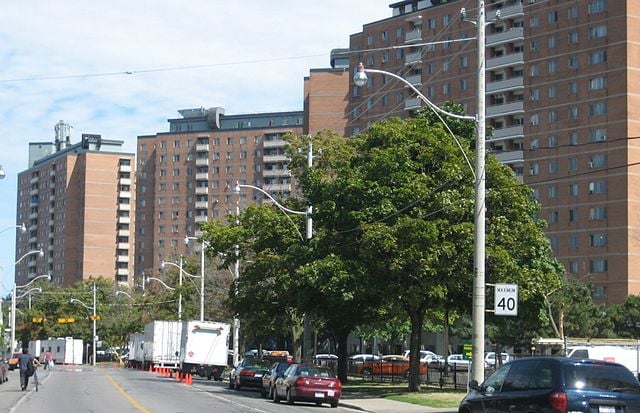
There is a particular kind of desperation that settles over a country when the thing it once took for granted a home, a place to belong, a foundation from which to build a life — begins to feel permanently out of reach. That desperation is now a defining feature of Canadian life in 2026, and no amount of political reassurance has yet managed to dispel it.
The numbers, at this point, are almost too familiar to shock. Average home prices in Toronto and Vancouver have long since passed the point where median-income earners could reasonably aspire to ownership. Rents in major cities have doubled over the course of a decade. Shelter costs consume proportions of household income that would have seemed extraordinary to previous generations of Canadians, and the waitlists for subsidised housing in cities like Ottawa and Calgary now stretch into years rather than months. The crisis is no longer an emerging trend. It is a settled condition that millions of Canadians are navigating every day.
What makes the situation particularly difficult is that it did not arrive unannounced. The warning signs were visible for years in rising price-to-income ratios, in construction data that consistently fell short of demand projections, in the slow erosion of rental vacancy rates across the country. Governments at every level received those warnings. The response, measured against the scale of the problem, was inadequate.
How Canada Got Here
Understanding where Canada finds itself in 2026 requires looking at the intersection of several forces that, individually, were manageable, but in combination proved overwhelming.
Population growth, driven by historically high levels of immigration, accelerated demand for housing at precisely the moment when supply was least equipped to respond. Canada welcomed record numbers of new permanent residents and temporary workers in the years following the pandemic, filling genuine gaps in the labour market and meeting long-term demographic needs. However, the infrastructure required to house those arrivals not just homes, but the serviced land, utilities and community facilities that make housing viable was not in place to receive them.
At the same time, the construction industry was operating against a set of structural constraints that limited its ability to scale. Skilled labour shortages, rising material costs, lengthy municipal approval processes and restrictive zoning frameworks combined to make new housing development slower and more expensive than the market required. The gap between what was needed and what was being built widened year by year.
Interest rate movements added further complexity. The rapid rise in borrowing costs that began in 2022 cooled price growth in some markets but did little to improve affordability for those entering the market, since the reduction in prices was offset by the increase in financing costs. When rates subsequently began to fall, demand returned faster than supply could respond, and prices climbed again. The result is a market that has failed, in a fundamental sense, to perform its basic function for a substantial portion of the population.
The Human Cost
Statistics communicate scale. They are less effective at conveying the human reality behind the numbers the young professionals sharing apartments well into their thirties not by preference but by necessity, the families in mid-sized cities who find themselves priced out of communities they have lived in for decades, the seniors on fixed incomes facing rent increases that consume any margin of financial security they once possessed.
The housing crisis has also deepened existing inequalities in ways that will have generational consequences. Ownership has become increasingly concentrated among those who already owned property before prices surged, or who had access to family wealth sufficient to bridge the gap between savings and a down payment. For those without those advantages which is to say, for a growing proportion of younger Canadians the path to ownership has narrowed dramatically. The wealth-building mechanism that homeownership represented for previous generations is, for many, no longer available.
The psychological toll is harder to quantify but no less real. Housing insecurity is associated with elevated stress, poorer health outcomes, reduced educational attainment among children, and diminished civic participation. A country in which a significant portion of the population cannot secure stable, affordable housing is a country whose social fabric is under sustained strain. Canada in 2026 is experiencing that strain in ways that are increasingly difficult to ignore.
What Has Been Tried
Federal, provincial and municipal governments have not been entirely passive. A range of initiatives has been introduced over the past several years, covering everything from foreign buyer restrictions and vacancy taxes to accelerated permitting processes and new federal funding streams for affordable housing construction.
Some of these measures have had modest effects in specific markets. The foreign buyer ban contributed to a cooling of speculative activity in some segments of the market, though its overall impact on affordability has been limited, since foreign buyers were never the primary driver of price growth in most Canadian cities. The Housing Accelerator Fund, which provides federal money to municipalities in exchange for commitments to zoning reform and faster approvals, represents a more structural intervention but its effects will take years to materialise in the form of actual completed homes.
The core problem a persistent and significant shortfall between housing supply and demand — has not been resolved by any of these measures. Building more homes, at the pace and in the locations where they are needed, remains the only intervention that will ultimately move the needle on affordability. Everything else is, at best, supplementary.
What Needs to Happen
The path forward is not mysterious. It is, however, politically difficult and operationally complex in ways that have consistently frustrated progress.
Zoning reform is essential. Large portions of Canadian cities remain restricted to low-density, single-family development in ways that make efficient use of urban land impossible. Allowing higher-density housing across a broader range of neighbourhoods including the established residential areas that have historically been most resistant to change is a precondition for meaningful supply growth. Several municipalities have taken steps in this direction, but progress has been uneven and often modest in scale.
Infrastructure investment must keep pace with housing ambitions. Building homes without the transit, utilities and community services required to make those homes liveable simply relocates the problem. Federal and provincial funding for housing-enabling infrastructure needs to be treated as urgently as the housing targets themselves.
The construction sector needs sustained attention too. Expanding the skilled workforce available for residential construction, reducing regulatory friction without sacrificing safety standards, and creating conditions for purpose-built rental development to be financially viable are all necessary components of a functioning supply response.
None of this is simple. All of it is necessary. Canada’s housing crisis did not develop overnight, and it will not be resolved through any single policy or any single level of government. What it requires is sustained, coordinated effort across jurisdictions and over a timeframe measured in years rather than electoral cycles. Whether the political will exists to sustain that effort in the face of competing priorities, fiscal constraints, and the resistance of those whose interests are served by the status quo remains the central question facing Canadian housing policy as 2026 unfolds.
