


Democrats in five newly won battleground states are under pressure to join the National Popular Vote Interstate Compact, a move that could activate an agreement designed to ensure the US presidency goes to the candidate who wins the most votes nationwide.
Pennsylvania, Michigan, Wisconsin, Arizona and Nevada will all come under unified Democratic control next year. If Pennsylvania, Michigan and Wisconsin join the compact, alongside either Arizona or Nevada, member states would reach the 270 Electoral College votes needed for it to take effect.
The agreement requires participating states to award their Electoral College votes to the winner of the national popular vote, rather than the candidate who receives the most votes within that individual state. It currently has the support of 18 historically Democratic states and Washington DC, representing 222 electoral votes.
All five states are expected to be important battlegrounds in the 2028 presidential election under the existing system. Democrats in each have previously backed a switch to a national popular vote, but it is unclear whether their newly elected leaders will prioritise the issue after campaigning on reducing costs for voters.
Democratic leaders weigh national popular vote proposal
Priya Sundareshan, the incoming Arizona Senate majority leader, said her caucus would consider the compact, although the timetable remained undecided. She said she had not discussed the issue with Governor Katie Hobbs, whose office declined to comment.
“We certainly are and have been prepared to join the compact, and we also want to make sure that we are showing that our priorities are reflective of what we really focused on on the campaign trail,” Ms Sundareshan said.
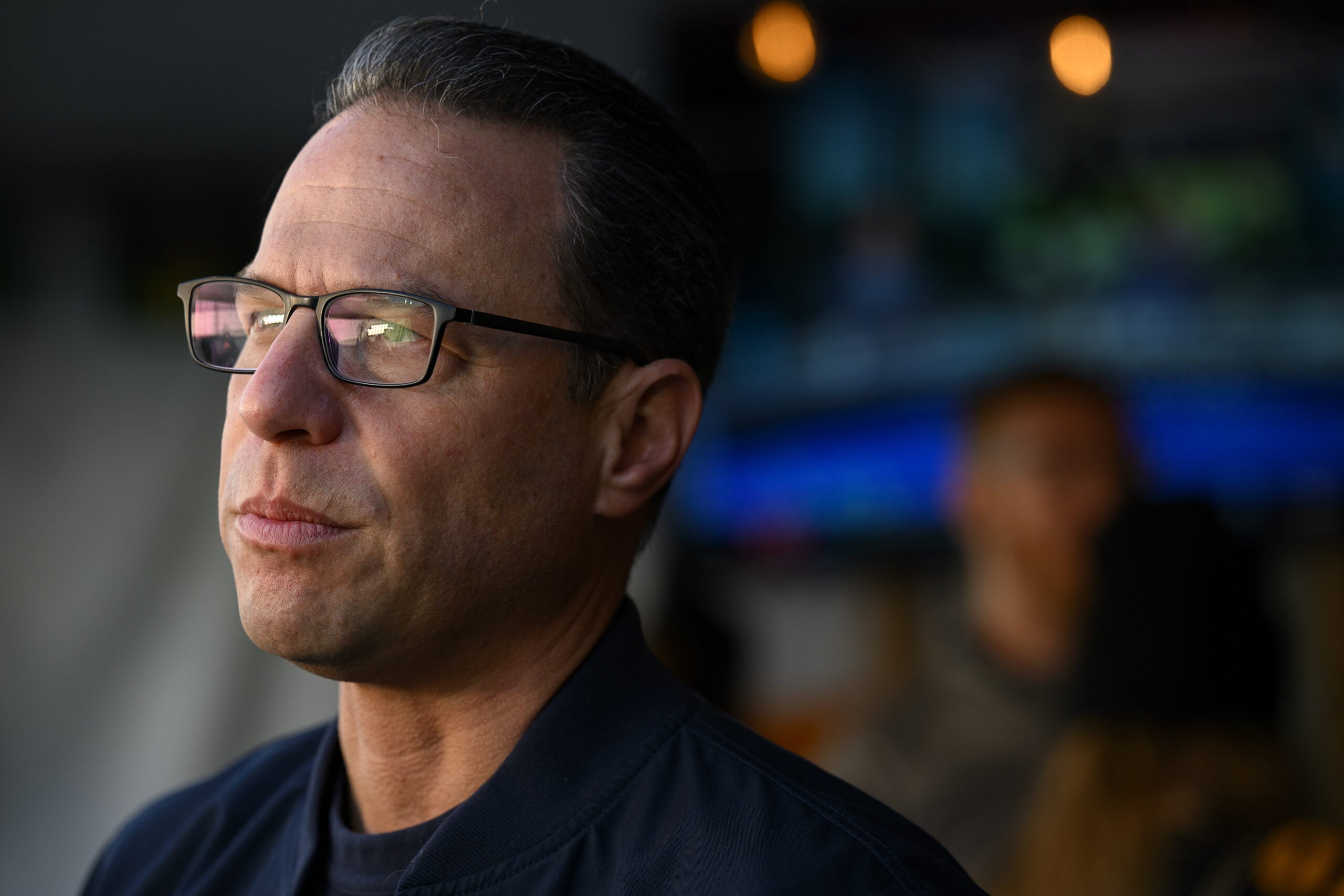
Pennsylvania Governor Josh Shapiro has said he is “open” to signing his state up, while indicating that he had not yet co-ordinated with legislators on how the proposal would fit alongside his wider agenda.
Speaking separately at Crooked Media’s Crooked Con event on Saturday, Mr Shapiro said the national popular vote “makes sense” and promised to work with lawmakers “to figure out what the right mechanism going forward on that.”
In Michigan, incoming Senate majority leader Darrin Camilleri said he was also open to the idea, but warned that it would probably prompt legal action from Republicans.
“Other states that have done this are not going to be the tipping-point states. We very well could be one of those tipping point-states, and so I want to ensure that everybody is on the same page,” Mr Camilleri said.
Representatives for Michigan Governor-elect Jocelyn Benson did not respond to a request for comment.
Wisconsin Governor-elect David Crowley supported a 2019 bill for the state to join the compact. Asked whether he would back it as governor, he said he was focused on forming an experienced transition team to ensure his administration was ready to deliver results for working families.
Ben Wikler, the former chairman of the Wisconsin Democratic Party and an advocate of the compact, rejected concerns that battleground states would lose influence in presidential elections.
“I’ve spoken to audiences all over the state of Wisconsin,” Mr Wikler said. “Everyone here agrees that Wisconsinites shouldn’t be high and mighty, lording over the powerless voters in the coastal states. We should be a one-person, one-vote democracy.”
Nevada Democrats previously advanced a bill to join the compact when they held control of the state legislature and governor’s office in 2019. It was vetoed by then-governor Steve Sisolak, who said he was concerned the change would reduce the role of smaller states such as Nevada. The office of Governor-elect Aaron Ford declined to comment.
Despite the uncertainty in all five states, National Popular Vote, the bipartisan organisation campaigning for the compact, said it remained confident that enough states would sign up before the 2028 election.
“I’ve never been more confident in my life,” said Patrick Rosenstiel, a spokesman for the organisation.
