


It was in the middle of the night when I first woke up drenched in sweat.
At just 40, I was hit by a tsunami of menopause symptoms. I had severe hot flushes and my clothes were soaked in sweat; the anxiety was so crippling, I found myself terrified to talk on work teams calls; and my brain fog was so intense, I thought I was going mad.
Ten days earlier, I’d been given an anti-antagonist injection recommended by my consultant to put an end to the debilitating endometriosis symptoms that had plagued me for decades.
Called Prostap, the drug shuts down the body’s hormone production and ‘starves’ the endometriosis – a chronic condition in which tissue similar to the lining of the uterus grows outside of it – into submission.
I was warned I might experience some menopause-like symptoms but I didn’t anticipate what felt like being plunged into early menopause. While my endometriosis finally felt under control, everything else in my life seemed to be falling apart.
Within five years of the symptoms starting I lost two jobs and my libido, discovered my partner had been secretly seeing other women, went on benefits and nearly crashed my car from severe fatigue.
I first took Prostap in 2019 when I was running a regional team for a large luxury retailer in central London.
Soon after, I knew my menopause symptoms had started to affect my performance at work so, when I was asked by my older male line manager for a chat, I was terrified I was going to lose my job.
Emma Stronell’s menopause symptoms were so debilitating that she says: ‘I had never been so low… I wanted it all to be over and I took an overdose’
We met in a busy coffee shop, where I explained my endometriosis and menopause symptoms, in the hope that he would understand how they had been affecting my performance at work.
Instead, he seemed to think I was making up excuses. He dismissed my condition as ‘women’s problems’, called me ‘over-emotional’ and suggested my symptoms were simply down to ‘stress’. I felt angry and humiliated and cried all the way home.
Unable to manage my symptoms and convinced I could no longer do my job, I had never been so low. I felt I was failing at everything and just wanted the misery to stop. Living for so long with the pain of endometriosis and feeling like a stranger in my own body had become too much.
In that moment, I just wanted it all to be over and I took an overdose. Thankfully, I managed to get a taxi straight to hospital in time, but I was off for around a month.
Within three weeks of my return, I discovered I was being made redundant. I felt angry and let down – if I’d been treated with basic human decency, I would never have reached that point of despair.
When Covid hit, I went back to my parents’ home in County Durham to join their bubble. Thankfully, I found a job in jewellery wholesale, which I could do from home until lockdown ended.
That was when I also met Callum at a lunch with friends. I’d been happily single for a decade, and wasn’t looking for love. He was a divorced dad of two; charming, funny and confident. I fell for him quickly and thought, at last, something good had come into my life. My family and friends liked him and, most importantly, so did my son Rhys, from a previous relationship. Callum made me feel seen, and loved.
A year in, he had more or less moved in with me, although he stayed at his own home when he had his children.
Then, one morning, I was alone when my phone pinged with an incoming text. It was from a number I didn’t recognise. It was a woman who said she had been in a serious relationship with Callum for the last six years. She had become suspicious, gone through his phone, and discovered that he had been in multiple relationships with at least two other women. I was one of them.
I felt angry, devastated and confused. Things had been difficult between us, due to my low libido – another menopause symptom – and I’d worried I was driving him away. But it wasn’t that at all.
He came back to my house later that afternoon. Distraught, I showed him the messages and told him to get out. He tried to deny it, but I wasn’t going to be made a fool of. Even then, he wouldn’t accept it was over. He knocked on my door, sent messages, he even transferred money into my account, in a bid to make contact. I blocked his number, put his belongings in a carrier bag and left them on his parents’ doorstep. I haven’t seen him since.
For the next two years, I felt I was managing my endometriosis symptoms better, but I frequently discussed the option of having a full hysterectomy with my consultant.


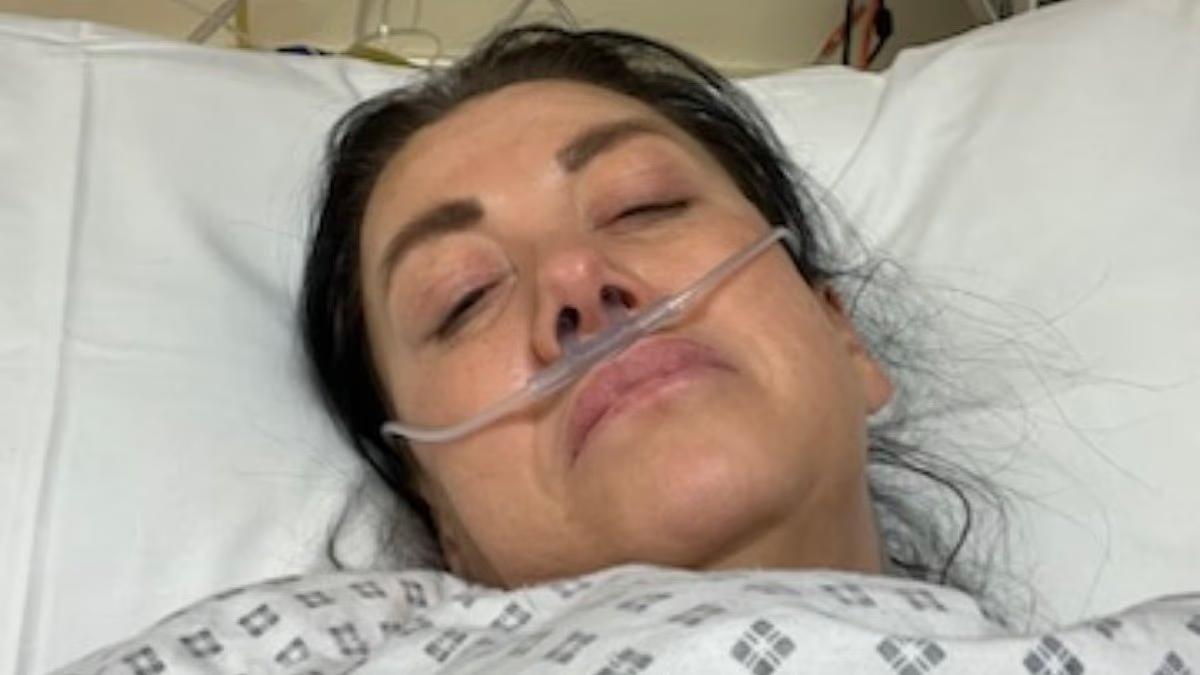
Emma had a full hysterectomy (pictured before and after the operation in 2024) but she says this worsened the symptoms, as she was suffering from ‘surgical menopause’
I had suffered stabbing abdominal pains for two decades, but always dismissed them as ‘one of those things’.
I finally got a diagnosis at 36 and, following seven laparoscopies – keyhole surgery where scar tissue is removed – and the Prostap injection, I finally felt the symptoms were more manageable.
But I always had a fear of the pain returning and, knowing I didn’t want any more children, I decided to go through with the hysterectomy in November 2024.
I spent a couple of days in hospital, and was off work for two weeks. While I was no longer in pain, I was now in ‘surgical menopause’. To my horror, within a month, everything became even worse.
I was utterly exhausted. Some mornings, I couldn’t even get out of bed. My job required me to drive around the county to meetings with clients – and one morning, after a night of insomnia and night sweats, I fell asleep at the wheel of my Golf.
I was out for just seconds and woke as I swerved off the road. I managed to stop without harming anyone but, looking back, I could have killed someone – or myself.
At the time, it didn’t even occur to me that the unmanageable fatigue was a menopause symptom. My brain fog was so bad I thought I was just simply exhausted.
I couldn’t remember meetings, forgot important sales information and was finishing work early in the afternoon to nap. I told my family how exhausted I was, and they supported me as much as they could.
But after that terrifying incident, my anxiety spiralled. I was scared it would happen again and, despite having spent 20 years working in sales, I became unable to pick up the phone and make a call. I told my boss, but there was no real support available.
I asked my doctor about HRT, but they were wary of prescribing anything that could cause my oestrogen levels to spike and potentially stimulate any residual endometrial tissue left behind after my hysterectomy.
I battled on for more than a year, regularly taking time off because I was so exhausted and ill.
Then, just before Christmas 2025, I was made redundant for a second time. I had no savings because of the unpaid sick leave, and I received just three months’ payout. Afraid I wouldn’t be able to pay my rent, I signed up for Universal Credit. I felt so ashamed and embarrassed after 25 years of working hard. My mental health and confidence were at rock bottom.
Finally, after four months of trying, I managed to get an HRT prescription with the exact dosage that doesn’t trigger my endometriosis. I am currently on three pumps of transdermal estrogen gel and a pea-sized amount of testosterone that goes directly onto my skin, and a 200mg capsule of progesterone.
Almost overnight, I felt like a different person.

Since getting an HRT prescription Emma says she feels like a different person. She is in a happy and supportive relationship with Alan, who she’s opened up to about her health struggles

And her 25-year-old son, Rhys, always tells Emma how proud he is of her when he comes home to visit
My anxiety is much better controlled and, although I still suffer from some fatigue, I am learning how to manage my energy. The HRT has almost stopped the hot flushes and night sweats.
I’m still not certain if my endometriosis will grow back, or whether having a hysterectomy was worth it. But I’m only 46, and I hope new treatments will improve my prognosis in future.
Rhys is now 25, a plumber and heating engineer with his own company. He lives nearby with his girlfriend in Durham and, whenever he comes home, he always gives me a big hug and tells me how proud he is of me.
I am also in a new relationship with Alan, whom I met at a brunch with friends. He is kind, charming and genuine. I was initially very cautious after what happened with Callum, but I told him about my health history and he was incredibly understanding.
He has been a real catalyst for my recovery. On the days when I didn’t want to leave the house, he’s cheered me up and made me laugh. I’m also so grateful for my parents’ support – I don’t know how I’d have coped through the pain of endometriosis, the hysterectomy and the menopause symptoms without them.
Instead of returning to my old career, I’m now using my fashion experience to build a personal styling business, helping women rebuild their confidence during menopause. I’m training to become a menopause coach with Lauren Chiren, a speaker and trainer helping women navigate midlife.
Other women have told me how much they appreciate being able to talk openly about how awful the symptoms can be for some of us. If I can prevent even one woman from losing her job, her relationship and her confidence the way I did, then everything I’ve been through will have been worth it.
For confidential support, call Samaritans on 116 123, or visit samaritans.org
theforwardedit.co.uk
