


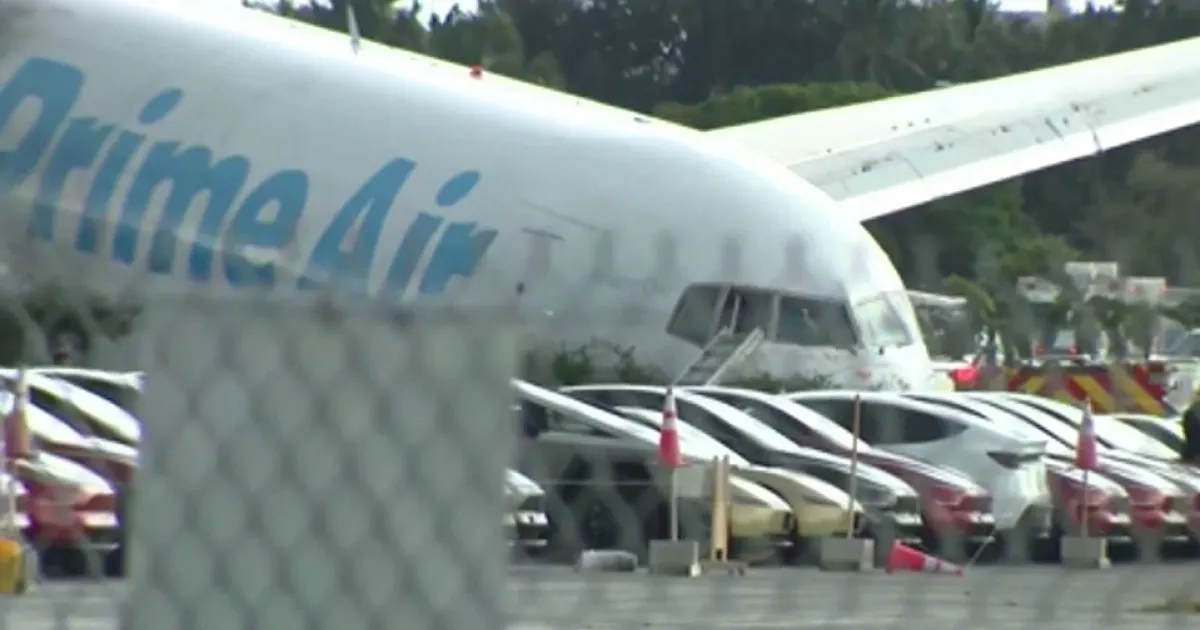
A pilot repeatedly warned that an Amazon cargo jet was approaching Miami International Airport too quickly before it overran the runway and crashed, killing five people, investigators have said.
The National Transportation Safety Board (NTSB) said one of the pilots raised concerns about the Boeing 767’s speed nearly two minutes before touchdown on Sunday, 6 September. The same pilot called for a go-around shortly after the aircraft landed.
The NTSB said the findings were preliminary and could change as the investigation continues. Its update was based on initial examinations of the cockpit voice recorder and flight data recorder.
Warnings came before fatal runway overrun
The aircraft was cleared to land on runway 30 at Miami International Airport after the crew checked in with air traffic control. About 1 minute 42 seconds before the end of the cockpit recording, one pilot warned that the aircraft was too fast.
Further comments about excessive speed followed, but investigators said there was no consistent verbal response from the other pilot. Automated warnings in the cockpit included repeated alerts about the aircraft’s sink rate and terrain.
The jet touched down at a groundspeed of about 158 knots, according to the flight data recorder. Braking was applied, but the left main landing gear did not touch down until the aircraft was travelling at about 134 knots.
About 15 seconds before the end of the flight-data recording, the brakes were released and the throttles increased to a setting consistent with go-around thrust. The throttles were then reduced to idle and the brakes reapplied, with no indication that the speed brakes or thrust reversers were deployed.
The aircraft travelled about 1,300ft beyond the end of the runway, struck a van carrying workers from an aircraft-cleaning company and then hit a sports utility vehicle after crossing a public road. It caught fire after the impact.
All five people who died were in the van. Five others were injured, including two who were reported to be in critical condition on Tuesday. Both pilots survived.
Investigation into Amazon cargo plane crash continues
The flight was operated by North Carolina-based 21 Air for Amazon. Flight 7598 was travelling from San Juan, Puerto Rico, to Miami and was being flown by a Boeing 767-33A that had originally been built as a passenger aircraft before being converted for freight operations.
The NTSB said the cockpit voice recorder contained more than two hours of audio, while the flight data recorder held about 54 hours of information covering more than 400 parameters. A specialist group will now review the cockpit recording and prepare a written transcript.
Investigators have not established why the aircraft approached at such a high speed, why the landing was not abandoned earlier or whether crew actions, aircraft performance, maintenance or other factors contributed to the crash.
The agency is also examining the aircraft’s ownership, maintenance and operating history. No final conclusions about the cause of the Miami cargo plane crash have been reached.
