


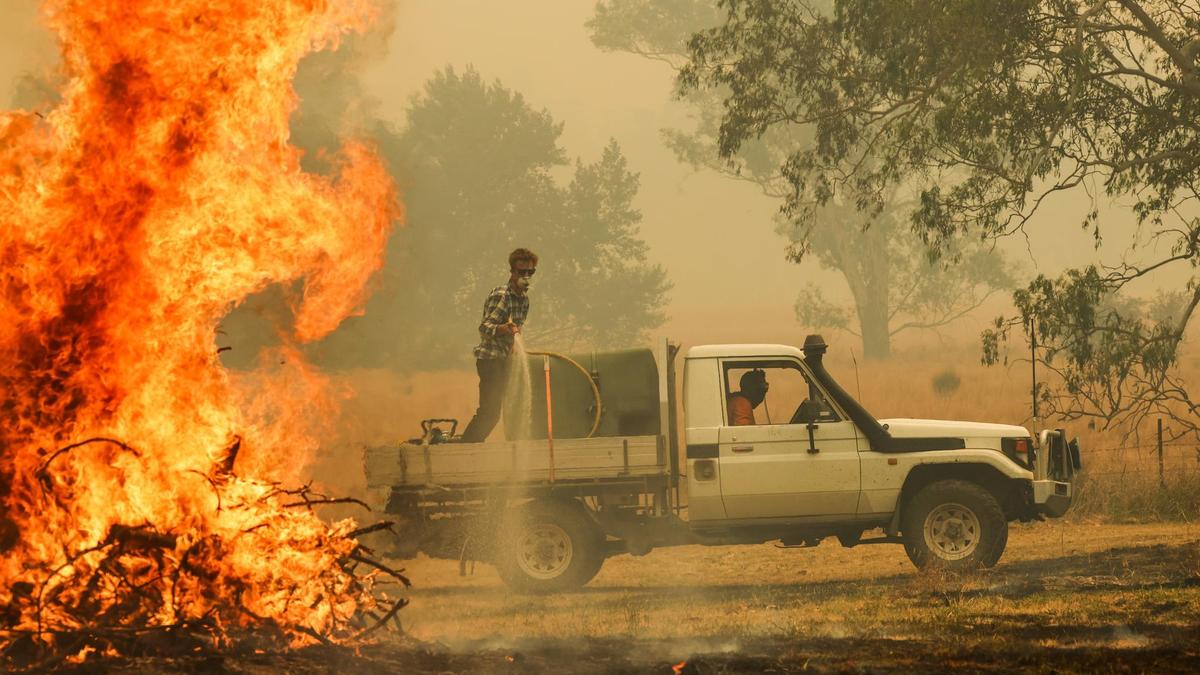
Australia is facing a heightened risk of severe heatwaves this spring and summer, with experts warning that temperatures are likely to be above average across much of the country.
The National Emergency Management Agency said a strong El Niño was “firmly established” and expected to continue warming the southern hemisphere, with the pattern forecast to peak in late spring or summer.
El Niño occurs when Pacific Ocean sea temperatures are warmer than average. In Australia, it is typically associated with hotter conditions, reduced rainfall and an increased risk of drought and bushfires.
Eastern and southern parts of the country are expected to receive below-average rainfall, while above-average rainfall is forecast in parts of western and northern Australia.
Severe heatwaves more likely across Australia
Caitlin Minney, a meteorologist at the Bureau of Meteorology, said the outlook pointed to unusually high maximum and minimum temperatures nationwide.
“We’re focusing on the chance of unusually high maximum and minimum temperatures, so that’s temperatures in the warmest 20 per cent of the historical range,” she said.
“At this time of year and into the warmer months, these are an indicator of areas that have a higher risk of severe heat.”
Much of southern Australia, particularly the south-east and south-west, is at greater risk of unusually high daytime temperatures. Almost the entire country is expected to experience unusually warm overnight temperatures between October and December.
The bureau said the long-range forecast reflected both the influence of El Niño and a broader global warming trend. Temperatures above 40C and prolonged severe heatwaves are considered more likely against that background.
Ms Minney said temperatures would be considered unusually warm if they exceeded 24.4C in Sydney or 23.3C in Melbourne during October.
She said cold fronts could still affect south-eastern Australia until December, but summer-like temperatures above 30C were also possible before summer officially began.
“Even before summer officially starts, (summer-like temperatures) across large parts of the south is not out of the question,” she said.
Bushfire risk rises across several regions
Australia’s severe weather period runs from October to April, when bushfires, heatwaves, thunderstorms, flooding and tropical cyclones are more likely.
Fire authorities have identified heightened bushfire risks in northern and south-eastern New South Wales, south-east Queensland, north-eastern Tasmania, parts of Western Australia and South Australia, Victoria and large areas of the Northern Territory.
AFAC, the Australia and New Zealand National Council for Fire and Emergency Services, said below-average rainfall in parts of Tasmania and Victoria, along with above-average fuel loads and dry soil in parts of Western Australia, had increased the danger.
AFAC chief executive Rob Webb said the different risks facing each region showed why communities needed to understand local conditions and prepare early.
“While some areas are facing an elevated risk of fire this spring, bushfires can still occur in regions with a normal seasonal outlook,” he said.
