


Daily Mail journalists select and curate the products that feature on our site. If you make a purchase via links on this page we will earn commission – learn more
Getting used to the new ‘normal’ of scorching British summertime temperatures takes some getting used to, to put it mildly. But it’s a particular challenge for the estimated 30 per cent of us who may develop a heat rash, also known as prickly heat.
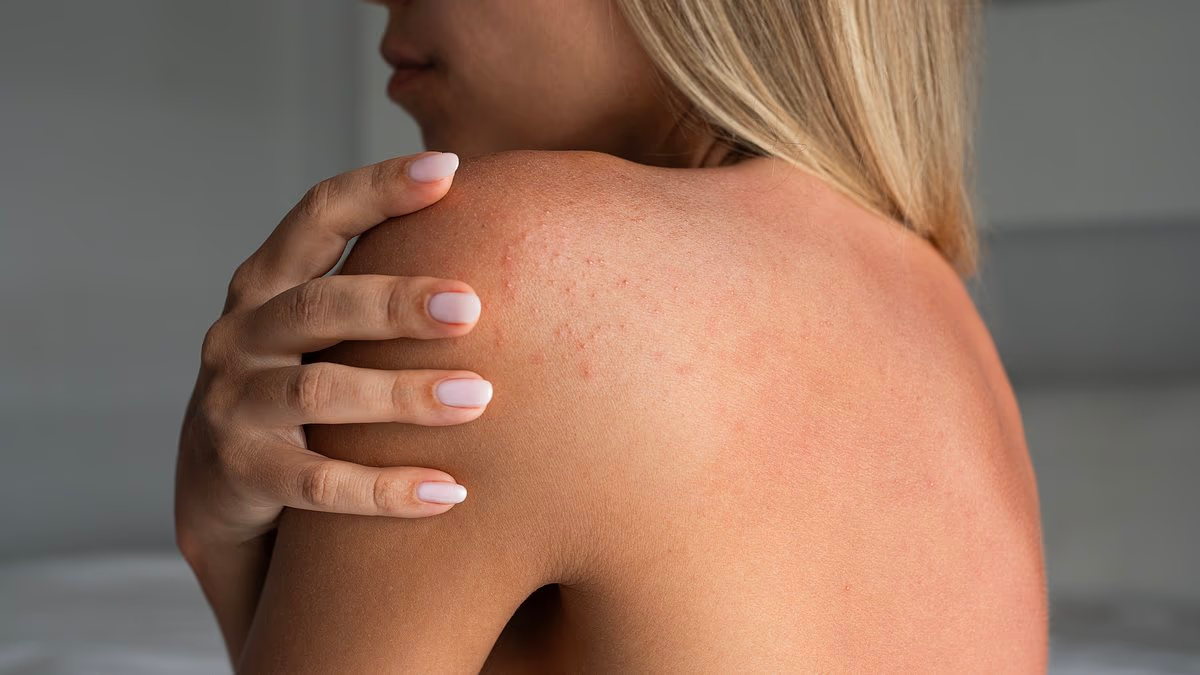
Manifesting as tiny red (or if your skin is dark, greyish or white) blisters that can spread quickly, itch, sting and burn like nettles, the condition can feel infuriatingly random and spoil your enjoyment of hot and sunny days.
Thankfully, there are effective ways to manage it – once you know what you’re dealing with. It’s important not to mistake it for another summer-induced rash, which may require different treatment.
As the Met Office has issued an amber weather warning for extreme heat today, with some parts of England set to reach temperatures of 38C (100F), we asked dermatologists how to prevent and contain these angry, prickly breakouts.
What exactly is heat rash?
Miliaria is the official name for what most people know as heat rash or prickly heat. ‘It’s caused by a blockage of the sweat ducts, which traps sweat under the skin and triggers inflamation,’ says consultant dermatologist Dr Shin-Young Cho.
The strongest risk factors, she says, are heat, humidity, tight clothing and prolonged skin occlusion and pressure (think bed sores) – all of which prevent sweat from evaporating properly.
‘There’s also some evidence that certain bacteria naturally present on skin produce substances that can contribute to the plugging of the sweat ducts, making heat rash more likely,’ she says.
Where on the body do you get it?
The most common places, says Dr Cho, are the torso, the neck and skin folds such as the armpits, groin and under the breasts, where sweat glands are more concentrated and moisture is easily trapped.
Heat rash can manifest as tiny red (or if your skin is dark, greyish or white) blisters that can spread quickly, itch, sting and burn like nettles
It can, however, occur anywhere sweat gets trapped under clothing. It’s less common on the face, though it does happen, especially in hot, humid climates.
How can you prevent it?
It’s easier said than done during a heatwave, but the aim is to avoid overheating and excessive sweating.
The most effective treatment, says Dr Cho, is prevention: keep cool in well-ventilated spaces, wear loose, breathable clothing, take cool showers whenever possible and avoid sweaty exercise and heavy skincare products, particularly occlusive ointments and creams with ingredients such as petroleum jelly, silicones and shea butter.
That includes sunscreen, which can be rich and build up on the skin with the necessary re-application. Opt for an unscented gel or oil-free sun lotion that delivers long-lasting protection.
What can you do to prevent it?
‘Calamine lotion may ease the worst of the hot, prickling sensation,’ says consultant dermatologist Dr Magnus Lynch. ‘Its zinc and ferric oxide help cool the skin and support the skin barrier while the body clears the blocked sweat ducts.

Consultant dermatologist Dr Shin-Young Cho says the strongest risk factors for heat rashes are heat, humidity, tight clothing and prolonged skin occlusion and pressure
‘Use it sparingly, especially if you have skin prone to dryness. Calamine lotion can have a drying effect over time. Apply it in the morning, then switch to a light, fragrance-free moisturiser with glycerin, ceramides or ectoin in the evening.’
Antihistamine tablets may also relieve itching, although they won’t help settle the condition itself as it’s not caused by an allergic reaction, says Dr Lynch. ‘Try a non-drowsy one such as cetirizine during the day or, if the itching disrupts your sleep, try a sleep-inducing one like Piriton at night.’
If you do exercise, invest in moisture-wicking sports fabrics and change out of sweaty clothes, followed by a shower as soon as possible, so perspiration doesn’t get the chance to linger on skin and aggravate it. And don’t scratch, as much as you might be tempted: it can make irritation worse and increase the risk of infection.
Is it the same as sweat rash?
While Dr Lynch considers them the same thing, others use the term ‘sweat rash’ for a condition known as candida intertrigo. This is typically a sore, raw rather than bumpy inflammation, sometimes with cracked skin and scaling around the edges.
It’s caused by sweat and friction, often alongside an overgrowth of yeast and bacteria, and usually found in skin folds, including between the fingers and toes.
An anti-microbial hypochlorous spray can help neutralise bacteria and calm skin in this case. If you’re not sure which rash you have, don’t worry. ‘While antibacterial products aren’t necessary in the case of heat rash, gentle and hydrating hypochlorous mists won’t aggravate it and can help settle inflammation,’ says Dr Cho.
Is it comparable to sun allergy?
No, although the two can look and feel deceptively similar. Sun allergy, or polymorphic light eruption (PLE), happens when skin that’s been minimally exposed to sunlight overreacts to primarily UVA rays and breaks out into red, itchy blotches and blisters rather than the tiny bumps typical of heat rash.
It usually appears within a few hours of sun exposure on skin, rather than in skin folds or where sweat may be trapped.

Altruist Dermatologist Sunscreen SPF50, £4.75 (amazon.co.uk): a scent-free, non-clogging sun protection lotion formulated by a dermatologist
Was £5.50
Best products for managing heat rash

A light, non-occlusive lotion with glycerin and ceramides
Shop

Offers long-term protection and superior UVA coverage
Was £30
Shop

A hypochlorous mist that can soothe and purify skin if you suspect bacteria are at play
Shop

Suppresses the rash and itching
Shop

Deep-cools skin and features plant extracts and antioxidants to calm and strengthen
Shop
