


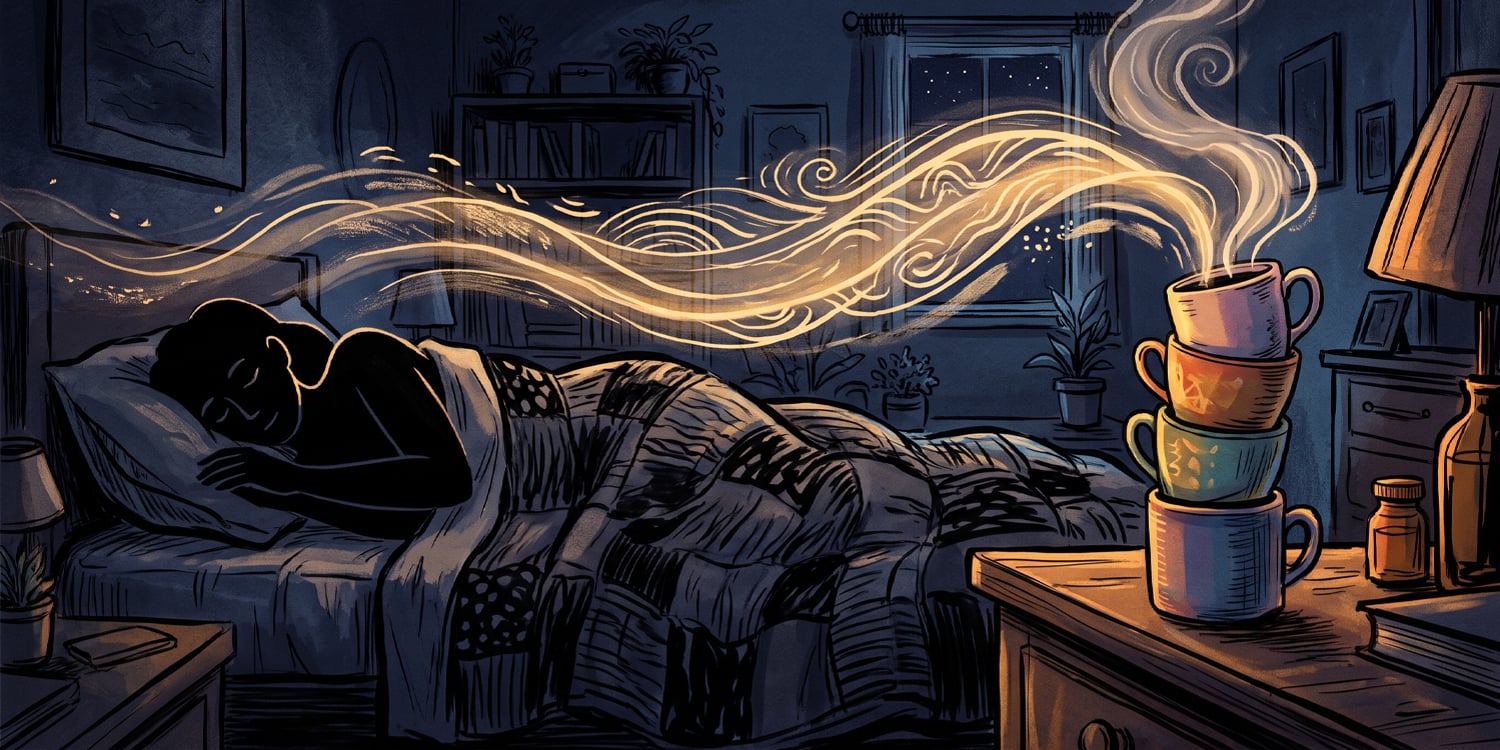
Researchers have tested a long-held belief that caffeine is the enemy of sleep by examining how habitual caffeine intake plays out in real life, rather than in tightly controlled labs. The study pairs data from the UK Biobank with at-home sleep recordings from Switzerland’s HypnoLaus cohort to see how daily caffeine habits shape sleep in people’s own beds, not just in the lab.
Led by Benjamin Stucky, the researchers used natural genetic differences linked to caffeine consumption to compare heavy and lighter drinkers. In practical terms, they looked at people who consume four or more caffeinated beverages a day against those who drink fewer, aiming to infer the sleep effects of a steady, real-world habit.
The first result aligned with expectations: habitual heavy caffeine drinkers slept less. But the team’s more robust causal estimates suggested the nightly reduction is modest—roughly 11 to 13 minutes shorter per night.
Crucially, heavy caffeine use did not make participants rate their sleep quality worse. Nor did it shift whether someone tended to stay up late or rise early, indicating the impact may not extend to obvious changes in daily sleep timing for most people.
The study’s most striking finding lay in the brain’s activity during sleep. Although heavy caffeine users slept a touch less, their brains appeared to be in deeper sleep, with stronger delta power detected in the home sleep recordings.
As the researchers put it, “The data show that high habitual caffeine intake alters the characteristics of sleep in the general population, while sparing the major physiological principles of sleep-wake regulation possibly due to adaptation.”
Nevertheless, the researchers caution that participants self-reported how many caffeinated drinks they consumed, which leaves room for recall error. They also note that the analysis did not account for different caffeine levels across beverage types or non-beverage sources like chocolate, and that the full report details other caveats alongside the sleep questionnaires used.
Taken together, the findings contribute a nuanced view of a widely shared habit. For regular heavy caffeine users, the body may adapt: trading slightly shorter nights for deeper rest to maintain the overall balance of sleep.
