


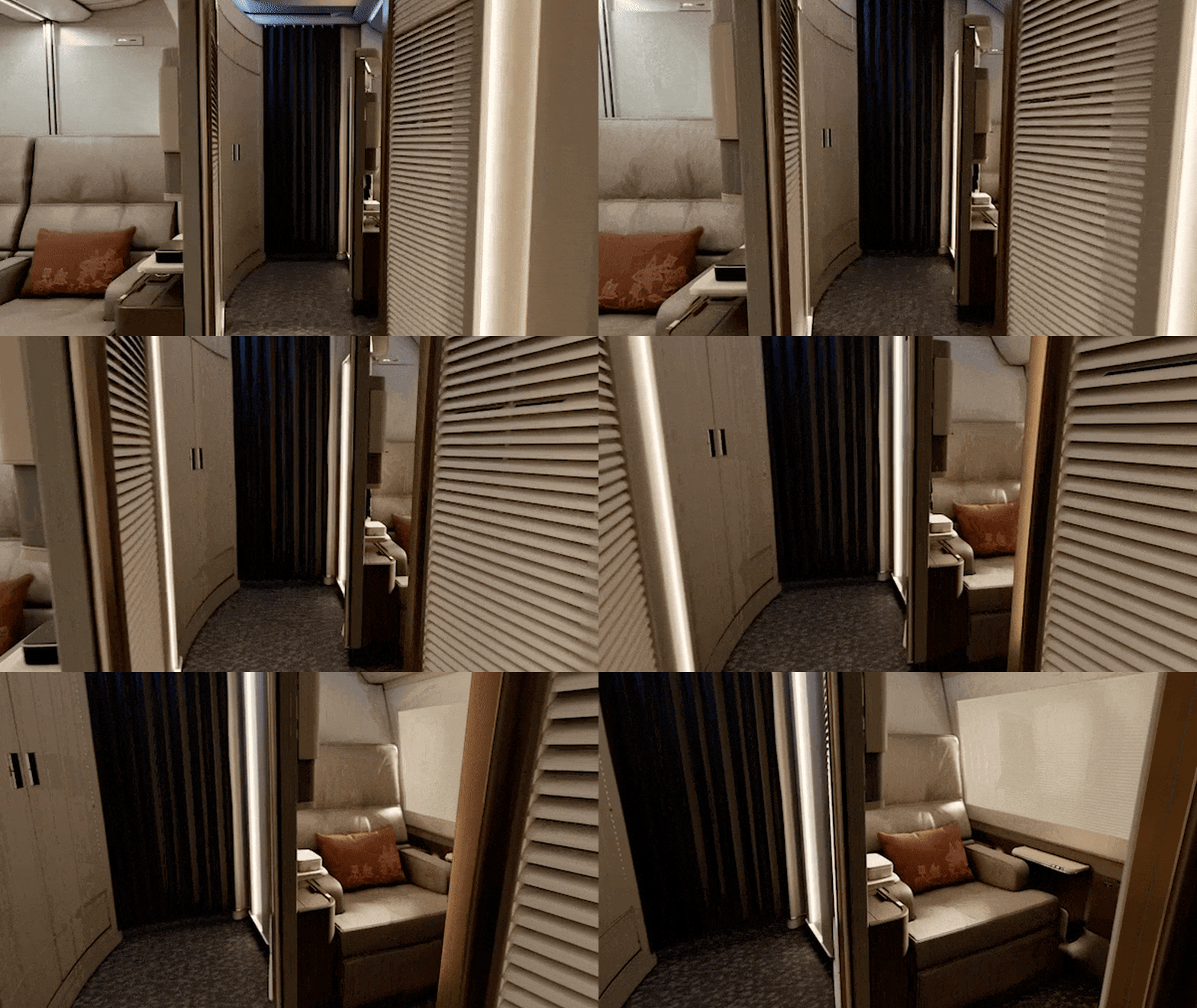
Singapore Airlines has unveiled a new generation of premium-cabin seats as it undertakes a S$2 billion (£1.1 billion) refit of its aircraft, highlighting the growing complexity of the airline industry’s battle for high-paying passengers.
The redesigned cabins will be installed across many of the carrier’s A350 aircraft and its forthcoming fleet of 31 Boeing 777-9s. They will include new first-class, business-class, premium-economy and economy seating.
The project was announced in 2024, with the first of 41 A350-900s originally expected to be completed this year. Singapore Airlines now expects the first aircraft to enter the refit programme in the first quarter of 2027, citing supply-chain constraints and delays in certifying one of the new seats.
The airline’s new Boeing 777-9s are expected to arrive in the second half of 2027. Lee Lik Hsin, its chief commercial officer, said the company was working with aircraft and seat manufacturers to meet the revised milestones.
Yeoh Phee Teik, Singapore Airlines’ senior vice-president for customer experience, said seats for the 777-9 had already been certified, although the aircraft itself had not yet completed certification. The new A350 seats are still going through the approval process.
Singapore Airlines refit faces certification delays
The delays reflect wider pressure on the specialist businesses that design, manufacture and approve aircraft interiors. Airlines are seeking more premium seating as demand recovers, while aircraft deliveries and cabin upgrades are being held back by limited production capacity and regulatory testing.
Airlines unable to obtain new aircraft have increasingly turned to cabin refits to keep pace with rivals. Qantas announced a refurbishment programme for its 737s in 2025, adding to demand for premium seats from a relatively small group of suppliers.
Singapore Airlines’ first-class cabin has been designed with curved, slightly hexagonal walls rather than conventional straight rows. The layout is intended to create more room around each passenger and allow adjacent seats to be converted into a two-person sofa during the day.
The first-class seats, made by Collins Aerospace in the United States, will feature Poltrona Frau leather and full-flat beds measuring 80 inches long and 30 inches wide. The design also allows passengers to turn and place their feet on the floor before standing.
“The curve in the aisle unlocks more space for the passenger,” said Ben Rowan, a designer at London-based PriestmanGoode. “You’re not looking at office cubicles in a straight line. This is a much more curving, welcoming space.”
The first-class design has taken almost a decade to reach production. PriestmanGoode began work on it in 2018, with progress affected by the pandemic and subsequent disruption to manufacturing.
Business-class passengers will receive a fully flat bed measuring 79 inches, replacing Singapore Airlines’ familiar diagonal arrangement. The seat, designed by BMW Designworks and manufactured by Germany-based Recaro, will also feature a meal table that extends from beneath the seat back.
Premium economy will include adjustable foot and leg rests, dedicated storage and a cocktail tray. Economy seats will have a revised reclining mechanism designed to improve knee and shin clearance, along with adjustable headrests.
The demand for more elaborate cabins has placed pressure on both manufacturers and safety regulators. Richard Aboulafia, managing director of AeroDynamic Advisory, said the limited number of seat suppliers and the labour-intensive nature of the work had intensified the problem.
Every aircraft seat must undergo testing and certification, with some designs requiring as many as 18 separate tests. At Recaro’s facility in Schwäbisch Hall, Germany, crash testing uses a catapult, a dummy and cameras and sensors to record the impact; a single business-class test can cost up to €100,000.
Specialist suppliers are also involved in producing the cabins. At Sabeti Wain’s factory in High Wycombe, near London, workers cut, fit and stitch the leather used on first-class and business-class seats, with materials subject to detailed checking and tracking.
The Singapore Airlines refit is intended to strengthen the carrier’s premium offering as airlines compete for passengers willing to pay more for space, service and comfort. Nine of its flights from Australia to Europe carried 25 per cent more passengers in the second quarter of 2026 than a year earlier, while fares rose by 109 per cent, according to Cirium data cited by the airline.
