


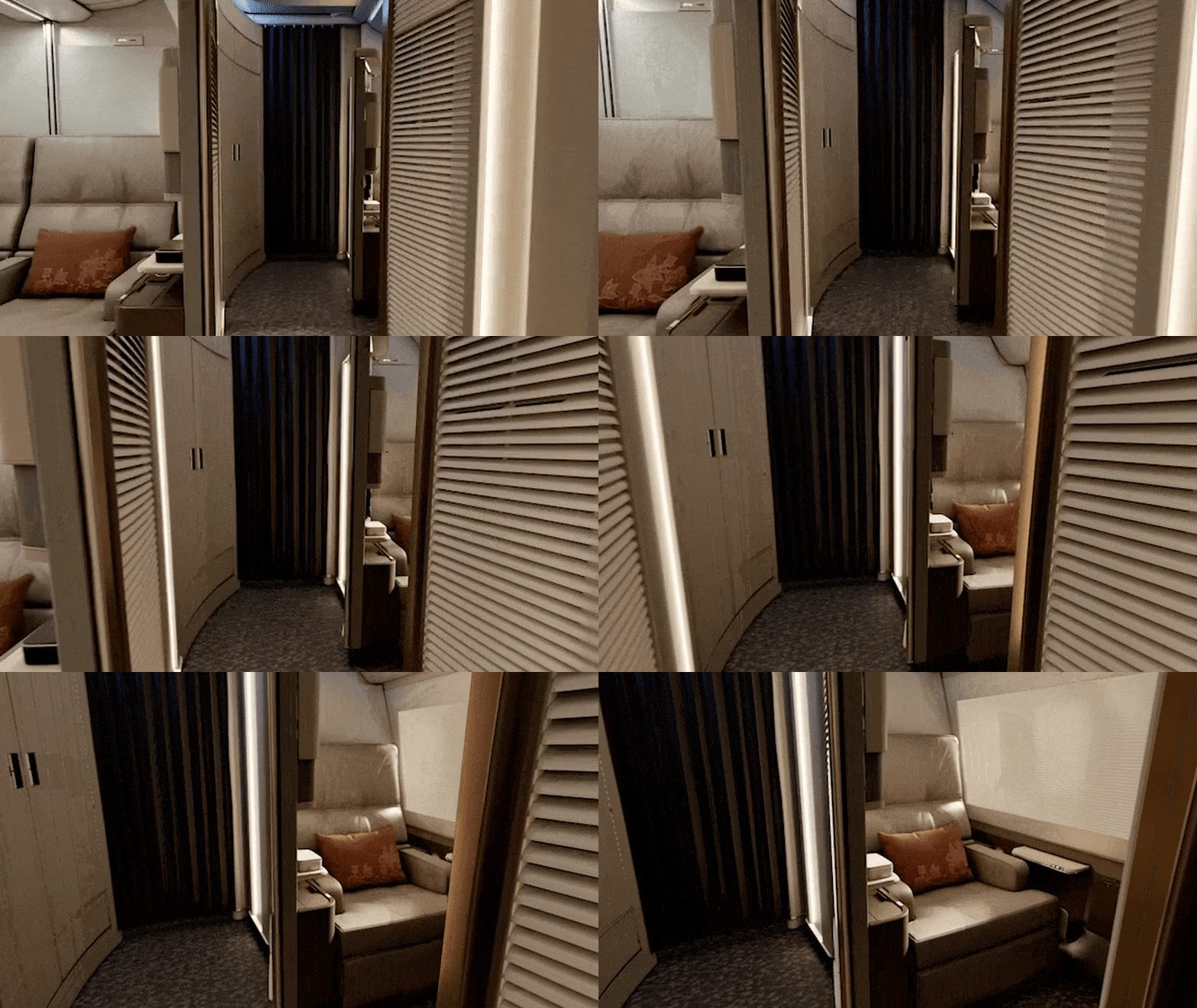
Singapore Airlines is to spend S$2 billion (£1.1 billion) upgrading the cabins of its long-haul aircraft as airlines compete for wealthy travellers with increasingly elaborate seats, service and onboard facilities.
The redesigned interiors will be installed on many of the carrier’s Airbus A350s and its forthcoming fleet of 31 Boeing 777-9s. The programme covers first class, business class, premium economy and economy cabins.
However, the refit has been delayed by supply chain pressures and the certification of new seats. Singapore Airlines had initially expected the first of 41 A350-900 aircraft to be completed this year, but now says work is due to begin in the first quarter of 2027.
Yeoh Phee Teik, the airline’s senior vice-president for customer experience, said the seats for the 777-9 had already been certified, although the aircraft itself had not yet passed certification. The new A350 seats are still undergoing the approval process.
Singapore Airlines expects its first Boeing 777-9 aircraft to arrive in the second half of 2027, according to Lee Lik Hsin, its chief commercial officer. The airline is working with aircraft and seat manufacturers to meet that timetable, he said.
Singapore Airlines cabin refit faces certification delays
The delays highlight the difficulty airlines face as they try to improve their premium cabins while aircraft deliveries and manufacturing remain constrained. With limited access to new planes, carriers have increasingly turned to refurbishing aircraft already in service.
Demand for new premium seats has placed further pressure on a small group of specialist manufacturers and on regulators in the US and Europe responsible for approving aircraft interiors. Seats must be tested and certified before they can be used in commercial aviation.
Richard Aboulafia, managing director of AeroDynamic Advisory, said there were relatively few seat suppliers and that production was labour-intensive. He said the industry’s decision to retrofit entire fleets had contributed to a bottleneck, with supply and certification challenges reinforcing one another.
Singapore Airlines’ new first-class cabin has been designed with curved walls and an unusual undulating layout intended to create more space around each passenger. The seats, being made by Collins Aerospace in North Carolina, will feature Poltrona Frau leather, full-flat beds measuring 80 inches by 30 inches and the ability to convert adjoining seats into a two-person sofa.
Ben Rowan, the PriestmanGoode designer behind the layout, said the curved aisle avoided the appearance of “office cubicles in a straight line” and created a more welcoming space. The first-class seats are the result of a design process that began in 2018.
Business-class passengers will receive a new blue-grey seat designed by BMW Designworks and manufactured by Germany’s Recaro. It will convert into a 79-inch fully flat bed, replacing the diagonal arrangement used in Singapore Airlines’ current business-class cabin.
The new premium economy seats will include adjustable foot and leg rests, extra storage and a cocktail tray. Economy passengers will receive a revised reclining mechanism designed to improve knee and shin clearance, alongside an adjustable headrest.
The safety work required for such designs can be extensive. At Recaro’s factory in Schwäbisch Hall, Germany, crash tests use a catapult, a dummy, cameras and sensors to record the impact. A single business-class seat can cost up to €100,000 to test, while some certifications require as many as 18 separate tests.
Specialist suppliers are also involved in the finishing work. At Sabeti Wain’s factory in High Wycombe, workers cut, fit and stitch the leather coverings used on aircraft first-class and business seats, with each material checked and tracked for aviation requirements.
The investment comes as premium travel becomes increasingly important to airline profitability. Singapore Airlines said nine services from Australia to Europe carried 25 per cent more passengers in the second quarter of 2026 than during the same period a year earlier, while fares rose by 109 per cent.
