


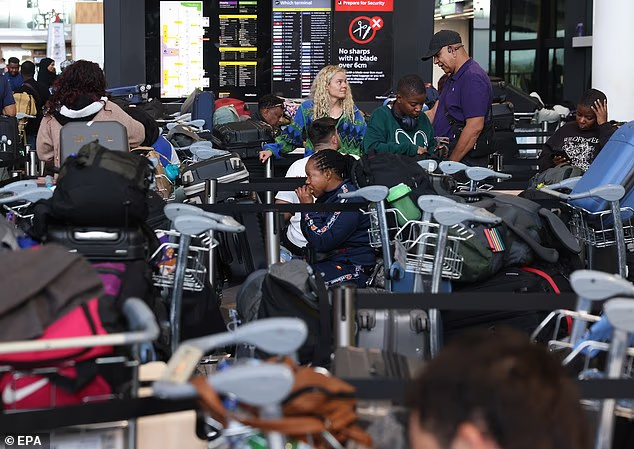
An air traffic control software glitch caused the disruption that led to more than 2,000 flights being cancelled on 8 September, according to a preliminary investigation by National Air Traffic Services (NATS).
The failure occurred in a small section of the system used to allocate identification codes to aircraft when requests are made manually. The codes allow flights to be tracked on radar while they are airborne.
NATS said the incident was not caused by incorrect actions by military or civilian operators, and was unrelated to an outage in 2023 or a radar problem in July last year.
Martin Rolfe, the organisation’s chief executive, said the fault had been traced to “a small subsection of coding”. He apologised to passengers and the aviation industry for the disruption.
“The issue has been identified and mitigation is in place while a permanent fix is safety tested and deployed,” Mr Rolfe said.
He said NATS would produce a full major incident report within two months. The organisation has also said that restrictions were imposed on air traffic to protect safety during the incident.
“That can mean placing restrictions to limit air traffic, as we did on 8 September; we do not do that lightly, and we deeply regret the inconvenience it caused to so many people,” Mr Rolfe said.
Transport Secretary Heidi Alexander has ordered the Civil Aviation Authority (CAA) to conduct an independent review of the findings.
The review will examine why the problem was not identified and fixed before it caused widespread disruption, as well as NATS’ investment plans for improving resilience and the organisation’s regulatory accountability.
Ms Alexander said the disruption was “completely unacceptable”, although she welcomed the confirmation that passenger safety had been protected.
“It is crucial that our national infrastructure is fit for the future, and this Government will make sure the aviation sector is as resilient as possible, so passengers can get to where they need to be,” she said.
Airlines including Ryanair and Wizz Air have called for a major overhaul of NATS and for Mr Rolfe to be removed following repeated failures. The Government has so far resisted those demands.
