


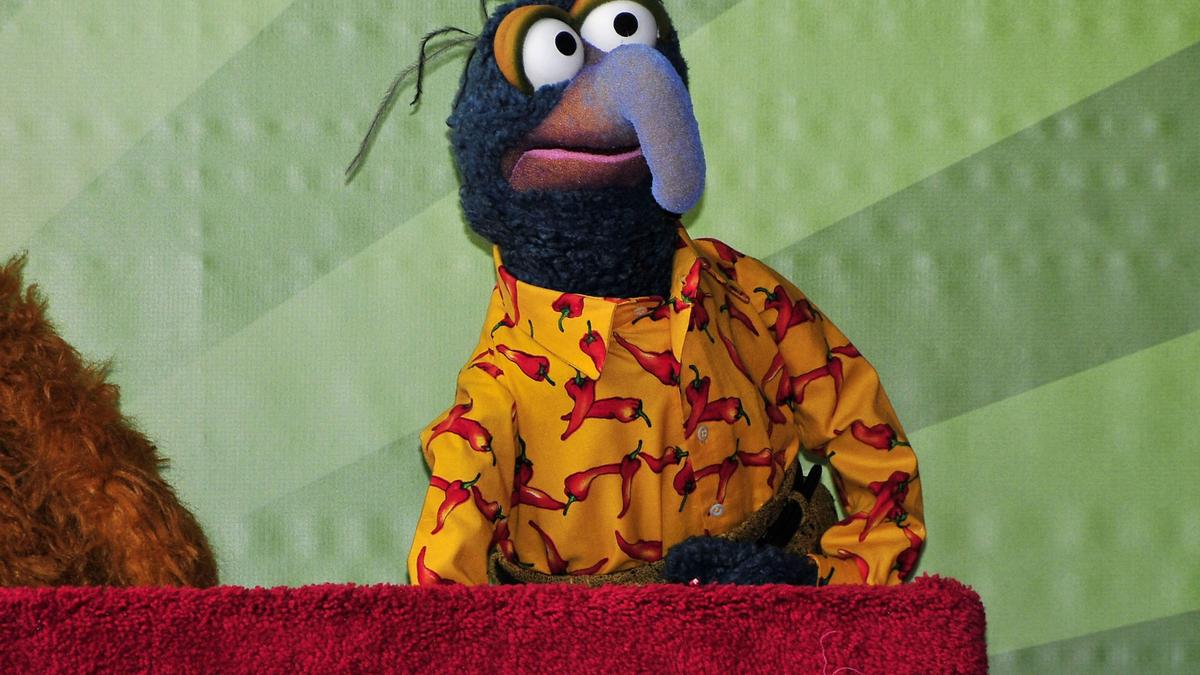
Biologists examining Gonzo’s unusual anatomy have concluded that the Muppets character is most likely some form of bird, although one palaeontologist believes he may instead be a dinosaur or an early bird relative.
The debate centres on features including Gonzo’s beak-like snout, four limbs, backbone and lack of teeth. His head tufts, described as “feathers” at points in the show, and his fuzzy appearance have also been considered.
Biologists assess Gonzo’s species
Darren Naish, who studies the anatomy of extinct backboned animals, said the combination of characteristics pointed towards a bird.
“If you add all those things together, there isn’t anything else he can be,” he said. “He can’t be anything other than a bird.”
Naish suggested Gonzo’s snout resembles that of the Jamaican ibis, which has been extinct for around 10,000 years. Gonzo’s three fingers also prompted a comparison with the bird, whose heavy wings caused its hand bones to swell into a club-like shape.
“Could be that he might be a highly derived, a very evolutionarily modified ibis?” Naish said.
Thomas Holtz, a palaeontologist at the University of Maryland, takes a different view. He pointed to Gonzo’s three working fingers on each hand and the down-like fuzz covering him, which he said recalled early carnivorous dinosaurs.
Holtz also noted that other birds in The Muppets, including Big Bird and Gonzo’s chicken girlfriend Camilla, have feathers and more recognisably bird-like beaks.
“This suggests that if he is a bird or bird relative, Gonzo is from a group that evolved prior to the evolution of modern feathers,” he said.
Michel Milinkovitch, from the University of Geneva, said the material making up Gonzo’s tuft could provide the clearest answer. If it is genuine hair, Gonzo would have to be a mammal, while feathers would make him most likely a bird.
For now, the scientific assessment is that Gonzo is probably “some kind of funny-looking bird”. The Muppets’ creators, however, remain the only people who can settle the character’s species definitively.
